
-
Energy loss is one of the most expensive problems facing farmers, contractors, and commercial operators — and most of it happens silently, through poorly insulated roofs, walls, and structures. A poultry barn that overheats in July. A greenhouse that loses heat every night in April. A warehouse where temperature-sensitive stock is constantly at risk. In each case, the fix is often simpler and more affordable than operators expect.
Reflective foil bubble insulation has become one of the most versatile thermal management solutions available to trade buyers. Lightweight, fast to install, and effective across a wide range of climates and building types, it's increasingly the first choice for professionals who need reliable performance without the cost and complexity of traditional insulation systems.
At Wellco Wholesale, a factory-direct s
Read morePosted: March 27, 2026 -
Shiny foil can feel like a shortcut: staple it up, trap “heat,” and you’re done. In real builds, insulation with reflective foil works best when you treat it as a radiant-control system, not a standalone replacement for the insulation that handles conduction and air leaks.
Who this is for: trade pros, facility teams, farm/outbuilding owners, and bulk buyers who need reliable, repeatable installs across garages, sheds, attics, and metal buildings.
How this guide was built: practical jobsite patterns + building-science references.
Why it matters: the right configuration can cut peak heat gain and help with condensation; the wrong configuration can do almost nothing.If you’re coordinating multi-structure jobs, it also helps to standardize the “supporting cast” (tapes, cap fasteners, furring strips, sealants). One-stop wh
Read morePosted: March 05, 2026 -
A radiant barrier attic foil reflective insulation upgrade targets the most punishing type of attic heat: radiant heat pouring off a sun-heated roof deck. If you’ve ever crawled into an attic in late afternoon and felt the heat “radiate” at you even before you touch anything, that’s the load this product is meant to reduce.
This article is written for trade buyers (roofers, HVAC contractors, insulation crews, property managers) and practical homeowners who want a real-world guide: what to spec, how to install it without killing performance, what savings are realistic, and what safety/code issues you can’t ignore.
Quick reality check from the field: the most common reason radiant barriers “don’t work” is not the foil—it’s the attic. I’ve walked attics where the foil was perfectly stapled up, but soffits were blocked by insulation and ducts were leaking li
Read morePosted: February 26, 2026 -
If you’re quoting materials for barns, greenhouses, metal buildings, or quick-turn retrofits, reflective insulation double sided foil often shows up on the shortlist because it’s lightweight, fast to roll out, and can noticeably cut the “radiant bake” you feel under a hot roof. The catch: this product category doesn’t behave like thick, fluffy insulation. It mainly targets radiant heat, and the results hinge on installation details—especially preserving an air space.
This article helps you decide where double-sided foil is worth it, how to spec it like a pro, and how to install it so you actually get the benefit. If you’re buying for multiple crews or repeat farm/building work, consistent SKUs and roll formats matter; Wellco Wholesale positions itself as a factory-direct, one-stop wholesaler across agricu
Read morePosted: February 12, 2026 -
Walk into a metal shed at 4 p.m. in midsummer and you can feel heat radiating off the roof like a broiler. That discomfort often isn’t just “hot air”—it’s radiant heat pouring in from sun-baked surfaces. Double sided reflective foil insulation can be a fast, practical tool to reduce that radiant load when the assembly is built for it. When it’s installed wrong (usually with no air space), it becomes an expensive shiny layer with disappointing results.
This article is for trade and bulk buyers—contractors, agricultural operators, greenhouse builders, landscapers, and light-building crews—plus serious DIYers who want pro-level outcomes. You’ll get a clear “when it works” decision guide, what specs matter for purchasing, and installation details that actually control performance.
Read morePosted: February 05, 2026 -
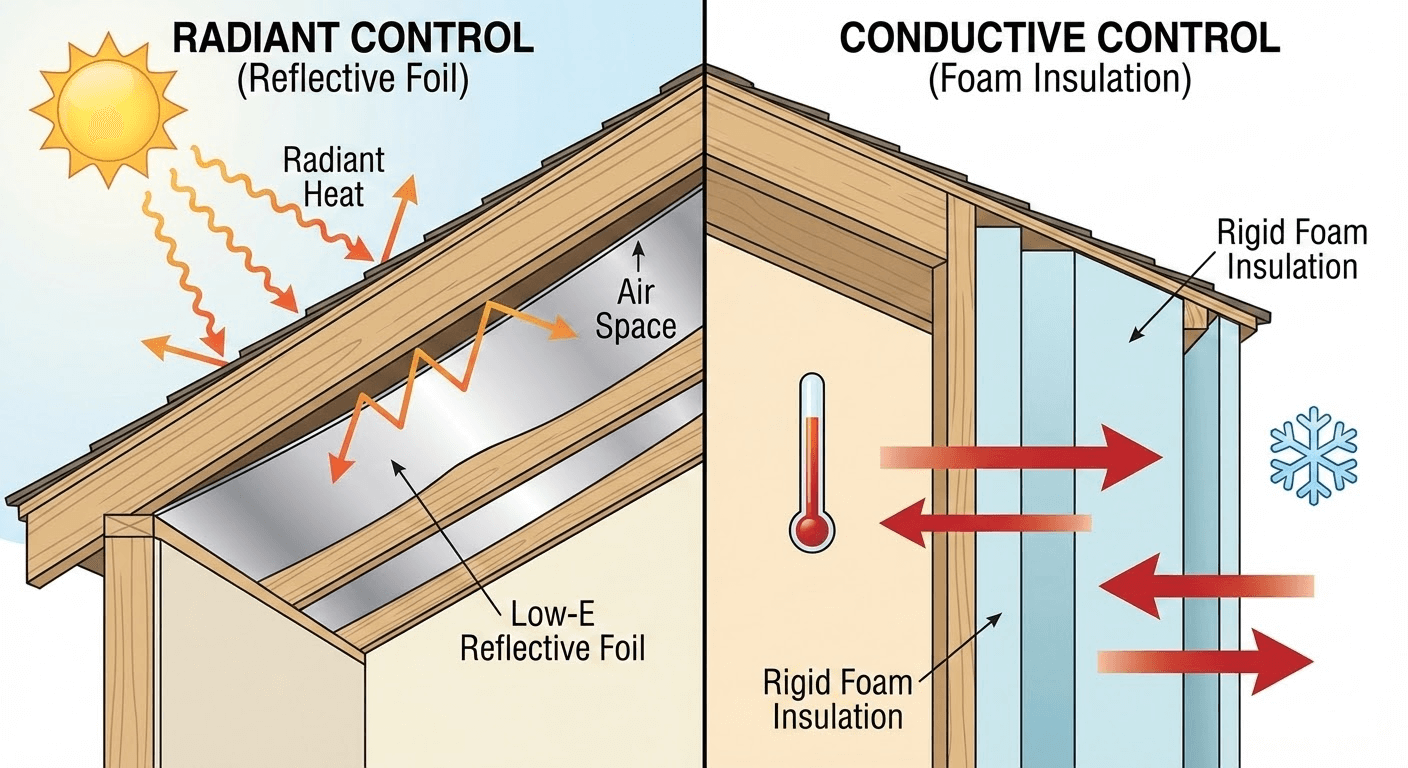
If your building feels like a heat lamp in the afternoon or a fridge at sunrise, you’re already asking the right question: which insulation strategy fits the physics and the jobsite reality. This guide compares low-e reflective foil insulation vs foam for trade buyers and bulk purchasers, including contractors, facility teams, farm and greenhouse operators, and light building suppliers.
You’ll get a fast decision flow, install do’s and don’ts, a troubleshooting cheat sheet, plus an RFQ spec list you can copy into purchasing. Wellco Wholesale supports one stop, factory direct wholesale buying across agricultural, gardening, landscaping, and light building supplies, which is useful when you want insulation plus the tapes, fasteners, and jobsite consumables to match.
 Read morePosted: January 29, 2026
 -
Hot upstairs rooms on sunny afternoons often trace back to radiant heat coming off a roof deck. Radiant barrier reflective foil insulation reduces that radiant transfer in attic and roof assemblies, so less heat radiates onto ducts, framing, and ceiling surfaces. DOE describes radiant barriers as a highly reflective material installed primarily in attics to reduce summer heat gain and cooling costs.
This guide covers what these products do, where they work, how to install them, and how to choose specs for bulk purchasing.
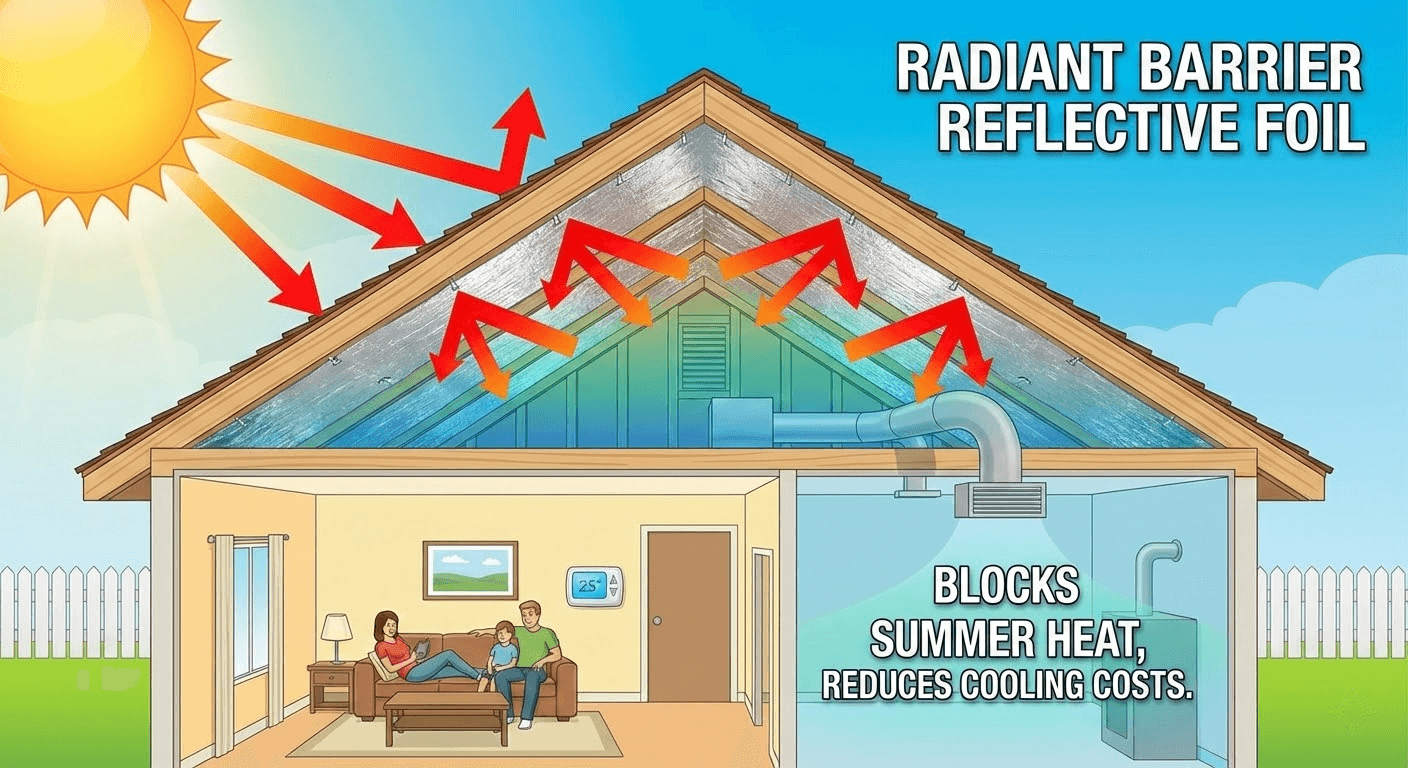
What Radiant Barrier Reflective Foil Insulation Is
How radiant barriers work
Heat moves by conduction, convection,
Read morePosted: January 22, 2026 -
If you’ve ever stepped into a metal garage on a sunny afternoon and felt the heat “radiating” down from the roof like a broiler, you already know why reflective systems get so much attention. The problem is, a lot of people buy reflective rolls expecting “instant high R-value,” staple them up with no air gap, skip proper seam sealing, and then get disappointed.
Double reflective foil insulation can be worth it—but only when you use it for what it’s designed to do: reduce radiant heat transfer as part of a complete assembly. Done right, it can improve comfort fast in garages, shops, agricultural buildings, and warehouses. Done wrong, it can become an expensive shiny liner.
For bulk and trade buyers, repeatable results come from consistent specs, reliable roll sizing, and install-ready accessories (tape, fasteners, edge sealing). Wellco Wholesale sup
Read morePosted: January 15, 2026 -
If your attic feels like a broiler, your metal building turns into a solar oven, or your garage is unbearable by mid-afternoon, heat reflective foil insulation is often the first “quick fix” people consider—because it’s lightweight, rolls out fast, and looks like it should work.
It can work—really well—when you understand what you’re buying. This material targets radiant heat, not the “thickness-based” heat loss you solve with fiberglass, mineral wool, or foam. In hot, sunny climates, research cited by the U.S. Department of Energy shows radiant barriers can reduce cooling costs about 5% to 10% in some cases—especially when the attic is a major heat source (and even more so when ducts run through the attic).
For trade customers buying in volume, the real win is also consistency: picking the right product type and installing it the same way acr
Read morePosted: January 09, 2026 -
If you’ve ever installed foil reflective insulation and thought, “Why didn’t this do much?”, you’re not alone. The most common reason is simple: a reflective surface can’t control radiant heat if it’s pressed tight against another material—it needs to face an air space to work the way people expect.
Who this guide is for: contractors buying in bulk, facility teams, and DIYers doing garages, attics, or metal buildings.
How it’s built: practical jobsite steps + widely accepted building-science guidance (and you should still follow your product label and local code).
Why it matters: done right, you cut radiant heat transfer; done wrong, you mainly create shiny disappointment (and sometimes moisture trouble).Assumptions (adjust as needed):
-
You’re installing into an attic, garage/workshop, or
Read morePosted: December 31, 2025 -