
-
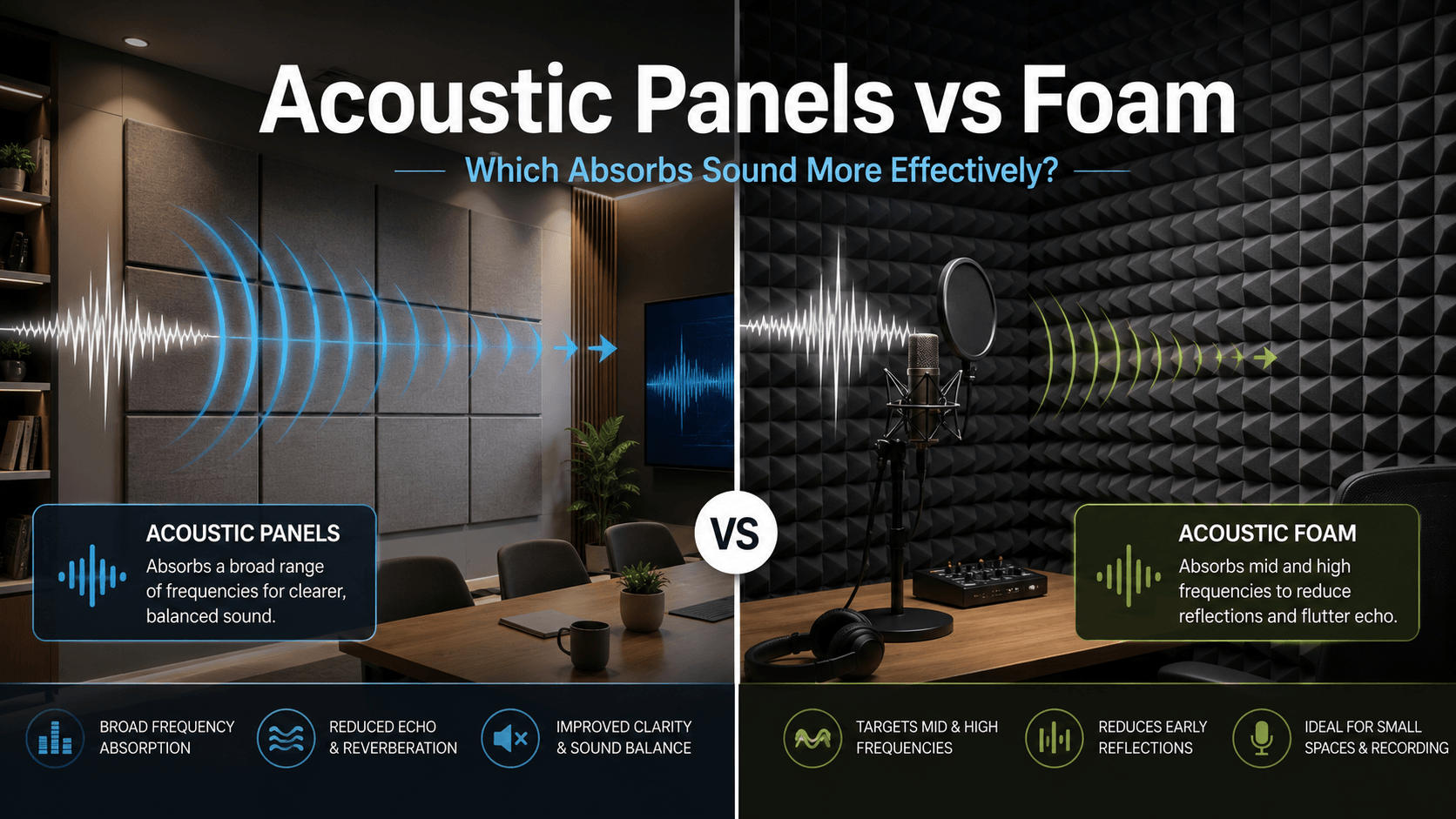
A room can sound harsh even when it looks finished. Glass, drywall, concrete, and bare ceilings reflect speech and music, creating flutter echo, blurred dialogue, and listening fatigue. When comparing acoustic panels vs foam soundproofing absorption effectiveness, first identify whether you need better sound inside the room or less sound passing through the building.
This guide compares frequency performance, thickness, mounting, durability, documentation, and room suitability. The recommendations draw on ASTM C423-23e1 and ISO 354:2003 for sound absorption, ISO 10140-2:2021 for airborne sound insulation, and published porous-absorber research. ASTM C423 measures absorption through reverberation-room decay rates, while ISO 354 provides a reverberation-room method for wall, ceiling, and space absorbers.
 Read morePosted: July 23, 2026
 -
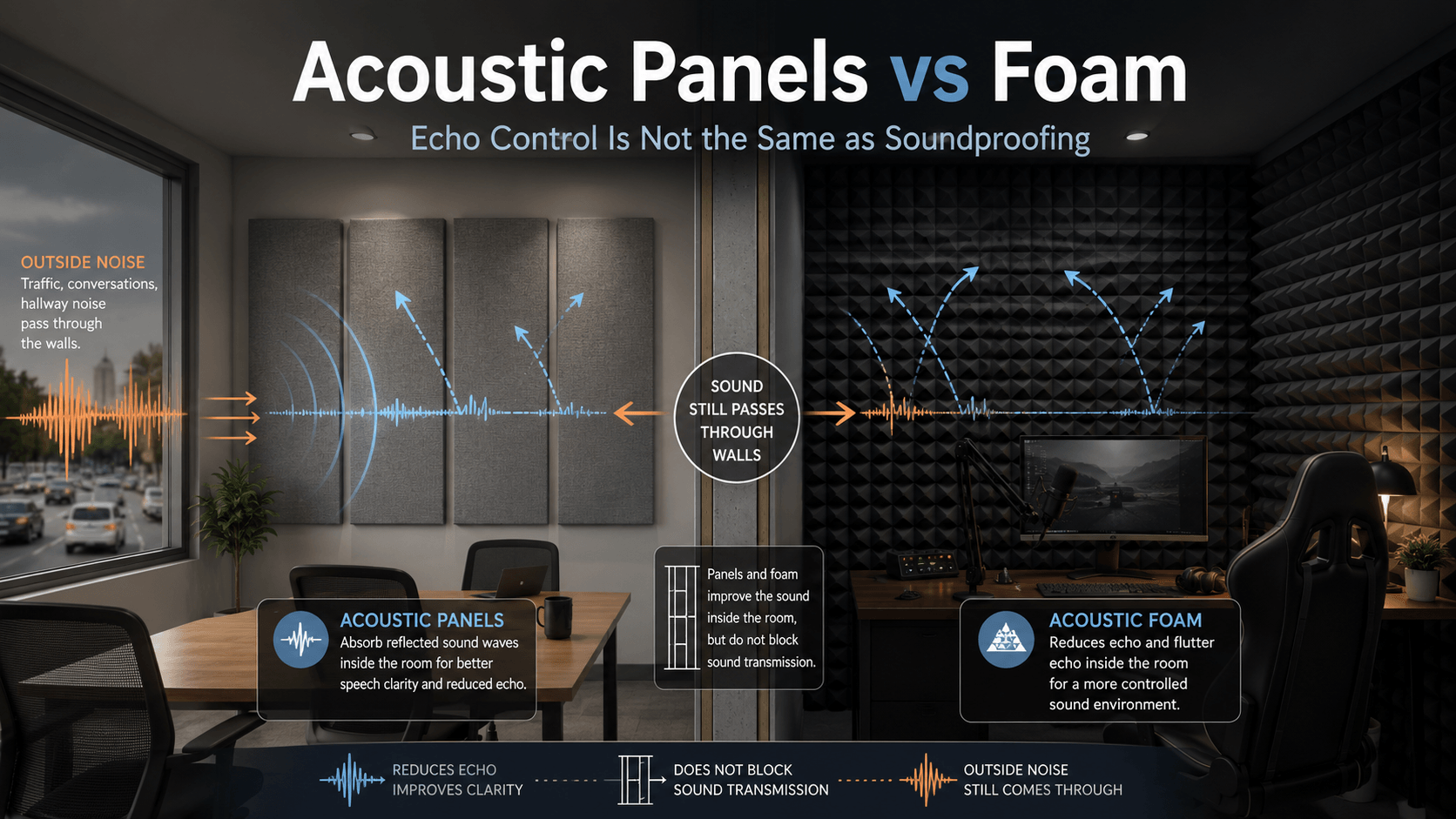
You install acoustic foam, close the door, and still hear traffic or conversations through the wall. This happens because acoustic treatment and soundproofing address different problems. Panels and foam reduce reflections inside a room. Structural soundproofing depends on mass, sealed gaps, isolation, and vibration control.
This guide compares acoustic panels and foam by absorption range, durability, installation, and cost. It also helps you identify the noise problem before buying treatment.
What Do Acoustic Panels and Acoustic Foam Actually Do?
Before comparing products, identify what each material controls. Depth, internal structure, placement, and mounting all affect useful performance.
 Read morePosted: July 16, 2026
 -
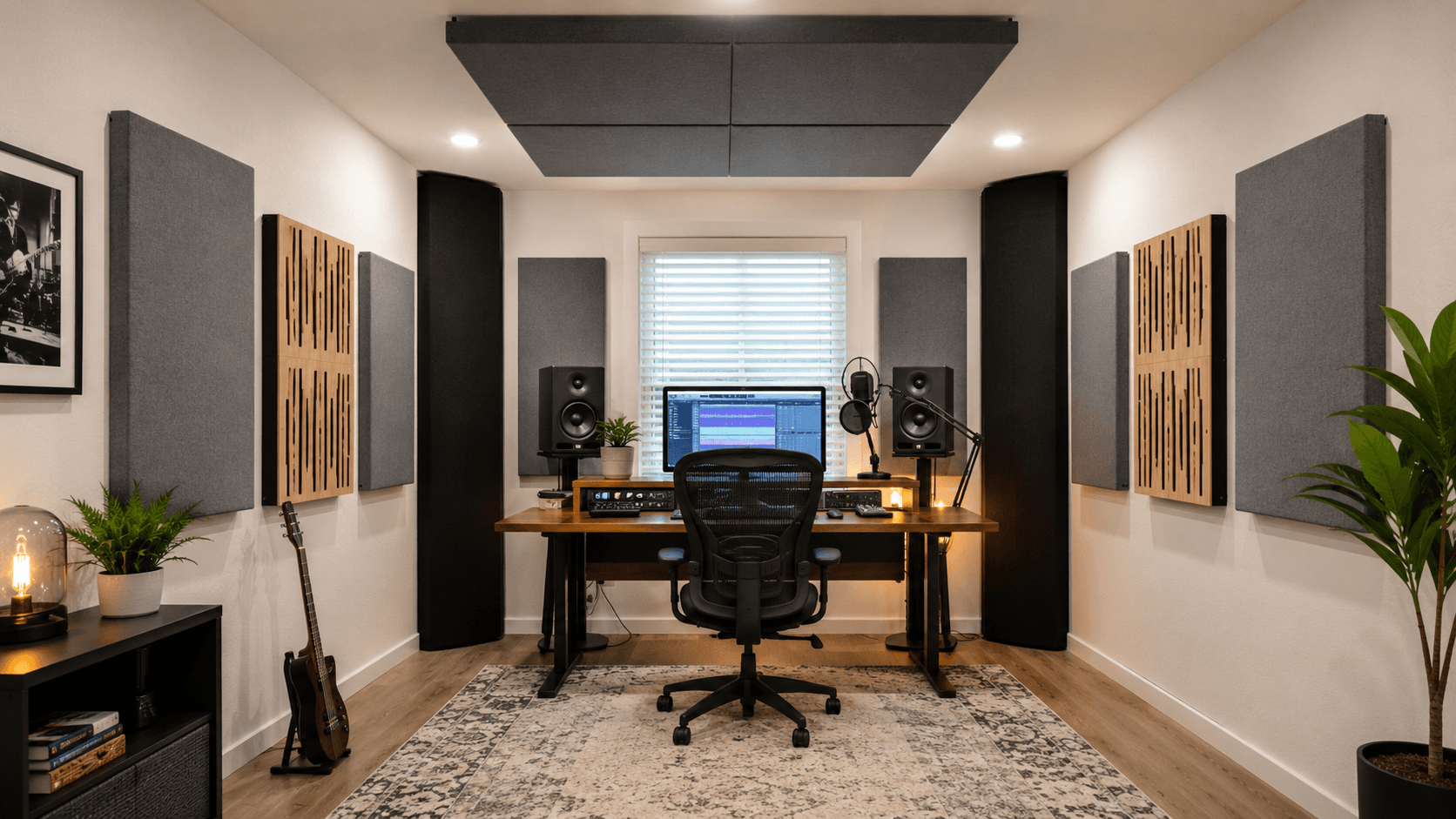
You can cover an entire wall with acoustic panels and still hear muddy dialogue, sharp echoes, or uneven bass. Placement matters as much as panel quantity.
This guide explains how to place acoustic panels in a room step by step using a practical workflow: diagnose, position, treat, test, and adjust.
Room shape, furniture, windows, flooring, and equipment position all affect performance. Start with the highest-impact areas before buying more panels.
Step 1: Identify the Room’s Main Acoustic Problems
Listen carefully before installing anything. A quick diagnosis prevents you from treating the wrong surface or frequency range.
Listen f
Read morePosted: July 10, 2026 -
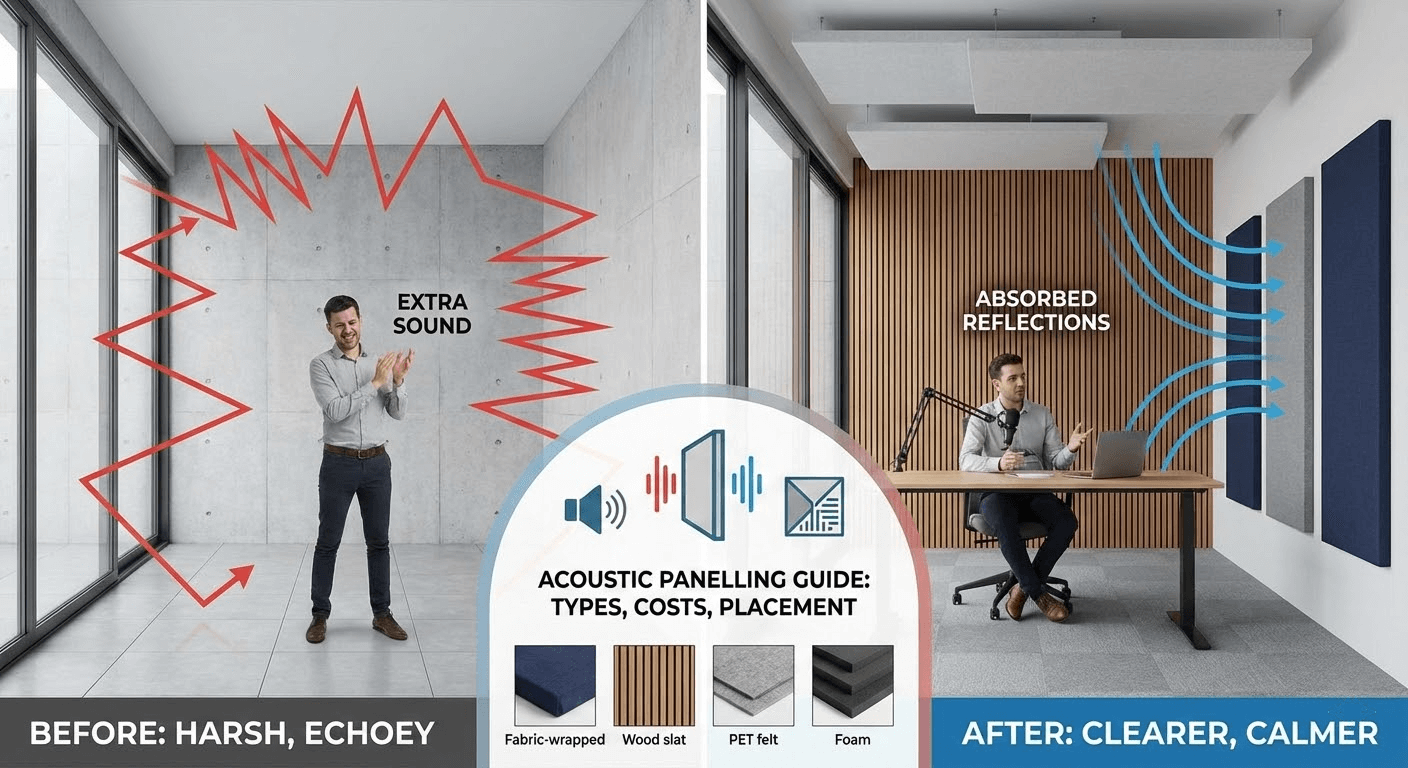
If a room feels harsh, tiring, or echoey, the room is adding extra sound. Acoustic panelling helps by absorbing reflections so speech becomes clearer and the space feels calmer.
This guide explains what is acoustic panelling with real-world choices: common types, realistic costs, and where to place panels for the biggest impact.
A quick 5-minute check
-
Clap once. A sharp ring or long tail suggests strong reflections.
-
List your hard surfaces: glass, bare drywall, tile, concrete.
-
Pick your goal: better clarity in the room, or less sound leaking to other rooms.
What Is Acoustic Panelling and How
Read morePosted: July 03, 2026 -
-
Ever spent hours polishing a track only to hear a boomy mess when you play it elsewhere? That problem usually isn’t your gear—it’s the room. Acoustic panels sound absorbing devices tame reflections and flutter echoes so your mixes translate. Unlike mass‑loaded barriers that block noise, these panels “drink up” excess energy and flatten the response curve.
Whether you’re treating a bedroom or building a turnkey studio, sourcing materials matters. Wellco Wholesale supplies factory‑direct acoustic and building products in bulk—gardeners, contractors, and audio pros alike tap the company for consistent quality without retail mark‑ups. This guide walks you through choosing, sizing, installing, and budgeting panels so you get pro
Read morePosted: June 25, 2026 -
There's a particular kind of frustration that comes with finishing a home studio or conference room treatment—only to walk in the next morning and find a panel face-down on the floor, a chunk of drywall pulled clean out with it.
It happens more often than most installation guides admit. Drywall is a surprisingly unforgiving surface: it looks solid, but its load tolerance is narrow, its surface is easy to damage, and the wrong mounting choice can mean hours of repair work before you even start over. Getting acoustic panel installation right the first time isn't just about convenience—it's about protecting your walls, your panels, and in commercial settings, your liability.
This guide covers four field-tested mounting methods, a methodical step-by-step process, and the mistakes most commonly seen on real installations. Whether you're treating a home studio, a corporate meeting room, or a large commercial space, the fundamentals are consistent. For contractors and trade buy
Read morePosted: March 27, 2026 -
Getting acoustic panels onto a wall is easy. Getting them to stay secure, look straight, and improve the sound is where most people go wrong.
If you are searching for how to fix acoustic panels to wall, the best method depends on three things: the wall surface, the panel weight, and whether you want a temporary or permanent installation. A lightweight foam tile on smooth painted drywall can often go up with strips or adhesive. A dense fabric-wrapped panel for an office, studio, or meeting room usually needs clips, anchors, or screws for a safer result.
This guide breaks down the practical choices step by step, so you can avoid failed adhesive, crooked layouts, and wasted money. It is useful for homeowners, office managers, studio users, and trade buyers handling larger projects. For bigger jobs, sourcing matching accessories and replacement stock matters too. That is where
Read morePosted: March 06, 2026 -
If your room sounds “splashy,” harsh, or tiring—especially with voices—ceiling-mounted panels can be the quickest way to cut the reflections you can’t solve with rugs, curtains, or furniture. A ceiling “cloud” over a desk, conference table, or listening position often improves clarity more than adding another wall panel because it intercepts strong early reflections from above.
This guide shows how to hang acoustic panels from ceiling safely and cleanly, with options for joists, concrete, drywall, and drop ceilings. It’s written for DIYers and for trade pros installing at scale—because the best acoustic plan still fails if the hardware choice is wrong.
Who / How / Why (Transparency)
-
Who wrote this: A practical installer-style guide based on common mounting methods and jobsite realities (layout, substrate, load rating mistakes).
Read morePosted: February 27, 2026 -
-
Acoustic panels earn their keep quietly: they soften echo, improve speech clarity, and make rooms feel less “hard.” The catch is that most panel faces (fabric, felt, foam) are porous—so they collect dust, lint, and airborne grime faster than painted drywall. In high-traffic rooms, that buildup can dull the surface and create stubborn “touch zones” near doors, chairs, or coffee stations.
This guide on how to clean acoustic wall panels is written for real use: offices, studios, hotels, classrooms, and home theaters. The recommendations are based on common manufacturer care sheets and facility-maintenance best practices—favoring dry methods, low suction, and minimal moisture. You’ll also see clear stop-points for when cleaning becomes risky and professional help (or replacement) is the smarter move.
Read morePosted: February 12, 2026 -
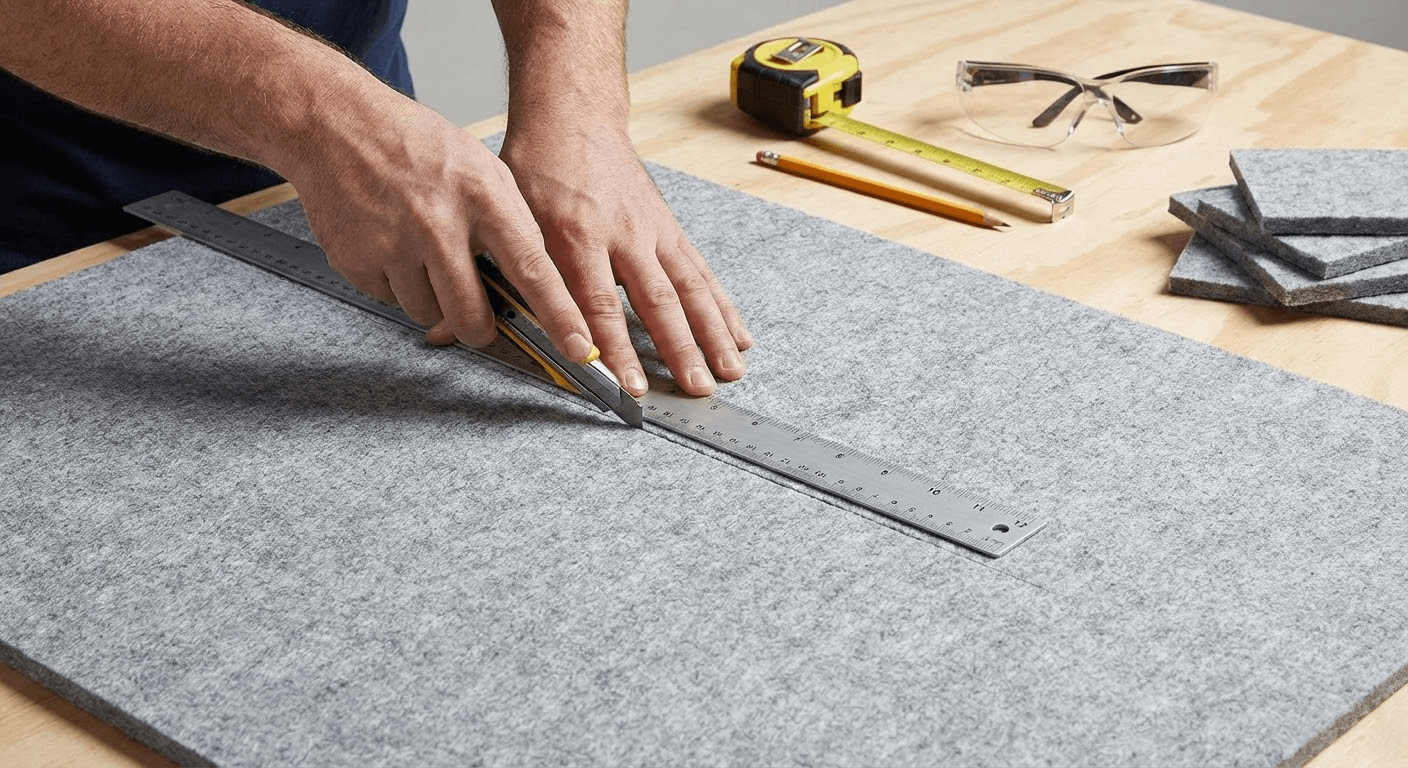
A clean-looking acoustic panel job usually comes down to one unglamorous skill: cutting. When edges fray, seams wander, or outlet cutouts land a hair off, even premium panels can look “DIY.” This guide shows how to cut acoustic panel materials cleanly and safely—whether you’re trimming a few panels for a home studio or sizing dozens for a commercial space.
At Wellco Wholesale, we support both trade customers buying in bulk and individual retail buyers sourcing project materials, so we’ve seen the same issues repeat: dull blades, rushing measurements, and using the wrong method for the panel type.
Who / How / Why (Transparency)
Read morePosted: February 06, 2026