
How to Use Bamboo Plant Stakes for Tomatoes
Tomato plants may bend or sprawl once summer fruit adds weight. Bamboo plant stakes for tomatoes offer an affordable way to guide stems upward, improve airflow, keep fruit away from wet soil, and simplify harvesting.
This guide explains how to select, anchor, tie, and reinforce bamboo supports for different tomato types.
Why Bamboo Plant Stakes Work Well for Tomatoes
Bamboo is light yet rigid enough for many garden tomatoes.
Natural Strength and Flexibility
Most tomato stakes measure 5 to 8 feet long and about 0.5 to 1 inch in diameter. Compact plants may need only a slender pole, while vigorous indeterminate or large fruited varieties usually need a thicker stake.
Diameter alone does not determine strength. Mature bamboo with firm walls and no deep splitting usually performs better than a thicker cracked pole.
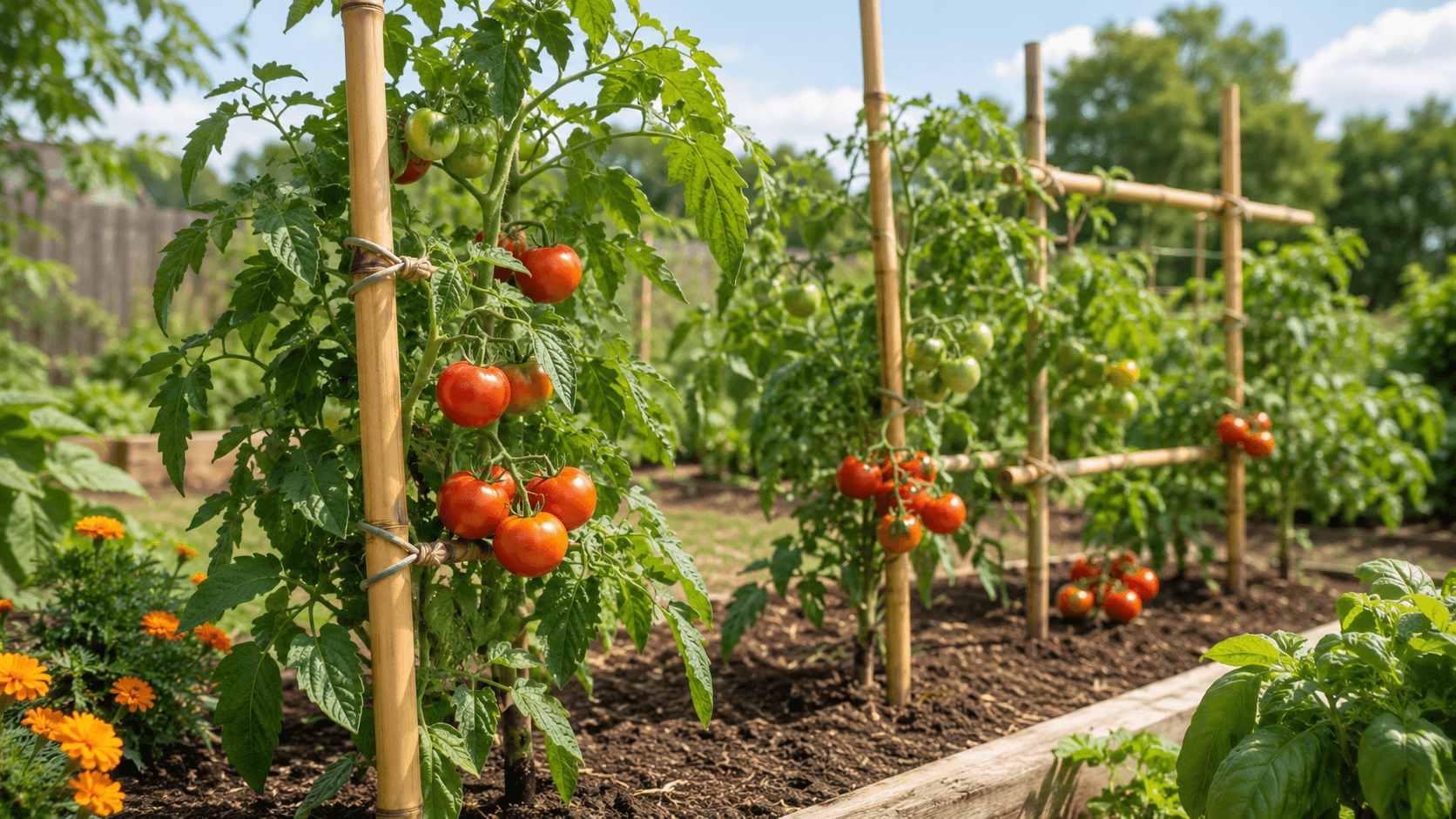
How Do Bamboo Stakes Compare With Tomato Cages?
Bamboo stakes use less space, cost less, and make pruning easier, while cages support more side growth with fewer ties. Stakes suit narrow beds, containers, and plants trained to one or two leaders. Cages suit bushier tomatoes that receive less pruning.
Bamboo Stakes vs. Other Tomato Supports
The table below compares common support options:
| Support Type | Best Tomato Type | Main Advantage | Typical Maintenance | Main Limitation |
|---|---|---|---|---|
| Bamboo stake | Pruned indeterminate or compact determinate | Affordable and easy to position | Retie every 7 to 14 days | May need bracing |
| Metal cage | Bushy determinate | Supports many branches | Reposition branches | Bulky to store |
| Fiberglass stake | Indeterminate | Moisture resistant | Inspect ties | Higher initial cost |
| Wooden stake | Large fruited varieties | Strong and available | Check for decay | Heavy and may rot |
Choose bamboo for flexible spacing. Very large plants may need a double stake or trellis.
How to Choose the Right Bamboo Stakes for Tomatoes
The pole should match the plant’s mature height, fruit load, soil, and wind exposure.
Recommended Height and Diameter
Use a 5 to 6 foot stake for patio, dwarf, and many determinate tomatoes. Vigorous indeterminate varieties often need a 7 to 8 foot pole because 12 to 18 inches should remain underground.
Beefsteak tomatoes need straight, consistent poles. Cherry tomatoes often need extra height.
What Size Bamboo Stake Does a Tomato Plant Need?
A compact tomato usually needs a 5 to 6 foot stake, while a vigorous indeterminate plant often needs a 7 to 8 foot pole. Since 12 to 18 inches should remain underground, choose enough total length to support the plant near maturity.
Container plants may also need the stake tied to the pot or connected to a second support.
Bamboo Stake Buying Guide
Use these factors when comparing poles or bundles:
| Factor | What to Look For | Why It Matters |
|---|---|---|
| Length | 5 to 8 feet | Determines usable support height |
| Diameter | About 0.5 to 1 inch | Influences bending resistance |
| Wall quality | Firm, mature bamboo | Improves strength |
| Straightness | Limited curves and taper | Simplifies tying |
| Surface | Dry and smooth | Reduces stem damage |
| Consistency | Similar poles within a bundle | Supports even installation |
| Condition | No deep splits, mold, or crushed nodes | Reduces early failure |
Compare usable length, bundle count, consistency, and storage condition. Wellco Wholesale offers flexible order quantities for home gardeners, small growers, and businesses, subject to current product and shipping terms.
When to Install Bamboo Plant Stakes
Install Stakes Before Plants Become Top Heavy
Place stakes at transplanting time or while plants are young. Early installation reduces root disturbance and lets you guide the main stem before branches spread.
In a raised bed, position the pole 2 to 4 inches from the stem and add the first loose tie at 10 to 12 inches tall.
Can You Add a Bamboo Stake to a Mature Tomato Plant?
Yes, you can add a bamboo stake to a mature tomato plant, though you should insert it several inches from the main stem to reduce root damage. Lift the plant gradually, secure it with several loose ties, and avoid forcing a strongly curved stem upright in one movement.
Support the lowest stable section first, then raise higher growth over several days.
How to Install Bamboo Stakes Correctly
Position and Anchor the Stake
Place the pole 2 to 4 inches from the stem and insert it about 12 to 18 inches into normal garden soil. Loose soil, tall plants, and exposed sites may require deeper placement or added bracing.
A 7 foot indeterminate tomato in soft raised bed soil may need an 8 foot pole inserted 16 to 18 inches deep. Use a rubber mallet, wooden block, or pilot hole to limit splitting.
Add Support for Windy or Soft Soil
Connect two stakes with a horizontal rail, build a tripod, or link several vertical poles along a row. Shared structures spread the load and reduce sideways movement.
In an open plot, connect individual stakes to a horizontal rail for greater stability.
How to Tie Tomato Plants to Bamboo Stakes
Choose Plant Safe Ties
Use garden tape, reusable rubber ties, cloth strips, or loosely tied natural twine. Avoid wire, fishing line, and narrow plastic cord because they can cut into expanding stems.
Leave visible slack and inspect ties every 7 to 14 days.
Use a Figure Eight Tie
Loop the tie around the stake, cross it between the pole and stem, then wrap it around the plant. This figure eight shape limits rubbing.
Place ties below heavy fruit clusters so their weight transfers toward the support.
How Often Should Tomato Plants Be Retied?
Inspect tomato ties every 7 to 14 days during active growth. Add ties as the main stem rises, loosen any tie pressing into the stem, and support side branches when fruit clusters become heavy. Check again after storms because wet soil and wind can shift poles or knots.
Training and Pruning Tomatoes on Bamboo Stakes
Guide the Main Stem Upward
For indeterminate tomatoes, select one or two main leaders and add a tie after every 8 to 12 inches of vertical growth. Move stiff stems gradually rather than bending them sharply toward the stake.
Prune Selectively
Remove selected suckers when maintaining a one stem or two stem system. This improves airflow and prevents dense growth from overwhelming one pole.
Determinate tomatoes usually need less pruning. Retain enough foliage to shade fruit and reduce sunscald risk.
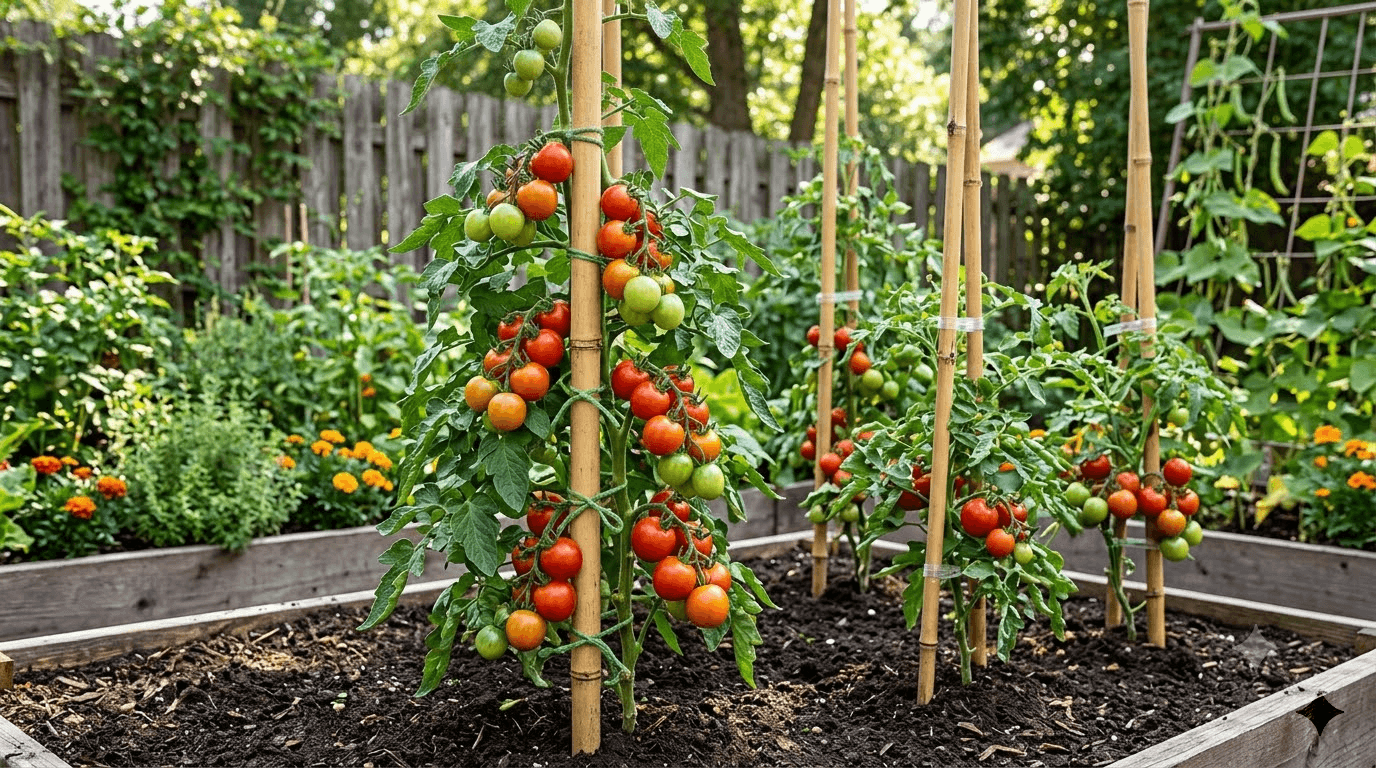
Can One Bamboo Stake Support a Large Tomato Plant?
One thick, deeply anchored bamboo stake can support a pruned tomato, while vigorous or heavily fruiting plants often need two stakes, a tripod, or a trellis. Cherry tomatoes may need extra height, beefsteak plants need greater load support, and containers need stronger anchoring.
A heavily fruiting beefsteak plant may pull away from one pole by midsummer. Add a second stake and horizontal brace before the main stem bends.
Common Mistakes to Avoid
Using Weak or Undersized Stakes
Short stakes leave upper growth unsupported, while thin, immature, or cracked poles may bend under fruit weight. Choose for mature height and keep a stronger spare available.
Tying the Stem Too Tightly
Tight ties restrict stem expansion. Use a loose figure eight and adjust it as the stem thickens.
Installing Stakes Too Late
Late installation increases root and branch damage. Lift leaning plants gradually and add several support points.
Ignoring Stake Condition
Untreated bamboo can weather, split, or develop surface mold when stored damp. Discard poles with deep cracks, active mold, crushed nodes, or severe splintering.
Clean, dry, and store reusable stakes in a ventilated area. Lifespan varies with climate, treatment, and bamboo quality.
How to Build a Simple Bamboo Tomato Support System
Single Stake Method
Drive one pole 12 to 18 inches deep and tie the main leader every 8 to 12 inches. This suits containers, compact beds, and pruned indeterminate tomatoes.
Double Stake or A Frame Method
Place two stakes on opposite sides and connect them near the top. Add a crosspiece for larger plants, windy sites, or soft soil.
Bamboo Trellis Method
Install vertical poles along a row and connect them with horizontal rails. Tie each plant to the shared frame as it grows.
Conclusion
Select mature, consistent bamboo, match the pole to the tomato’s mature size, install it early, anchor it securely, and adjust soft ties every 7 to 14 days.
A single stake works for many trained tomatoes. Heavy beefsteak plants, long cherry vines, windy gardens, and loose soil may require a second pole, brace, or trellis.
Inspect poles before use and store reusable bamboo dry. Strength and service life vary with bamboo quality, climate, treatment, and installation.