
5 Uses for Aluminum Foil Reflective Insulation
A metal roof can turn a garage or workshop into a heat trap. In cooler weather, the same building may develop damp panels or dripping fasteners.
Aluminum foil reflective insulation can reduce radiant heat transfer when the foil faces an air space. It can also support condensation and vapor control when seams and penetrations are sealed.
This guide explains five uses, product differences, specifications, and mistakes. Wellco Wholesale supports trade and retail buyers with flexible order quantities and California fulfillment.
How Aluminum Foil Reflective Insulation Works
Radiant Heat Versus Conductive Heat
Fiberglass, mineral wool, and rigid foam mainly slow conductive and convective heat flow. Reflective insulation targets radiant heat moving across an open cavity.
A thin foil roll should be judged through a tested assembly that states air-space depth, heat-flow direction, and orientation. Many aluminum facings report emissivity near 0.05 and reflectivity around 95 percent or higher, but buyers should verify the finished-product test report.
Why Does Reflective Insulation Need an Air Gap?
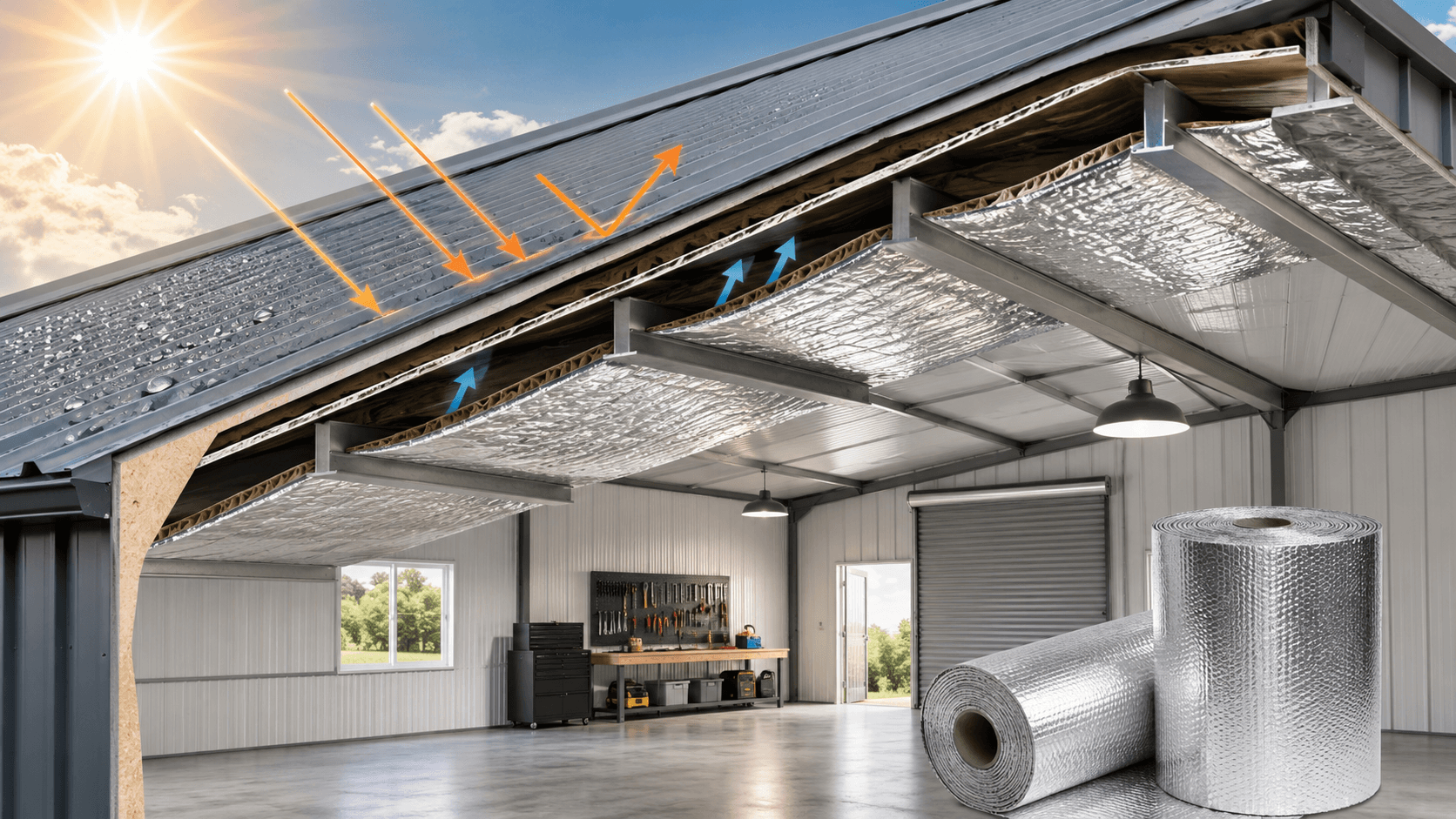
Reflective insulation needs an adjacent air space because radiant heat travels across that cavity. The foil surface can then reduce radiant exchange. When compressed between solid layers, conduction becomes more important, and performance may fall to the value documented for that contact assembly.
Stapling foil beneath rafters can preserve a cavity. Pressing the same roll directly between plywood and interior panels creates a different thermal system.
Common Product Constructions
Single-bubble foil is economical. Double-bubble foil is stiffer, foam-core foil adds conductive resistance, and reinforced woven foil improves tear resistance.
Use 1: Reducing Heat Gain in Attics and Roof Spaces
How Reflective Insulation Helps Under a Roof
Roof coverings absorb solar energy and radiate heat toward rafters, attic insulation, ducts, and ceilings. A low-emissivity foil layer facing an attic or rafter cavity can reduce that load.
This is useful in hot climates and in attics containing air-conditioning ducts. It works best with conventional insulation, air sealing, and ventilation.
What Installation Details Matter Most?
Preserve airflow from soffit vents to ridge or high-level exhaust points. Follow overlap and fastening instructions, and choose reinforced material for long runs.
Keep foil clear of flues, exhaust components, non-rated recessed fixtures, and other heat sources. Required clearances vary by equipment listing and local code.
Reflective roof insulation succeeds as part of the complete roof system.
Use 2: Insulating Garages, Workshops, and Metal Buildings
Why Metal Structures Benefit From Reflective Barriers
Thin metal roofing and siding react quickly to outdoor temperature changes. In summer, panels radiate solar heat inward. In cool weather, moist indoor air may condense on cold metal.
Reflective insulation can reduce radiant exposure and support condensation control when installed as a continuous layer. Droplets around screws, wet purlins, stained edges, and morning moisture signal that humidity, ventilation, leaks, and thermal bridges also need inspection.
Which Reflective Insulation Type Fits Each Building?
The table below connects common buildings with practical product and documentation needs:
| Building Type | Suitable Construction | Main Advantage | Installation Priority | Documents to Request |
|---|---|---|---|---|
| Residential garage | Double-bubble foil | Easy handling | Preserve air space | Assembly R-value and fire data |
| Metal workshop | Reinforced woven foil | Better tear resistance | Seal penetrations | Tensile and permeance data |
| Agricultural shed | Single- or double-bubble foil | Economical coverage | Maintain ventilation | Roll tolerance and facing data |
| Light commercial building | Foam-core or reinforced foil | Added durability | Meet specifications | ASTM E84 or equivalent report |
Can Reflective Insulation Stop Condensation in a Metal Building?
Reflective insulation can reduce condensation risk when it blocks warm, moist air from reaching cold metal and when seams, edges, and penetrations stay sealed. It cannot correct high humidity, major air leaks, weak ventilation, roof leaks, or continuous thermal bridges through steel framing.
Before replacing material, inspect failed tape, punctures, compressed areas, unsealed fasteners, and gaps around purlins.
Use 3: Improving Comfort in Sheds, Barns, and Agricultural Structures
Seasonal Temperature Moderation
In sheds, poultry buildings, barns, and equipment storage areas, reflective insulation can reduce roof-generated radiant heat. This may improve working conditions and protect tools, feed, packaging, or temperature-sensitive supplies.
It should work with ridge ventilation, sidewall openings, fans, shade, or mechanical cooling. A sealed layer without adequate airflow may leave humidity problems unresolved.
Selecting Material for Agricultural Environments
Agricultural buildings expose insulation to dust, birds, rodents, equipment contact, and cleaning. Reinforced woven foil usually tolerates these conditions better than a light bubble product.
Buyers should check adhesion, tear strength, puncture resistance, fastener compatibility, and fire data.
Use 4: Supporting Temperature Control in Crawl Spaces and Walls
Reflective Insulation in Crawl Spaces
Foil-faced products may be installed beneath floors, along crawl-space walls, or around ducts, depending on the moisture strategy. Water intrusion, plumbing leaks, pests, and open penetrations should be corrected first.
In a raised-floor home with cold floors, foil may supplement cavity insulation when it faces an air space. In a humid crawl space, ground vapor control, drainage, air sealing, and dehumidification may produce a larger benefit.
Is Aluminum Foil Reflective Insulation a Vapor Barrier?
Many foil-faced products have very low vapor permeance, but the full assembly acts as a vapor barrier only when seams, edges, tears, and penetrations remain continuous and sealed. Buyers should review tested permeance in perms and confirm the correct climate-side placement before installation.
Materials rated at 0.1 perm or less are commonly classified as Class I vapor retarders. The product report should confirm the actual value because facings, perforations, cores, and seams can change performance.
Wall Applications and Thermal Bridging
Reflective insulation can supplement framed walls when the foil faces a designed cavity. Metal studs, girts, and fasteners can still conduct heat through the assembly.
Where stronger year-round resistance is required, combine foil with fiberglass, mineral wool, spray foam, or rigid board selected for the climate.
Use 5: Insulating RVs, Vans, Ducts, and Small Projects
Compact Spaces Where Thin Insulation Helps
Low weight and easy cutting make reflective products useful in RVs, vans, utility trailers, pet shelters, water-heater jackets, and approved HVAC applications. In a camper van roof, foil facing a cavity can reduce solar radiant heat, while foam or fibrous insulation handles more conductive heat.
Check service-temperature limits, adhesive compatibility, vibration resistance, moisture exposure, and fire requirements.
Where Should Reflective Insulation Not Be Used?
Do not place unapproved foil against exhaust pipes, flues, catalytic heaters, recessed lights, or high-temperature equipment. Avoid covering wiring junctions, drainage openings, inspection points, or ventilation paths.
Reflective products can trap moisture between low-permeance layers. Complex roofs, refrigerated spaces, and hot-humid walls may need professional review.
How to Choose Aluminum Foil Reflective Insulation
Compare Common Reflective Insulation Options
The table below highlights the main purchasing tradeoffs:
| Product Type | Best Fit | Durability | Vapor-Control Potential | Installation Difficulty | Main Limitation |
|---|---|---|---|---|---|
| Single-bubble foil | Light-duty sheds | Low to moderate | Product dependent | Easy | Lower puncture resistance |
| Double-bubble foil | Garages and roofs | Moderate | Often low when sealed | Easy to moderate | Needs tested air-space assembly |
| Foam-core foil | Walls and vehicles | Moderate | Product dependent | Moderate | Higher cost |
| Reinforced woven foil | Farm and commercial buildings | High | Often suitable when sealed | Moderate | Heavier cutting and fastening |
Specifications Buyers Should Verify
Before comparing quotes, request emissivity, reflectivity, tested assembly R-value, water-vapor permeance, tensile strength, puncture resistance, service-temperature range, roll tolerances, and required fire reports.
Supplier inspection should cover edge condition, foil adhesion, core consistency, crushed rolls, moisture damage, label accuracy, and pallet protection. Private-label buyers should confirm labels, traceability, and approved samples before production.
How Much Reflective Insulation Should You Order?
Measure the full area, adjust for roof slope, subtract only large openings, and add material for overlaps, edge returns, penetrations, cuts, and mistakes. A simple project may start with 10 percent extra, while irregular framing may require 15 percent or more.
A 20-by-24-foot garage has a flat plan area of 480 square feet. Actual roof area increases with pitch. Divide the adjusted area by usable roll coverage after allowing for overlaps.
Installation Mistakes That Reduce Performance
Installing Without an Air Space
A foil surface pressed between solid materials will not perform like the same surface facing an open cavity. Match the manufacturer’s tested air-space depth, orientation, and heat-flow direction.
Leaving Seams and Penetrations Unsealed
Open seams, damaged tape, fastener holes, and unsealed penetrations can reduce air and vapor control. Use compatible tape, patches, sealants, and fastening methods specified by the manufacturer.
Ignoring Ventilation and Building Codes
Reflective insulation must work with ventilation, drainage, fire safety, electrical layouts, and moisture control. Verify local requirements before covering large areas or using the product in an exposed location.
Good detailing protects the value of the material and prevents a higher-grade roll from being undermined by installation errors.
Conclusion
Keep these four points in mind:
-
Use aluminum foil reflective insulation where radiant heat is a meaningful part of the problem.
-
Preserve the air space and orientation required by the tested assembly.
-
Combine foil with conventional insulation, ventilation, air sealing, or moisture control when needed.
-
Compare verified thermal, vapor, strength, temperature, and fire data before ordering.
Shipping terms may vary for oversized or freight-only rolls.
[Shop reflective insulation products or request a project quote →]