
Which Bamboo Garden Stakes Are Best for Your Plants?
Bamboo garden stakes may look interchangeable, but differences in height, diameter, drying, and straightness determine whether a plant stays upright. A stake that suits an orchid may bend under a fruiting tomato, while a cane chosen only for current height may become useless as the plant matures.
This guide helps you select bamboo garden stakes and covers installation, comparisons, quality checks, quantity planning, and storage.
What Makes a Bamboo Garden Stake Suitable?
The best stake matches the plant’s mature height, weight, growth habit, and exposure to wind.
Stake Height and Plant Growth
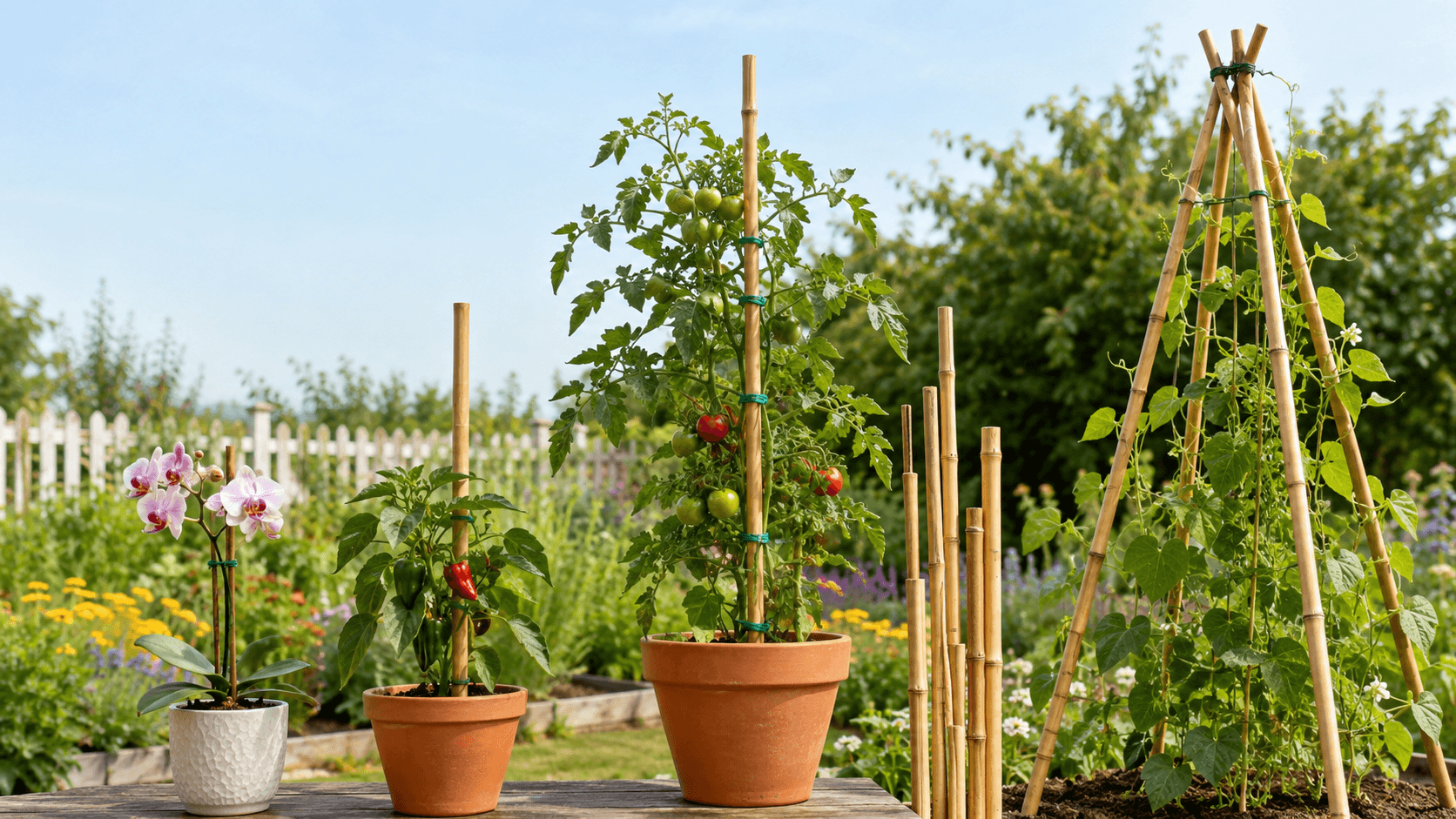
Choose a stake that reaches close to the plant’s mature height while leaving enough length below ground. Light flowers may need about 6 inches of insertion, while tall or fruit-bearing plants often need 8 to 12 inches.
A 3-foot stake can support compact peppers or small flowers. Tomatoes, dahlias, climbing beans, and vigorous vines commonly need 5- to 8-foot supports.
Diameter and Load Capacity
Approximate diameter ranges can help you compare options:
-
6 to 8 mm for seedlings, orchids, and lightweight flowers
-
9 to 12 mm for peppers, lilies, and compact vegetables
-
13 to 20 mm or more for tomatoes, dahlias, shrubs, and windy sites
These ranges are practical starting points. Bamboo strength varies with species, wall thickness, moisture, and processing quality.
Surface Finish and Stake Condition
Check for severe curves, split ends, crushed nodes, splinters, mold, and soft sections. Minor variation in color and diameter is normal.
A musty odor, damp packaging, or spongy fibers may indicate poor storage.
Which Bamboo Garden Stakes Are Best for Common Plants?
Match the stake to the plant’s mature size and support pattern:
| Plant or Use Case | Recommended Stake | Key Reason |
|---|---|---|
| Seedlings and small flowers | 2–3 ft, 6–8 mm | Light support without crowding |
| Peppers and compact vegetables | 3–4 ft, 9–12 mm | Supports branches and fruit |
| Tomatoes and tall flowers | 5–7 ft, 12–16 mm | Adds height and bending resistance |
| Pole beans and peas | 6–8 ft stake or tripod | Creates climbing space |
| Young shrubs | Thick stake with soft ties | Reduces wind movement |
| Container plants | Stake matched to pot depth | Prevents an unstable setup |
A mixed garden may need 4-foot stakes for peppers, 6-foot stakes for tomatoes, and 8-foot canes for pole-bean tripods.
What Size Bamboo Stake Does a Tomato Plant Need?
A tomato plant usually needs a bamboo stake about 5 to 7 feet long and roughly 12 to 16 mm in diameter, depending on variety and exposure. Insert 8 to 12 inches into the soil and secure the main stem with soft ties as it grows.
Determinate tomatoes may work with one stake. Indeterminate varieties often need a taller cane or multi-stake frame.
Which Bamboo Stakes Work Best for Flowers?
Slim bamboo suits orchids, lilies, and other light stems. Dahlias, peonies, and rain-heavy blooms need medium or thick stakes.
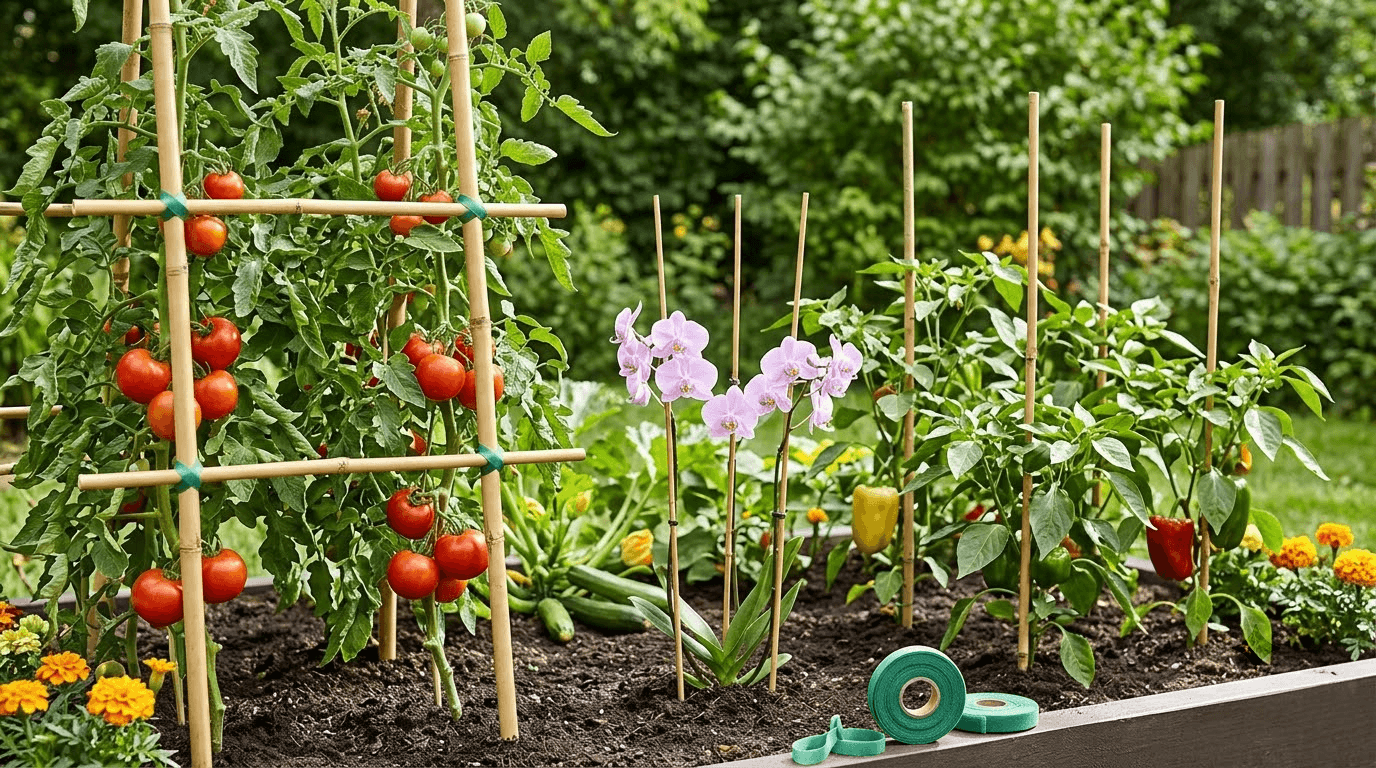
Install supports before stems lean. Green garden tape, reusable clips, or soft fabric ties keep the support discreet and reduce abrasion.
How Bamboo Stakes Compare With Other Plant Supports
Bamboo offers a natural appearance and low entry cost, while fiberglass or metal may perform better in wet or repeated-use applications.
| Feature | Bamboo Stakes | Fiberglass Stakes | Metal Stakes |
|---|---|---|---|
| Appearance | Natural | Clean and uniform | More utilitarian |
| Moisture Resistance | Moderate | High | Varies by coating |
| Reusability | Moderate | High | High with corrosion control |
| Typical Cost | Often low | Moderate | Moderate to high |
| Best Use | Seasonal support | Repeated humid use | Heavy or permanent support |
| Main Limitation | Can split or soften | Higher initial cost | Uncoated steel may rust |
Galvanized or powder-coated metal resists corrosion better than uncoated steel. Fiberglass suits wet soil and repeated seasonal use.
Are Bamboo Stakes Strong Enough for Heavy Plants?
Bamboo stakes can support many heavy plants when the height, diameter, grade, and installation method are suitable. For large tomatoes, fruiting vines, or exposed gardens, thick canes, tripod frames, or cross-bracing provide more stability than one thin stake.
In constantly wet soil or long-term structural use, fiberglass or coated metal may provide better consistency.
How to Install Bamboo Garden Stakes Correctly
University extension guidance commonly recommends installing supports while plants are young, before roots become dense and stems begin to lean.
Place the Stake Before Roots Spread
Install the stake at planting time or shortly afterward. Position it about 2 to 3 inches from the main stem.
When adding a stake to an established plant, insert it slowly and stop if you meet strong resistance.
Insert the Stake Deep Enough
Light flowers may need about 6 inches of insertion. Taller vegetables, shrubs, and fruiting plants often need 8 to 12 inches.
Loose soil may require deeper insertion or a wider frame. In hard ground, create a pilot hole instead of repeatedly hammering a thin cane.
Use Plant-Safe Ties
Use soft garden tape, fabric strips, reusable clips, or coated plant ties. A figure-eight tie creates a buffer between the stem and stake.
Avoid tight knots and bare wire. Leave room for the stem to expand.
How Often Should You Retie a Growing Plant?
Check plant ties every one to two weeks during active growth. Loosen, reposition, or add ties when stems thicken or new growth rises above the supported area. After storms or heavy fruit development, inspect for leaning, rubbing, loose soil, and damaged ties.
Fast-growing plants may need weekly adjustments.
How to Choose Quality Bamboo Garden Stakes
Poor drying, uneven sizing, and damaged bundles can increase waste and replacement costs.
Check Diameter Consistency and Straightness
Measure several stakes from the same bundle. Look for intact nodes, clean ends, limited curvature, and no major longitudinal splits.
Slight bends may suit decorative structures, while straight stakes work better in rows.
Look for Proper Drying and Clean Storage
Dry bamboo should feel firm and relatively light. Avoid damp wrapping, visible mold, soft spots, or a strong musty smell.
Natural color variation is expected. Fuzzy growth, softness, and musty odor deserve closer inspection.
Consider Quantity, Shipping, and Reuse
Calculate quantity from plant count, structure type, replacements, and expected reuse. A three-leg tripod uses three stakes per plant, so 20 climbing plants require 60 stakes before spares.
Add 5 to 10 percent for replacement. Wellco Wholesale supports one-piece minimum orders, bulk purchasing, blind drop shipping, and OEM or private-label requirements through its California warehouse.
How Long Do Bamboo Garden Stakes Last?
Service life varies with grade, diameter, treatment, climate, soil moisture, and storage. Untreated stakes may last one season or remain reusable for several seasons when kept dry and undamaged.
Expected Lifespan in Different Conditions
A thick stake in well-drained soil that is cleaned and stored indoors may remain usable beyond one season. A thin cane left in waterlogged ground can soften much sooner.
Inspect the buried end first. Replace stakes that feel soft, crack under light pressure, shed fibers, or develop sharp splinters.
How Can You Make Bamboo Stakes Last Longer?
Let bamboo stakes dry fully after use, remove soil before storage, and keep them in a ventilated indoor area away from standing moisture. Avoid prolonged waterlogging and discard cracked or mold-damaged canes.
Store dry stakes loosely rather than sealing them in damp plastic.
Common Mistakes to Avoid
Most failures come from sizing or maintenance.
Choosing Stakes That Are Too Short
Choose for mature height, especially with indeterminate tomatoes, pole beans, dahlias, and delphiniums. Replace a short stake early or add a taller support before the plant becomes heavy.
Using Thin Stakes for Heavy Crops
Fruit, wet foliage, and wind can bend a slim cane. Use a larger diameter, second stake, or tripod frame.
After storms, check whether the stake has tilted at soil level and add cross-bracing when needed.
Tying Plants Too Tightly
Tight wire or cord can cut into expanding stems. Check for indentation or rubbing every one to two weeks and replace narrow ties with softer material.
Leaving Damaged Stakes in Use
Cracks, mold, soft ends, and splinters increase failure risk. Replace damaged stakes before they collapse.
Quick Buying Checklist for Bamboo Garden Stakes
Before ordering:
-
Confirm mature plant height and weight.
-
Allow 6 to 12 inches for soil insertion.
-
Match diameter to plant load and wind exposure.
-
Accept minor natural variation, but reject mold, softness, crushed nodes, or major splits.
-
Choose soft, adjustable ties.
-
Add spare stakes for tripods, cross-bracing, and replacement.
-
Plan dry, ventilated storage.
-
Compare fiberglass or coated metal when long-term moisture resistance matters.
Conclusion
Choose bamboo garden stakes according to mature plant height, load, soil condition, and wind exposure. Slim canes suit seedlings and light flowers, medium stakes support peppers and compact vegetables, and thick canes or multi-stake frames work better for tomatoes, vines, dahlias, and shrubs.
Install supports while plants are young, insert them deeply enough, and use ties that allow stem growth. Inspect buried ends and tie points throughout the season, especially after storms.
Wellco Wholesale offers multiple stake sizes, flexible ordering, bulk support, blind drop shipping, and OEM or private-label options for gardeners, small growers, contractors, and resellers.
[Shop Wellco Wholesale's full range with 1-piece MOQ and free shipping over $300 →]