
How to Clean Acoustic Wall Panels Without Damage
Acoustic panels earn their keep quietly: they soften echo, improve speech clarity, and make rooms feel less “hard.” The catch is that most panel faces (fabric, felt, foam) are porous—so they collect dust, lint, and airborne grime faster than painted drywall. In high-traffic rooms, that buildup can dull the surface and create stubborn “touch zones” near doors, chairs, or coffee stations.
This guide on how to clean acoustic wall panels is written for real use: offices, studios, hotels, classrooms, and home theaters. The recommendations are based on common manufacturer care sheets and facility-maintenance best practices—favoring dry methods, low suction, and minimal moisture. You’ll also see clear stop-points for when cleaning becomes risky and professional help (or replacement) is the smarter move.
Identify Your Panel Type Before You Clean
Different materials tolerate different tools. A 30-second ID prevents most damage.
Fabric-wrapped panels (fiberglass/mineral wool core)
These are rigid panels wrapped in an acoustically transparent fabric. Many manufacturers recommend periodic vacuuming to remove dust.
What goes wrong: Over-wetting can create water rings, loosen adhesives, or risk the core if the backing is compromised.
PET felt acoustic panels
PET felt panels (often polyester fiber) are durable but can pill or fuzz if scrubbed. One PET felt care sheet explicitly advises: vacuum/light compressed air for dust, test in an inconspicuous area, do not saturate, and do not scrub.
Foam acoustic panels
Open-cell foam traps dust deep in its texture and can tear if tugged by strong suction. Foam also degrades with age and UV exposure; when it starts crumbling, cleaning can accelerate the damage (a replacement decision is often better than “saving” it).
Wood slat panels with felt backing
Treat these as two surfaces: wood slats (wipe like finished wood) and felt backing (clean like felt). Moisture is the main enemy—multiple care guides warn to protect slat panels from water and avoid aggressive cleaners/abrasives.
Tools and Supplies That Work
You don’t need specialty chemicals; you need the right pressure and moisture control.
Safe “default” kit for most panels
-
Vacuum + soft brush attachment
-
Microfiber cloths (at least two)
-
Lint roller (excellent for pet hair on felt/fabric)
-
Distilled water (reduces spotting)
-
Mild soap (tiny amount, if needed)
-
Soft artist brush (edges/corners)
Why low suction matters: Multiple manufacturer instructions specify low suction power with a soft brush attachment.
Cleaning products to avoid
-
Bleach, ammonia, solvent-based cleaners
-
Abrasive pads
-
Heavy steam or soaking methods
A PET felt guide is direct: avoid solvent-based cleaners, don’t saturate, and don’t scrub because it affects the surface finish.
How to Clean Acoustic Wall Panels
Use this sequence to protect both appearance and acoustic performance.
Quick cleaning matrix (pick your safest method)
Fabric-wrapped
-
Best: low-suction vacuum + soft brush
-
OK (sparingly): blot with barely damp cloth
-
Avoid: scrubbing, soaking, aggressive upholstery machines
PET felt
-
Best: low-suction vacuum, lint roller
-
OK (sparingly): distilled water + mild detergent, blot only
-
Avoid: powered brush heads, scrubbing, saturating
Foam
-
Best: very gentle vacuuming, handheld dusting
-
OK (sparingly): minimal moisture dab (only if necessary)
-
Avoid: pulling, twisting, high suction, soaking
Wood slat + felt
-
Best: dry dusting; lightly damp wipe on wood only
-
OK (sparingly): mild cleaner on wood, applied to cloth (not sprayed)
-
Avoid: water exposure, abrasive materials, aggressive cleaners
Routine dry cleaning (weekly/monthly)
This is the highest payoff and lowest risk.
-
Dust top-down with a microfiber cloth.
-
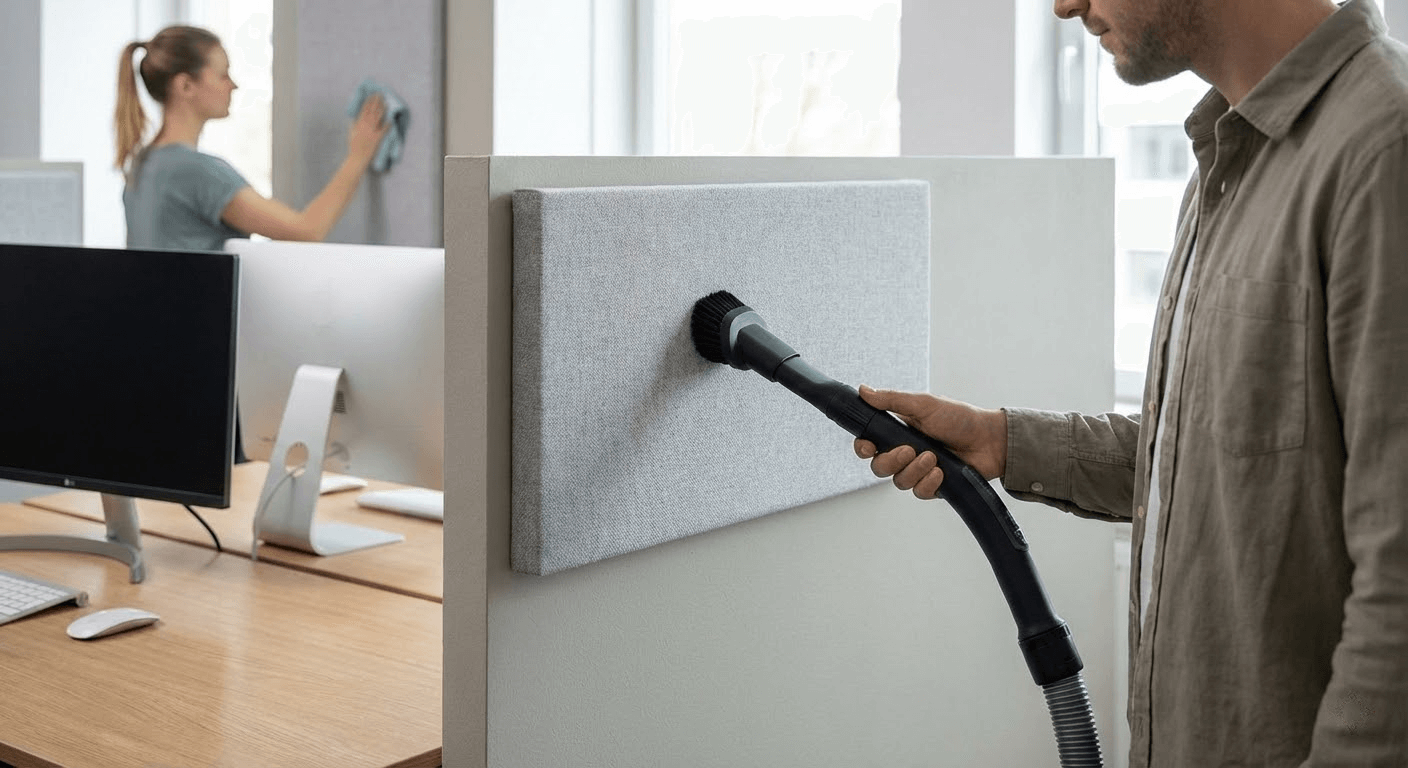
Vacuum with a soft brush on low suction.
-
Keep the nozzle moving; don’t “park” it on fabric or felt.
-
Detail corners with a soft artist brush.
A polyester panel care guide recommends vacuuming with a soft brush and even notes an attachment benchmark: at least 1-inch soft bristles to avoid damage.
Experience vignette: In a conference room where panels sat above a coffee station, the “invisible” dust line along the top edge was the reason the wall looked uneven on camera. A 10-minute monthly low-suction vacuum pass eliminated the shadowing without any wet cleaning.
Spot-cleaning stains (fingerprints, coffee, scuffs)
Decision rule: dry methods first (vacuum, lint roller, dry cloth). If it remains, go barely damp and blot.
Blot method (fabric or felt)
-
Test a hidden edge first.
-
Use distilled water on a microfiber cloth—barely damp.
-
Blot from outside-in; don’t rub.
-
If needed, add a tiny amount of mild soap to water.
-
Blot again with clean water to remove residue.
-
Air-dry with ventilation.
Two key “manufacturer-style” principles support this:
-
Treat stains quickly: “the sooner the stain is treated, the greater the chance it can be removed.”
-
On PET felt, don’t scrub and don’t saturate.
Foam spot-cleaning
-
Vacuum first.
-
If you must dab, support the foam with your free hand and use minimal moisture.
-
Let it dry fully before closing the room (humidity can linger).
Deep cleaning (only when truly needed)
Deep cleaning is for widespread construction dust or visible grime across multiple panels—not for routine maintenance.
Safer approach
-
Work one panel at a time
-
Multiple gentle passes > one aggressive pass
-
Extend drying time (airflow beats heat)
Stop and escalate if:
-
You see large water stains or recurring musty odor
-
The panel face is separating from the frame
-
Foam is crumbling (cleaning often accelerates shedding)
Safety and Performance Considerations
Safety considerations
-
Use stable ladder practices; avoid overreaching.
-
If a fabric-wrapped panel’s backing is damaged or you suspect fiber exposure, wear gloves and a mask while handling.
-
Never saturate panels—moisture can create odors and, in worst cases, mold risk in porous materials.
Preserve acoustic performance
-
Don’t compress foam or mash felt repeatedly; physical deformation can change the look and may affect how evenly the surface behaves.
-
Avoid painting/coating unless the product is designed for it (many coatings clog pores and reduce absorption).
Common Mistakes and How to Fix Them
Water rings or tide marks
Cause: too much moisture in a small spot.
Fix: “feather” the area—lightly dampen a wider ring with distilled water and blot outward, then dry with airflow (not heat). This aligns with the broader guidance to use minimal moisture and avoid saturation.
Fuzzing or pilling on felt
Cause: scrubbing or powered brush agitation.
Fix: stop rubbing; switch to vacuum + blot-only spot cleaning. PET felt instructions explicitly caution against scrubbing because it affects finish.
Loose edges or panels shifting
Cause: tugging during cleaning, humidity swings, aging adhesive.
Fix: stop vacuuming near the edge at full suction; reduce suction and clean away from seams. Re-secure using the mounting method recommended for that panel system.
Maintenance Schedule and Checklist
Weekly (busy rooms)
-
Top-edge dusting
-
Lint roll visible hair/lint zones
Monthly
-
Low-suction vacuum with soft brush (all panels)
-
Spot-check stains and mounting points
Quarterly (or post-renovation)
-
Full-room “detail clean” + stain triage list
-
Document recurring stain sources (coffee station, door push zone)
Stocking a Consistent Cleaning Kit for Multi-Room Facilities
For facilities and trade buyers, the easiest way to protect panels is consistency: same attachments, same cloths, same “damp-not-wet” standard, and the same checklist across staff. That’s where a reliable wholesale supplier helps. As a one-stop, factory-direct wholesaler serving bulk buyers across agricultural, gardening, landscaping, and light building needs, Wellco Wholesale can support routine maintenance programs by helping teams stock general consumables (microfiber, gentle cleaners, ladders, and related supplies) in bulk—reducing improvisation that leads to panel damage.
Conclusion
Clean panels last longer when you treat them like acoustic equipment, not a scrub-able wall: identify the material, start dry, use low suction with a soft brush, and blot stains with minimal moisture. Standardize your tools and schedule—especially if you manage multiple rooms—and you’ll protect both the look and the sound you installed panels for.
Frequently Asked Questions
Can I use a steam cleaner on acoustic wall panels?
Most panels are safest with dry methods and minimal moisture. Steam can saturate porous faces or cores and may cause water rings, adhesive failure, or odor issues—especially on fabric-wrapped and felt panels.
What’s the safest routine for PET felt panels?
Use low-suction vacuuming with a soft or smooth attachment, plus occasional lint rolling. If spot cleaning is needed, test an inconspicuous area first and blot gently—avoid scrubbing or saturating.
How often should I clean acoustic panels in a commercial space?
High-traffic rooms often benefit from weekly dusting and monthly low-suction vacuuming. If the room has heavy lint/dust sources (renovation work, textiles, pet traffic), increase frequency to prevent buildup.
How do I know when a stain is “too big” to DIY?
If stains cover large areas, keep reappearing, or come with a musty odor, DIY cleaning becomes higher risk. At that point, professional cleaning advice—or replacement—may be more cost-effective than repeated wet attempts.
Will cleaning change the acoustic performance?
Gentle dry cleaning shouldn’t. The bigger risks are compressing foam/felt or clogging pores with coatings or residue; keep pressure light and avoid products that leave films.