
Bamboo Stakes for Pepper Plants: Size & Setup Guide
Pepper plants can look perfectly upright for weeks—then one gusty day or a sudden heavy fruit set bends a main stem and snaps your best branch right where it forks. Bamboo stakes for pepper plants are a low-cost, high-impact way to prevent that kind of mid-season loss, while also improving airflow and making harvests less of a scavenger hunt under the canopy.
Who this is for: home gardeners, market growers, landscapers, and trade buyers who want a simple support method that scales.
How this guide was built: hands-on staking across containers, raised beds, and in-ground rows (plus what consistently failed), combined with widely used university-extension style best practices—especially around staking early and gentle ties.
Why bamboo: it’s lightweight, easy to cut/handle, and simple to standardize by length and diameter—useful whether you’re supporting 6 plants or 600.
If you’re sourcing for larger jobs, a wholesale supplier such as Wellco Wholesale (a one-stop source for garden and farm supplies) can make it easier to standardize stake sizes and tie materials across crews and sites—without turning staking into a custom project every time.
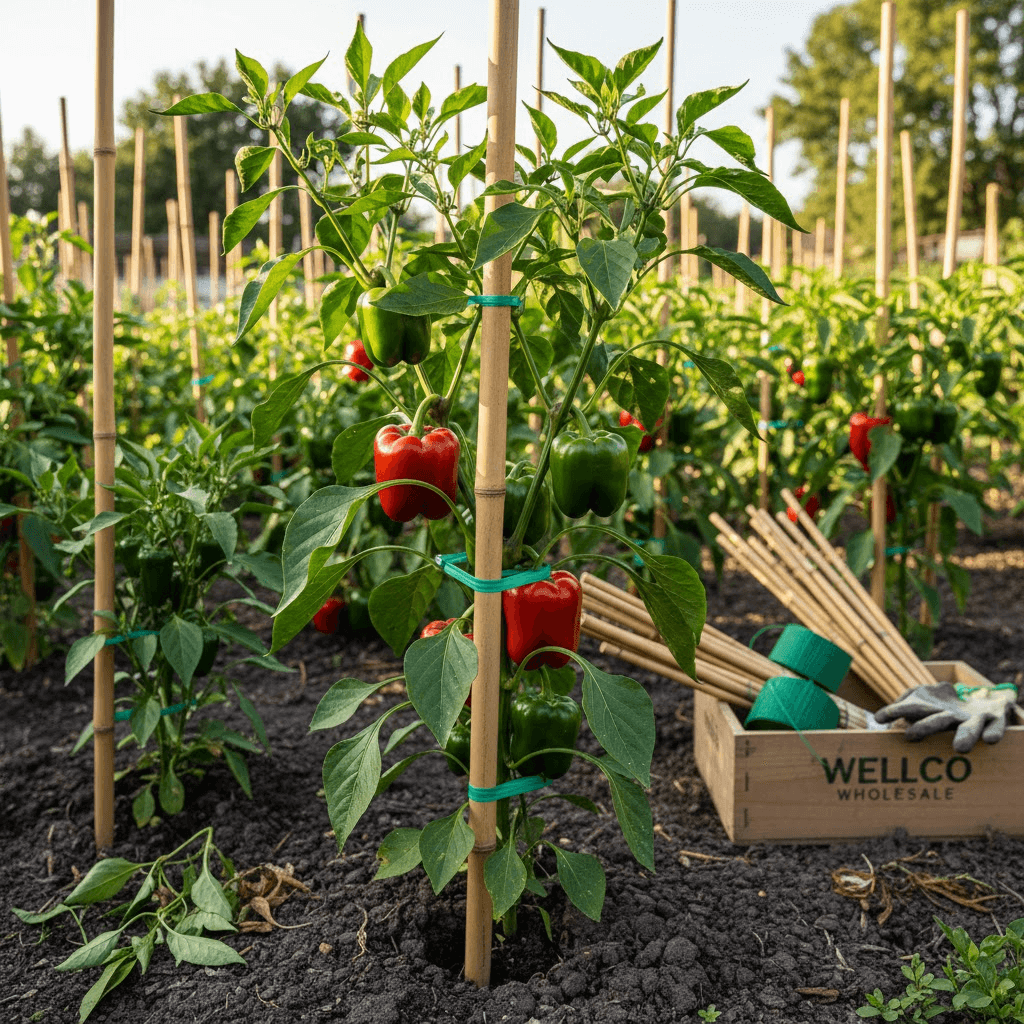
Choosing Bamboo Stakes for Pepper Plants
Match stake height to pepper type and growing conditions
Pepper varieties differ dramatically in mature height and branch architecture. University guidance for peppers notes that staking is especially useful for tall (30+ inch) or heavy-bearing varieties and recommends doing it at transplanting when appropriate. (UC ANR)
Practical height targets that hold up across real gardens:
-
Compact peppers (typically 12–24 in. in many gardens): 24–36 in. stake
-
Medium peppers (often 24–36 in.): 36–48 in. stake
-
Tall or heavy-fruiting peppers: 48–60 in. stake, or consider a cage/row support system
Experience note: I used to pick stakes based on the plant’s size in June. That worked—until the first big fruit wave. The plant didn’t just get taller; it got top-heavy. When the load increased, thin, short stakes acted like wobble poles. The fix was boring but effective: choose stakes for the end-of-season plant, not the early-season plant.
Select diameter, strength, and finish
Stakes fail for two reasons: they’re too thin (they flex) or they’re set too shallow (they loosen). For peppers that will carry clusters, prioritize bamboo that’s:
-
Thicker and straighter (less flex under load)
-
Consistent in diameter/length (important for bulk installs)
-
Smooth enough not to shred ties, but not slick like varnished dowels
If you garden in wind or grow heavy-fruiting bells, err thicker. The small cost increase is cheaper than losing a fruit-laden branch.
How many stakes you actually need (and how to buy smart)
For most gardens: one stake per plant is the default.
For larger plantings, you may use fewer stakes by switching to a row system (stake-and-weave), but even then you still want consistent stake specs.
Bulk-smart purchasing habits:
-
Standardize on two lengths (e.g., 36" + 48") to simplify training and tie placement
-
Buy tie materials with the stakes (crews always run out of ties before stakes)
-
If you’re buying for projects at scale, sourcing through a wholesale supplier like Wellco Wholesale can help keep stake sizes consistent across seasons and locations (helpful for pros who need repeatable installs)
When to Stake Pepper Plants
Best timing (and why “too late” costs you)
The easiest time to stake is at planting. It’s faster, and it reduces the risk of driving a stake through established roots later.
One mainstream, practical guideline: drive a stake at least 6 inches deep and do it at planting to avoid disturbing roots down the line. (Bonnie Plants) University guidance similarly emphasizes staking at transplanting for varieties expected to grow tall or carry heavy loads. (UC ANR)
You’re getting “too late” if you notice:
-
The plant leans after watering or wind
-
Lower branches pull fruit toward the soil
-
The main stem bows at the first major branching point
Adjust staking through the season
Staking is not a one-and-done job. Two quick check-ins prevent most failures:
-
Early fruit set: add a second tie and re-center the plant on the stake
-
Heavy harvest period: support side branches carrying clusters (don’t just tighten the main tie)
First-hand anecdote: After a late-summer windstorm, I found the same failure pattern on multiple pepper plants—ties were still “there,” but they had tightened as stems expanded. The plants rubbed against bamboo, and one branch snapped at the fork. The next season, I switched to a figure-eight tie with more slack and added a weekly tie check during rapid growth. I didn’t eliminate leaning entirely, but I stopped losing branches—especially on heavy-fruiting bells.
Step-by-Step: Staking Pepper Plants with Bamboo
Placement and depth for stability
-
Insert the stake a few inches from the main stem so you support the plant without spearing the root crown.
-
Set it deep enough to resist wobble—a commonly recommended minimum is 6 inches in the soil, deeper in loose soil or windy sites. (Bonnie Plants)
-
Keep it vertical unless you’re building a frame or row system.
For containers: push the stake down as far as practical toward the bottom of the pot for stability, taking care not to crack the container.
Mini install checklist:
-
Stake doesn’t rock when you tug it
-
Stake top extends above where you expect the canopy to load up
-
Plant is upright without being pulled sideways
Tying methods that don’t cut stems
The rule is simple: soft tie + loose loop + regular checks.
Soft materials (cloth strips, soft twine, stretchy plant tape) reduce scarring. One widely used method in staked systems is the figure-eight tie, which creates a buffer so the plant doesn’t rub directly on the stake. (Rutgers NJAES)
Tie placement that works:
-
First tie: just below the first major “Y” branch
-
Add ties as the plant grows and after storms
-
Leave slack—stems expand fast during peak growth
Avoid wire, thin string, or anything that behaves like a cheese cutter under tension.
Training branches for better airflow and fruit support
Pepper branches often fail at forks when fruit loads up. Instead of cinching the main stem tighter:
-
Support the main stem upright with a gentle figure-eight tie
-
Add a second support point for heavy side branches
-
If the plant is very wide and top-heavy, consider switching to a small cage to distribute load
Common Problems and Fixes
Stake snapping, wobbling, or pulling out
Common causes:
-
Stake too thin for the fruit load
-
Stake set too shallow
-
Late staking forces you to avoid depth (to protect roots), resulting in weak support
Fast fixes:
-
Add a second stake on the opposite side and distribute ties
-
Replace with thicker bamboo and set it deeper
-
In rows, switch to a weave-style support so multiple plants share load (Rutgers NJAES)
Plant damage from ties or abrasion
Warning signs:
-
Pinched “waistline” around the stem
-
Dark scarring where the tie sits
-
Bark-like abrasion from rubbing
Fix:
-
Replace with softer, stretchy ties
-
Re-tie with a figure-eight so the plant doesn’t grind on bamboo
-
Check weekly during rapid growth
Safety and sanitation
Support systems can help keep fruit off the soil and improve airflow, but only if they’re kept clean and maintained.
Practical habits:
-
End of season: remove plant debris, let stakes dry fully, and store them dry/off the ground
-
Discard stakes that are cracked, splintered, or visibly moldy
-
Don’t share dirty stakes between beds if you had a disease issue—start fresh where it matters
Alternatives to Bamboo Stakes (and when to switch)
Tomato cages, stake-and-weave, and trellis lines
-
Small cages: great for bushy peppers that sprawl and carry fruit on side branches
-
Stake-and-weave systems: ideal for rows where you want speed and shared support; the same figure-eight logic helps keep plants buffered and upright (Rutgers NJAES)
Choosing a system for your scale
Use this simple decision filter:
-
1–20 plants: one bamboo stake per plant, plus branch ties as needed
-
20–200 plants: stake-and-weave for efficiency
-
High wind or very heavy fruiting: cages or sturdier distributed systems
Anonymized case example: A mixed bed of bells and hot peppers performed better after switching from “one thin stake for everything” to two standardized lengths (36" for compact plants, 48" for heavy fruiters), plus a tie check after storms. The yield gain wasn’t magical—it came from preventing breakage at the fork during peak harvest.
Conclusion
Strong pepper support comes down to four habits: choose stake height for the plant you’ll have in late summer, pick bamboo thick enough to resist flex, stake early with a solid set in the soil, and tie gently with room for growth. Do that, and bamboo stakes for pepper plants will save branches, reduce fruit-on-soil issues, and make harvests faster.
If you’re supporting plants at scale, consistency is the real upgrade—standard stake specs and reliable tie materials keep installations predictable. For trade buyers who prefer one source for repeat needs, Wellco Wholesale can be a practical option for bulk garden and farm supplies, including staking and tying essentials.
Frequently Asked Questions
How thick should bamboo stakes be for pepper plants?
Thicker is better once plants carry fruit clusters, especially in wind. If your stakes flex easily when you shake the plant, step up to a sturdier diameter or add a second stake to share the load.
Can I reuse bamboo stakes next season?
Yes, if they’re structurally sound and you clean off plant residue and store them dry. Replace cracked, splintered, or moldy stakes—those tend to fail mid-season when the plant is heaviest.
What’s the best tie for peppers so I don’t damage stems?
Use soft, flexible ties and leave slack for growth. A figure-eight tie reduces rubbing against the stake and helps prevent scarring as stems expand.
Do I need one stake per pepper plant?
For most home gardens, yes—it’s simple and effective. For larger rows, a stake-and-weave system can reduce the total number of stakes while still supporting plants well.
When should I stake peppers if I forgot at planting?
Do it as soon as you notice leaning—before heavy fruit loads arrive. Insert the stake carefully a few inches away from the main stem and focus on gentle ties and branch support to avoid breakage.