
Tall Bamboo Garden Stakes: Bulk Buying Guide for Pros
Tall bamboo garden stakes look simple until late season hits. Fruit loads up, wind starts pushing, and suddenly a “good enough” stake turns into a weekly reset job. I learned this the hard way in a tomato patch where I buried stakes only a few inches deep because the soil was rocky. Everything stood straight in June. By August, half the row leaned, ties rubbed stems, and I spent more time fixing supports than pruning.
This article gives you a practical, repeatable way to choose tall bamboo garden stakes by height and thickness, then install, tie, and store them so they stay stable through peak growth. It’s written for bulk buyers and home growers. If you purchase for farms, garden centers, crews, or landscape teams, Wellco Wholesale operates as a factory direct, one stop wholesaler across agricultural, gardening, landscaping, and light building supplies, which can make it easier to standardize stake specs and bundle related items like soft ties, twine, clips, and ground staples.
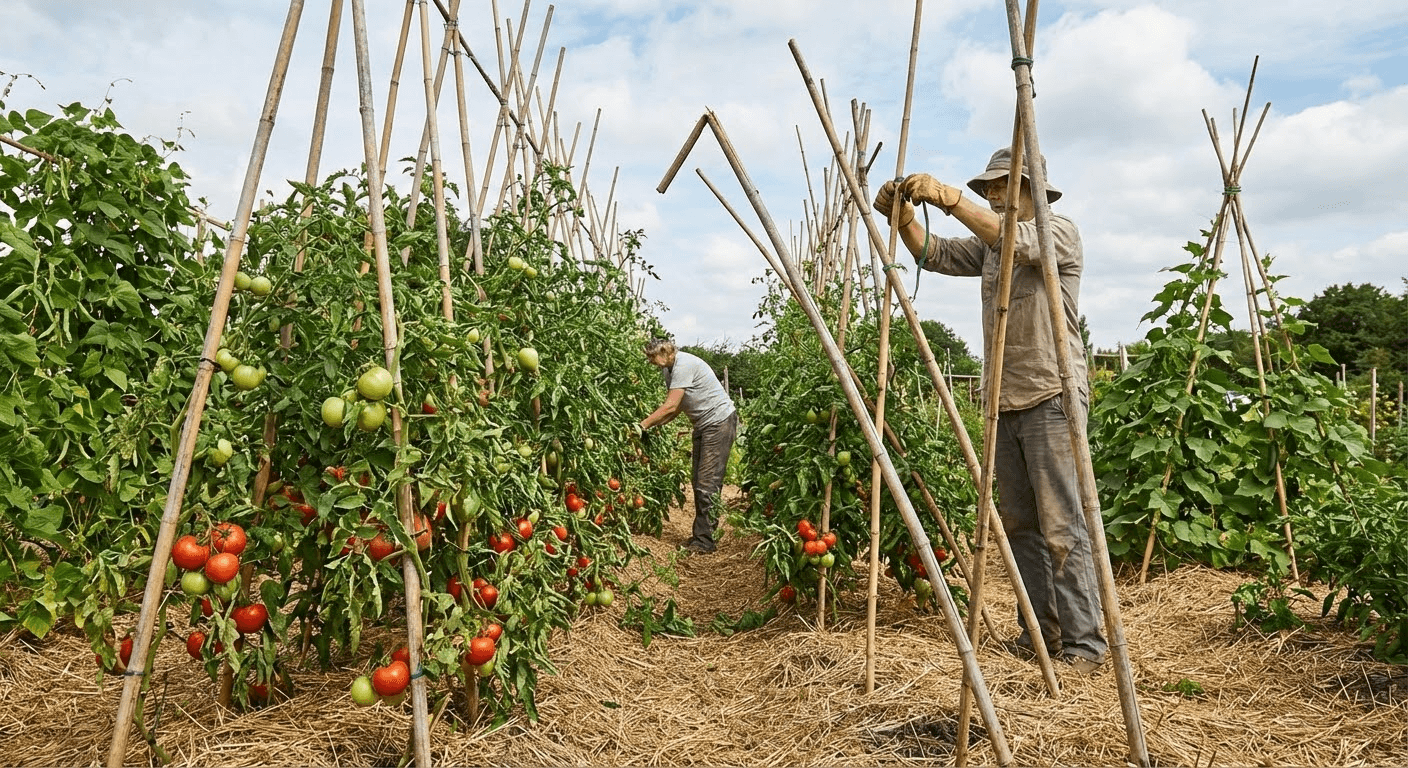
What “Tall” Means for Bamboo Stakes
Height selection by crop and training style
“Tall” should be defined by mature plant height and training method, not the plant’s height today.
Use this sizing rule:
-
Support height above ground = expected plant height × 0.7 to 0.9
-
Soil embed depth = 20% to 30% of the above ground support height
That 20% to 30% range is the number most people skip, then pay for later in leaning and broken stems.
Quick examples:
-
Indeterminate tomatoes reaching 7 feet. Aim for 5 to 6 feet above ground. Choose 7 to 8 foot tall bamboo garden stakes so you can bury 1.5 to 2 feet.
-
Pole beans and cucumbers on a teepee. A 6 to 8 foot structure often needs an anchor depth that keeps the legs from splaying, so longer stakes are safer than “exact height.”
Training style matters:
-
Single stem tomatoes. Taller stakes reduce top whip and make weekly tying easier.
-
Florida weave or row trellis. You can use slightly shorter stakes, yet extra height adds stability for twine layers.
-
Vines and climbing flowers. Tall stakes often serve as legs for A frames or teepees.
A helpful quote to keep your sizing honest: “Buy for August, not for May.”
Diameter and strength basics
Tall bamboo garden stakes behave like long levers. Thin stakes can work in calm sites, though they struggle when plants get heavy or wind is frequent.
Use a simple match approach:
-
Light support plants and flowers. Thinner stakes work if you tie gently and keep height moderate.
-
Medium vegetables and determinate tomatoes. Mid thickness stakes reduce bending.
-
Heavy fruiting indeterminate tomatoes, trellised crops, and soft soil. Thicker stakes or braced systems hold better.
A quick field test with a number you can use:
Push the installed stake by hand about 2 feet above the soil line. If it deflects more than 2 inches with a firm push, upgrade the system by going deeper, using a thicker stake, or adding an anchor post.
Material Quality Checklist for Tall Bamboo Garden Stakes
Species, wall thickness, and straightness
Bulk buying success starts with consistency. Two stakes can share a label length and diameter, while one survives a season and another splits on day one.
Inspect for:
-
Straightness. Roll the stake on a flat surface. Strong wobble means it will steer your plant and throw off twine lines.
-
Wall thickness. Thicker walls usually resist cracking and flexing better on tall stakes.
-
Nodes. Bamboo is often tougher near nodes. Stakes with reasonable node spacing tend to tolerate driving better.
-
Surface defects. Avoid long cracks, deep checking, or insect holes.
A practical sampling statistic you can set for your own operations:
Sample 30 stakes per pallet lot and track defect types. Many teams use a simple acceptance target like “visible splits or cracks under 5% of the sample.” It’s not a universal industry standard. It’s a clear internal benchmark that turns returns into measurable feedback.
Treatments and what they actually change
Some tall bamboo garden stakes are treated for mold or pest resistance. Treatment can help with extended outdoor exposure and storage, while untreated stakes can still perform well for a typical season if you dry and store them correctly.
What to decide up front:
-
One season use. Prioritize straightness and install method more than treatment.
-
Planned reuse. Treatment plus storage discipline matters more.
-
Plant contact and handling. Choose products that feel safe to touch and don’t shed splinters easily, and pair them with soft plant ties.
A simple quote to guide decision making: “Dry storage extends life more than any label claim.”
Installation That Prevents Leaning and Splitting
Placement and driving technique
Most bamboo splitting happens during install. Bamboo is strong along its fibers and weaker across them. Bad driving forces the fibers apart.
Step by step:
-
Place the stake 2 to 4 inches from the stem on the side that allows tying without rubbing.
-
Prioritize depth. For tall bamboo garden stakes, depth is stability.
-
In hard or rocky soil, make a pilot hole using a metal rod or rebar, then insert the stake. This reduces splitting and protects roots.
-
If tapping is needed, use a rubber mallet and strike near a node when possible.
-
Stop at the first sign of a developing crack. Replace that stake. Cracks grow once flexing begins.
An anonymized case study with a measurable outcome:
A small market garden crew switched from pounding stakes directly into compacted paths to pilot holes in beds. Their reset rate dropped from “several per row after storms” to “a few per block,” mainly because stakes went deeper and stayed straighter. The labor savings showed up in August, when the crop load was heaviest.
Ties, knots, and plant safe support
A strong stake still fails if the tie injures the plant. Ties should support without constricting.
Use these tying rules:
-
Use a figure eight tie so the stem and stake don’t grind against each other.
-
Leave room for growth. If the tie looks snug today, it will likely choke later.
-
Add tie points as the plant grows. Tall plants often need multiple tie points so the top does not whip.
Tie material comparison that buyers find useful:
-
Soft rubber or stretchy plant tape. Great for fast tying and stem protection, though it can degrade in sun over time.
-
Cloth strips or soft fabric ties. Gentle on stems, slower to install, reusable.
-
Jute twine. Affordable and decent for many crops, though it can tighten when wet and dry cycles repeat.
-
Plastic zip ties. Fast, strong, and risky on living stems. Reserve for non living bundles or attaching accessories to the stake, not for direct stem contact.
A numeric cadence that prevents most issues:
During rapid growth, check ties about once per week and loosen or move them as needed. That one habit prevents tie strangulation and reduces breakage during wind.
Longevity and Storage for Reuse
End sealing, drying, and off season storage
If you want reuse, treat bamboo like a tool. Most rot and mold problems come from storing stakes wet.
A reuse SOP:
-
Pull stakes on a dry day when possible.
-
Knock off soil and rinse if needed.
-
Dry with airflow in shade. Air movement matters more than heat.
-
Store off the ground in a dry, ventilated spot with some spacing between bundles.
Optional end sealing:
Sealing cut ends can reduce moisture absorption at the ends, which are often the first to soften. A small amount of prep can meaningfully extend the usable life of tall bamboo garden stakes for teams that reuse season after season.
A quick statistic style rule you can apply:
If a stake has a crack longer than 3 inches, noticeable soft spots near the buried end, or splinters that catch gloves easily, retire it from plant duty and downgrade it to lighter tasks.
When bamboo is the wrong choice
Bamboo has limits, especially for tall installations:
-
High wind sites with heavy crops may need metal anchors.
-
Permanent trellis systems usually perform better with rigid posts and wire.
-
Waterlogged sites shorten bamboo life, especially if stakes are stored wet afterward.
A reliable hybrid approach:
Use metal posts as anchors at intervals, then use bamboo as plant contact and intermediate supports. You get structural strength plus the plant friendly feel of bamboo.
Quote worth remembering: “Anchors carry the load, bamboo guides the plant.”
Bulk Buying Guide for Pros
Specs to standardize before you order
Bulk orders go smoothly when “tall” becomes a clear spec. Standardizing stake specs reduces crew confusion and keeps accessory fit consistent.
Include these on your purchase order:
-
Length and tolerance
-
Diameter range
-
Straightness check method and acceptable deviation
-
Treatment requirement, if any
-
Bundle count and packaging format
-
End finish requirements if you care about sealing or cut style
A compact Buyer Spec Sheet you can copy:
| Item | Your Spec |
|---|---|
| Length | ___ ft with ± ___ in tolerance |
| Diameter range | ___ to ___ |
| Straightness check | Roll test or max bow of ___ over length |
| Treatment | None or specify type |
| Bundle count | ___ per bundle, ___ bundles per pallet |
| End finish | Standard cut or sealed ends |
A measurable procurement tip:
Before you standardize, do a pilot order and run a small trial on 50 to 100 plants. Track stake failures and re tie labor. That mini trial often prevents an expensive mismatch at full pallet scale.
Packaging, shipping, and quality control for tall stakes
Long stakes can arrive with end damage or bending if packaging is weak.
Receiving checklist:
-
Inspect end protection and corners first.
-
Sample from top, middle, and bottom layers.
-
Look for crushed ends, long splits, and excessive curvature.
-
Photograph problems with bundle labels visible.
For operations that want fewer vendors and fewer shipments, Wellco Wholesale’s one stop wholesale model can help by consolidating tall bamboo garden stakes with complementary supplies like soft ties, twine, clips, and other garden and farm essentials, which reduces split deliveries and keeps crews stocked with matching accessories.
Safety and Handling
-
Wear gloves to reduce splinters, and eye protection if you cut stakes.
-
Use a rubber mallet when tapping stakes. Avoid hard hammer blows that can shatter fibers.
-
Keep ties loose enough to avoid stem damage. Plant strangulation is a hidden cause of yield loss.
-
If you use treated stakes, store them in ventilated areas and follow disposal guidance consistent with your local rules and your buyer requirements.
Frequently Asked Questions
How tall should tall bamboo garden stakes be for tomatoes?
For indeterminate tomatoes, many growers aim for 5 to 6 feet above ground support. That often means buying 7 to 8 foot stakes so you can bury enough depth for stability.
Do thicker bamboo stakes always last longer?
Thicker stakes usually resist bending and splitting better, though quality and installation matter just as much. A thin, straight stake installed deep with a pilot hole can outperform a thicker stake that was cracked during driving.
Can I reuse tall bamboo garden stakes next season?
Yes, if you dry and store them properly. Clean off soil, dry with airflow, store off the ground, and retire stakes that show long cracks, soft ends, or heavy splintering.
What’s the best way to tie plants to bamboo stakes?
Use a figure eight tie with a soft material, and leave room for growth. Check ties about once per week during rapid growth and adjust before they tighten on stems.
When should I switch to a mixed support system?
If your site is windy, your soil is soft, or your crops are heavy and tall, add anchor posts like metal T posts at intervals. Bamboo then works well as intermediate supports and plant contact points.