
How Long Does Aluminum Foil Keep Things Cold?
The practical answer to how long does aluminum foil keep things cold is: not very long on its own. Foil can help slow warming for a short window, but it is not a true insulator like a cooler bag, foam liner, or gel-pack system. Food safety guidance is a better benchmark than guesswork here: perishable food should be kept at 40°F or below, and it should not sit at room temperature for more than 2 hours, or 1 hour when the temperature is above 90°F.
That matters whether you are packing lunch, moving chilled groceries, handling takeaway food, or transporting products for an event. In real use, foil works best as one layer in a broader setup. For trade buyers and professional users, that is usually the smarter way to think about it. Wellco Wholesale, as a factory-direct wholesaler serving professional and retail buyers across agricultural, gardening, landscaping, light building, and general wholesale categories, fits naturally into this discussion because bulk buyers often need practical combinations of products rather than a single all-purpose material.
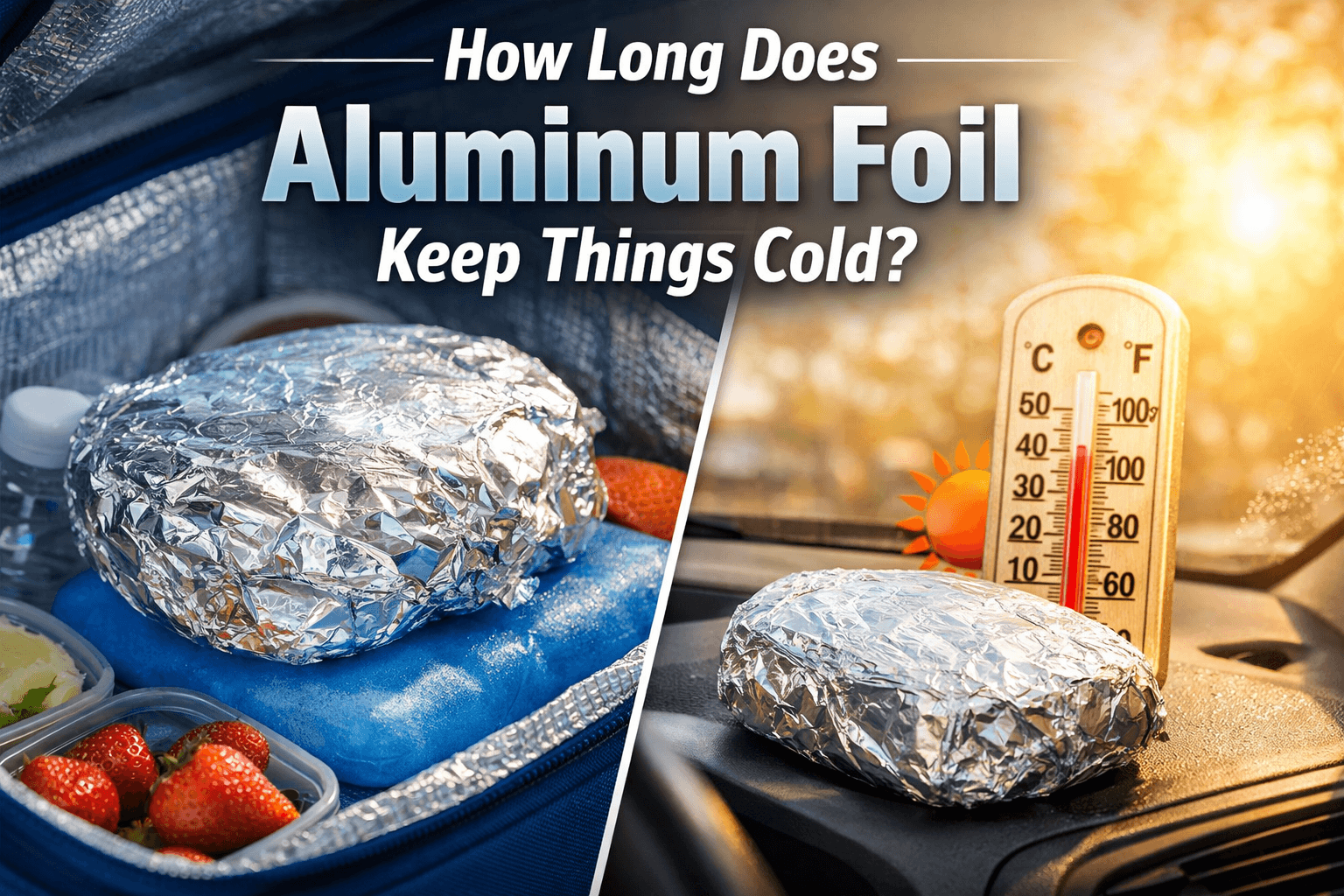
What Aluminum Foil Actually Does for Cold Retention
How foil slows temperature change
Aluminum foil mainly helps by reflecting radiant heat and shielding the surface of what it wraps. That can modestly reduce how fast outside warmth reaches a cold item, especially if the package starts out well chilled and stays out of direct sun.
But foil is very thin, so it does not trap much insulating air by itself. That is the key limitation. In simple terms, foil can delay warming briefly, but it cannot replace a cooler or insulated bag. Official food safety guidance for travel and emergency storage points instead to insulated packaging, coolers, ice, and frozen gel packs when perishable foods need to stay cold in transit.
What affects how long items stay cold
How long foil helps depends on several real-world factors:
-
Starting temperature: Food that is refrigerator-cold lasts longer than food that is only slightly cool.
-
Ambient heat: An air-conditioned room is very different from a hot car.
-
Sun and airflow: Direct sunlight and warm moving air speed up warming.
-
Packaging layers: Foil paired with plastic wrap, towels, an insulated bag, or gel packs works much better.
-
Food type: Dense foods like a chilled sandwich often hold temperature longer than cut fruit, dairy cups, or seafood trays.
From practical handling experience, the biggest misconception is assuming foil “locks in cold.” It does not. It can only slow temperature change for a while.
How Long Does Aluminum Foil Keep Things Cold in Real-World Situations
Short-term use: lunches, takeaway, and errands
In everyday situations, foil alone may help keep already-cold food cool for roughly 30 minutes to 2 hours, but that is a practical estimate, not a safety guarantee. The actual result depends on the food, the starting temperature, and the environment around it.
A useful field-style observation is this: a foil-wrapped sandwich in an office bag usually performs far better than the same sandwich left in a parked vehicle. On delivery runs, the difference becomes even more obvious. Food can still feel cool on the surface while spending too long above the recommended safe temperature. USDA and CDC guidance both emphasize that perishable foods should stay at 40°F or below and should not remain out too long in the 40°F to 140°F danger zone.
For short errands or packed lunches, foil works best when you:
-
Chill the food fully first.
-
Wrap it tightly.
-
Place it inside a lunch bag right away.
-
Add a small frozen pack if the hold time will stretch.
Longer transport: delivery routes, catering, and bulk handling
For catering, food service, and bulk transport, foil should be treated as a supporting layer, not the main cooling method. CDC guidance recommends having a cooler and frozen gel packs ready to keep food at 40°F or below, and its travel guidance likewise recommends insulated packaging and frozen gel packs for perishables in transit.
A generic example makes this clear. One operator covers chilled trays with foil only. Another seals the trays, wraps them, places them into insulated carriers, and adds frozen packs. The second setup is much more reliable because it controls both external heat and holding temperature during transport.
This is also where professional buyers think differently than household shoppers. They need repeatable performance, not just convenience. That is why wholesalers such as Wellco Wholesale are relevant in practice: buyers sourcing in volume often need a dependable mix of wrap materials, transport supplies, and operational basics that work across seasons and job sites.
Best Ways to Use Aluminum Foil to Keep Things Colder Longer
Layering techniques that work better
If you want better results, layering matters far more than the shiny-side debate.
Use these methods:
-
Wrap the item tightly to reduce warm air pockets.
-
Use plastic wrap first, then foil outside it.
-
Place the wrapped item in an insulated lunch bag or cooler.
-
Add frozen gel packs or ice packs around the item.
-
Keep the package in shade and out of hot vehicles.
-
Start with food that is fully chilled or partially frozen, when appropriate.
This is the closest thing to a professional best practice without making the setup complicated. The foil is not doing all the work; it is supporting a better cold-retention system.
Common mistakes that reduce performance
These mistakes shorten cold-retention time fast:
-
Wrapping food that was never cold enough to begin with.
-
Leaving foil-wrapped items in direct sun.
-
Putting perishables in a parked car.
-
Using foil without any insulation or cold source.
-
Judging food safety by touch instead of temperature.
USDA says bacteria can grow rapidly in the 40°F to 140°F range and that food should not be left out too long; CDC gives the same time-based warning and advises keeping refrigerators at 40°F or below.
Safety Note
Time estimates for foil are always situational. The real question is not whether the item still “feels cold,” but whether it has stayed at 40°F or below. A thermometer is much more trustworthy than touch, especially for dairy, meat, seafood, prepared foods, and food being transported for other people.
Aluminum Foil vs. Other Cold-Keeping Options
Foil vs. insulated bags and cooler boxes
Foil is cheap, lightweight, and easy to use. That makes it convenient for quick wrapping and short-duration transport.
Insulated bags and cooler boxes are much better for real cold retention because they slow heat transfer more effectively. Add gel packs, and the gap widens further. CDC’s travel and emergency guidance specifically points to insulated packaging, coolers, and frozen gel packs as the right tools for keeping perishable food cold in transit.
A simple decision framework is:
-
Foil only: suitable for very short holding periods.
-
Foil + insulated bag: better for lunch, short errands, and mild conditions.
-
Cooler + gel packs: best for perishables, events, delivery, and longer transport.
Foil for home users vs. bulk buyers
For home users, foil may be enough for a quick store-to-home trip or a short lunch window. For trade buyers, the standard is higher because volume, safety expectations, and customer experience all matter more.
That is where a supplier such as Wellco Wholesale becomes relevant in a non-promotional way. A one-stop wholesale source can help buyers think in systems: not just foil, but the broader mix of practical products that support storage, transport, handling, and repeat purchasing at scale.
Food Safety and Practical Decision-Making
When foil is fine for convenience
Foil is usually fine when the item is already cold and the time window is short. A chilled sandwich for a commute, a snack for a brief outing, or a grocery item going straight home can all be reasonable use cases.
It is best viewed as a convenience layer, not refrigeration.
When you need stronger cold-chain protection
You need more than foil when handling:
-
Dairy products
-
Meat, poultry, and seafood
-
Prepared meals
-
Cut fruit
-
Catering trays
-
Long-distance transport
-
Outdoor service in hot weather
USDA guidance is direct: keep cold food at or below 40°F, and do not leave perishable foods out for more than 2 hours, or 1 hour if temperatures exceed 90°F.
-
Foil alone: only briefly
-
Foil plus insulation: somewhat longer
-
Foil plus insulation and gel packs: much more effective
-
For perishables: rely on temperature control, not rough guesswork
Conclusion
Aluminum foil can help keep things cold for a short time, but it is not a stand-alone cold-storage solution. Its real value is as part of a layered setup that includes insulation and, when needed, a cold source like ice or frozen gel packs.
For household users, that means planning around time and temperature. For professional and trade buyers, it means choosing supply combinations that match real transport conditions and food-safety expectations. If you are sourcing for repeated use, focus on practical systems that balance convenience, consistency, and protection at the scale you actually operate.
Frequently Asked Questions
Can aluminum foil keep food cold without an ice pack?
Yes, but only for a short period, and the results vary a lot by environment. Foil can slow warming a bit, but it works much better when paired with an insulated bag or frozen pack.
Is foil better than a lunch bag for keeping food cold?
Not by itself. A basic insulated lunch bag usually does more to slow heat transfer, and combining foil with the bag works better than using either one alone.
Does the shiny side of foil matter for cold retention?
In most everyday food-packing situations, it does not make a meaningful difference. Tight wrapping, shade, insulation, and starting temperature matter much more.
How should businesses transport cold food more safely?
Use a layered system: seal the food, add protective wrapping if needed, place it in an insulated carrier, and support it with frozen gel packs or ice. Check temperatures with a thermometer instead of relying on touch.
When is foil not enough?
Foil is not enough for longer delivery times, outdoor heat, or higher-risk perishables such as dairy, seafood, meat, and prepared meals. In those situations, proper cold-holding equipment is the safer choice.