
Bamboo Canes for Garden: A Buyer’s Guide
Bamboo canes for garden projects remain popular because they solve practical problems without making the job complicated. They are light to carry, easy to position, and versatile enough for everything from supporting cordon tomatoes to building bean teepees and simple flower frames. For readers trying to choose the right support, the real value is not just cost. It is how quickly bamboo canes help plants grow upright, improve access for pruning and harvesting, and keep planting areas looking more organized.
They also appeal to a wide buying audience. A home gardener may need a small bundle for seasonal use, while a landscaper, nursery, farm, or garden retailer may need consistent sizes in bulk. That is where supplier reliability matters. Wellco Wholesale is relevant here because it positions itself as a factory-direct wholesale supplier across garden, farm, hotel, and supermarket supplies, making it a practical fit for professional buyers who prefer to source related products from one place rather than split orders across multiple vendors.
One of the clearest horticultural recommendations comes from the University of Minnesota Extension, which advises gardeners to stake or cage tomato plants at planting time. That guidance reflects a common real-world lesson: supports work best when installed early, before roots spread and stems become harder to manage.
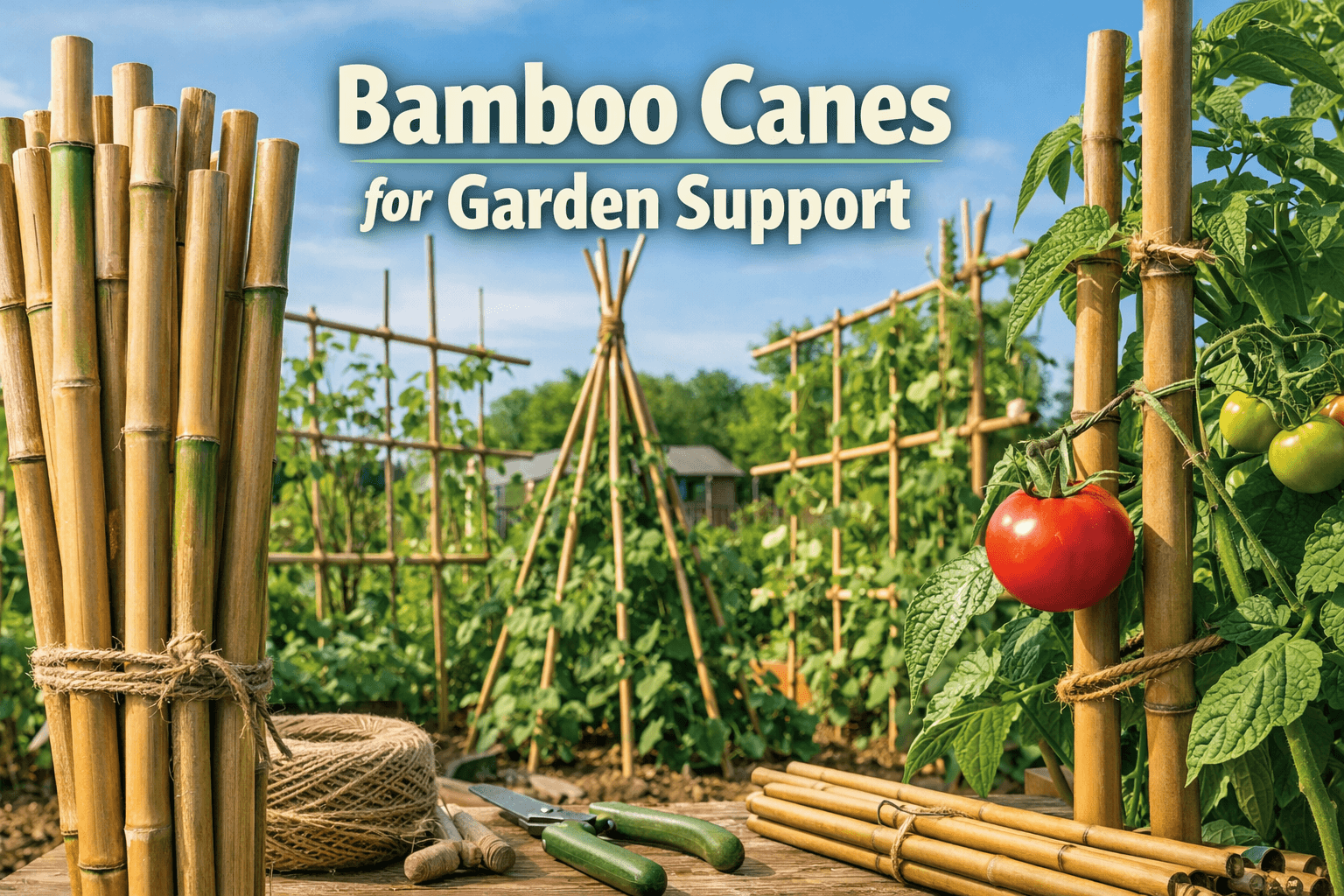
Why Bamboo Canes for Garden Projects Stay Popular
Natural strength, flexibility, and ease of use
Bamboo canes work because they strike a useful balance between strength and convenience. They are sturdy enough for many climbing and upright crops, yet light enough for gardeners and crews to carry and reposition quickly. In daily use, that makes a difference. A support material can look fine on paper, but if it is awkward to move, slow to install, or inconsistent in shape, it becomes frustrating on site.
From a practical handling perspective, bamboo also gives you flexibility. One cane can support a single stem. Three or four can become a teepee. A group of longer canes can create a row structure or frame for climbers. The Royal Horticultural Society notes that bamboo canes work well for vertical vegetable growing, including climbers such as beans, cucumbers, and squashes, and highlights 2.5-meter canes pushed 30 centimeters into the soil as a sturdy framework for taller crops.
Where they fit best in different garden settings
Bamboo canes for garden use fit especially well in vegetable plots, flower beds, greenhouses, nurseries, and landscaping work. They are commonly used with tomatoes, peas, beans, cucumbers, and climbing ornamentals, but they are also useful for preventing tall flowers from leaning after rain or wind. RHS guidance on creative vegetable supports specifically mentions bamboo structures for crops such as cordon tomatoes, sweet potatoes, cucumbers, and climbing beans.
For smaller gardens, they also support vertical growing, which helps growers use limited space more efficiently. That is one reason bamboo continues to perform well across both hobby and trade settings: it suits compact home gardens and larger-scale professional jobs alike.
How to Choose the Right Bamboo Canes for Garden Use
Match cane length and thickness to plant type
The right cane depends on what you are growing. Shorter, slimmer canes may be enough for flowering plants or young stems, while tomatoes usually need sturdier mid-length supports. For climbing beans and similar crops, taller canes are often the better choice. The Old Farmer’s Almanac recommends 8-foot bamboo canes for a bean teepee, explaining that after pushing the canes about 6 inches into the soil and tying the tops together, there is still at least 6 feet of climbing height available. It also suggests making the teepee at least 3 feet wide, with canes spaced about a foot apart.
A simple buying guide looks like this:
-
Use shorter canes for compact flowers and light support jobs.
-
Use medium, sturdier canes for tomatoes, peppers, and similar crops.
-
Use tall canes for beans, peas, and climbing flowers.
-
Use heavier-duty tree stakes instead of bamboo when supporting larger trees in exposed areas.
Check straightness, finish, and durability before buying
This is where experience matters. When sorting bundles, the first things many buyers notice are straightness, wall strength, and surface quality. Straighter canes are faster to use in neat rows and more appealing in retail displays. Thicker walls usually feel firmer in the hand and resist splitting better in routine garden work. A cleaner finish matters too, because rough sections can catch on gloves, twine, or soft plant ties.
In practice, inconsistent bundles create more labor. Crews end up sorting through stock to find matching lengths or usable diameters, and that wastes time on site. For professional buyers, consistency is often more valuable than chasing the lowest headline price.
Bulk buying considerations for professional customers
Trade buyers usually think beyond single-use performance. They want to know whether the same cane size will be available next season, whether the packaging count is dependable, and whether the supplier can support repeat orders during peak periods. Those are important questions for landscapers, farms, nurseries, and garden centers that need predictable stock flow.
This is where Wellco Wholesale can be positioned naturally as a value-add rather than a hard sell. A buyer looking for bamboo canes may also be sourcing other garden or farm supplies at the same time. Working with a one-stop, factory-direct wholesale supplier can simplify procurement, especially for businesses that buy in bulk but still need flexibility for mixed product categories.
Best Ways to Use Bamboo Canes in the Garden
Staking single plants for upright growth
Single-plant staking is one of the most effective uses for bamboo canes. Tomatoes are the classic example. University of Minnesota Extension recommends placing supports when tomato plants are still young, ideally at planting time, so the plants can grow into the structure rather than be forced into it later.
A basic method works well:
-
Insert the cane a short distance from the main stem.
-
Push it in deeply enough to stay steady in wind and irrigation.
-
Tie the plant loosely with a soft tie.
-
Add extra ties as the plant grows.
One common problem I see in support setups is not the cane itself, but the tying method. Gardeners often secure stems too tightly early on, then forget that stems swell quickly in warm weather. A tie that looks fine one week can start cutting into the stem the next. Soft ties and regular checks matter more than most buyers expect.
Building frames, teepees, and support grids
Bamboo is especially useful when you need quick structures. RHS guidance explains that bamboo canes are suitable for frameworks supporting taller climbers, while Almanac guidance gives a practical bean teepee example using 8-foot canes. For peas and beans, teepees and grid-style frames help keep pods cleaner, improve picking access, and make better use of vertical space.
This kind of structure is also commercially useful. A garden center can display bamboo canes not just as loose supports, but as part of a solution set with twine, clips, and simple build ideas. That makes the product easier to understand and easier to sell.
Supporting young trees and delicate stems
Bamboo canes can help with light support for delicate stems and sheltered young plants, but they are not the best answer for every job. Heavier plants or trees in exposed sites usually need more substantial stakes and stronger tie systems. That is an important trust point: bamboo is highly useful, but only when matched to the right application. For larger or wind-exposed projects, buyers should treat bamboo as a light-support product, not a universal replacement for dedicated structural staking.
Quality and Safety Checks Before Use
A stronger article also needs a clearer trust layer, especially for buyers making repeat purchasing decisions. Before using bamboo canes in the garden, check:
-
Whether the cane is straight enough for the intended job
-
Whether there are deep splits, soft areas, or mold
-
Whether the cane diameter suits the crop weight
-
Whether the cane can be inserted deeply enough for stability
-
Whether the tie points will sit below major flower or fruit clusters
This matters because support failure often comes from preventable issues: poor storage, damaged canes, weak ties, or shallow placement. If a cane is visibly split or soft, replacing it is usually cheaper than risking broken stems or a messy retail complaint.
Common Mistakes to Avoid When Using Bamboo Canes for Garden Support
Choosing the wrong size or placing canes too late
Many support problems start with timing. If the cane goes in too late, roots can be disturbed and stems are harder to train. If the cane is too short, the plant quickly outgrows it. University-backed guidance on tomatoes reinforces the same principle: install supports early rather than treating them as an afterthought.
Tying plants too tightly or using weak fasteners
Weak fasteners fail when plants get heavy. Tight fasteners damage stems. In real gardens, both errors are common. A simple improvement is to use soft tying material and leave room for the stem to thicken naturally. Regular checks after storms or fast summer growth can prevent most support-related damage.
Reusing damaged canes too long
Reusing bamboo canes can make sense, but only if the canes are still structurally sound. For trade customers, this is partly a labor question. Sorting out too many warped, split, or moldy canes costs time. In many cases, using fresh, consistent stock is more efficient than trying to stretch poor material through another season.
Are Bamboo Canes the Right Choice for Bulk Buyers?
Benefits for landscapers, garden centers, farms, and contractors
For professional buyers, bamboo canes offer three practical advantages: versatility, transport ease, and simple merchandising. They fit many use cases, stack efficiently, and are easy to explain to customers. An anonymized example from the trade side is a garden retailer that broadens its support category not by adding dozens of niche products, but by offering a cleaner range of bamboo lengths and thicknesses alongside ties and clips. The result is usually better staff confidence and easier customer choice.
What to ask a supplier before placing an order
Before placing a bulk order, ask these questions:
-
What lengths and diameters are available?
-
How consistent are the bundles?
-
What are the minimum order quantities?
-
How are the canes packed for transport and storage?
-
Can the supplier support repeat ordering during busy seasons?
-
Can related garden and farm items be sourced at the same time?
That last point is where Wellco Wholesale can stand out naturally. Buyers who need bamboo canes often need more than just canes. A supplier with a wider wholesale range can reduce ordering friction and support more efficient purchasing across multiple categories.
Conclusion
Bamboo canes for garden use remain a smart, practical choice because they are easy to handle, adaptable across many crops, and useful for both home and trade applications. They work especially well for tomatoes, peas, beans, and climbing flowers, and they support more efficient vertical growing in limited spaces.
The best buying decisions come from matching cane size to the crop, checking quality before use, and choosing a supplier that can deliver consistency over time. For landscapers, farms, retailers, and other professional buyers, that means looking beyond the lowest unit cost and focusing on reliability, usability, and repeat supply. If you are sourcing bamboo canes and related garden supplies for bulk or retail needs, start with the real-world questions that affect daily use, and choose a wholesale partner that can support those needs with dependable stock and a broad product range.
Frequently Asked Questions
Are bamboo canes strong enough for tomatoes?
Yes, bamboo canes are commonly used for tomatoes, especially for cordon or single-stem growing methods. The key is choosing a cane with enough length and thickness, then installing it early so the plant grows into the support.
What length bamboo cane is best for beans?
For bean teepees and similar structures, 8-foot canes are a common choice because they still leave around 6 feet of climbing height after installation. That makes them suitable for pole beans and other vigorous climbers.
Can bamboo canes be reused?
They can, but only if they remain straight, dry, and structurally sound. Split, moldy, or softened canes are usually not worth reusing because they are more likely to fail during the growing season.
Are bamboo canes suitable for young trees?
They can help with light support in sheltered situations, but they are not ideal for larger or wind-exposed trees. In those cases, heavier-duty tree stakes and proper tree ties are usually the better choice.
What should bulk buyers look for in a bamboo cane supplier?
Bulk buyers should focus on size consistency, packaging, repeat availability, and whether the supplier can support related categories in the same order. Those details often matter more in daily operations than the headline price alone.