
What Is Acoustic Panel and How Does It Work?
If a room feels “echoey,” people start talking louder, meetings feel more draining, and music loses detail. That’s the everyday pain behind the question “what is acoustic panel,” and it’s also why acoustic treatment is one of the highest ROI upgrades you can make in a reflective space.
An acoustic panel is a sound-absorbing product designed to reduce reflections inside a room. The goal is simple: reduce echo and reverberation so speech becomes clearer and audio sounds tighter. One key expectation: panels improve the sound inside the room. They do not reliably stop outside noise from coming in, and they rarely prevent your noise from leaking out.
For contractors and bulk buyers, you also need repeatable specs, dependable supply, and packaging that survives shipping and jobsite handling. Wellco Wholesale operates as a professional one-stop wholesaler serving trade customers and bulk buyers across many supply categories, which can be helpful when acoustic treatment is one line item inside a larger procurement plan.
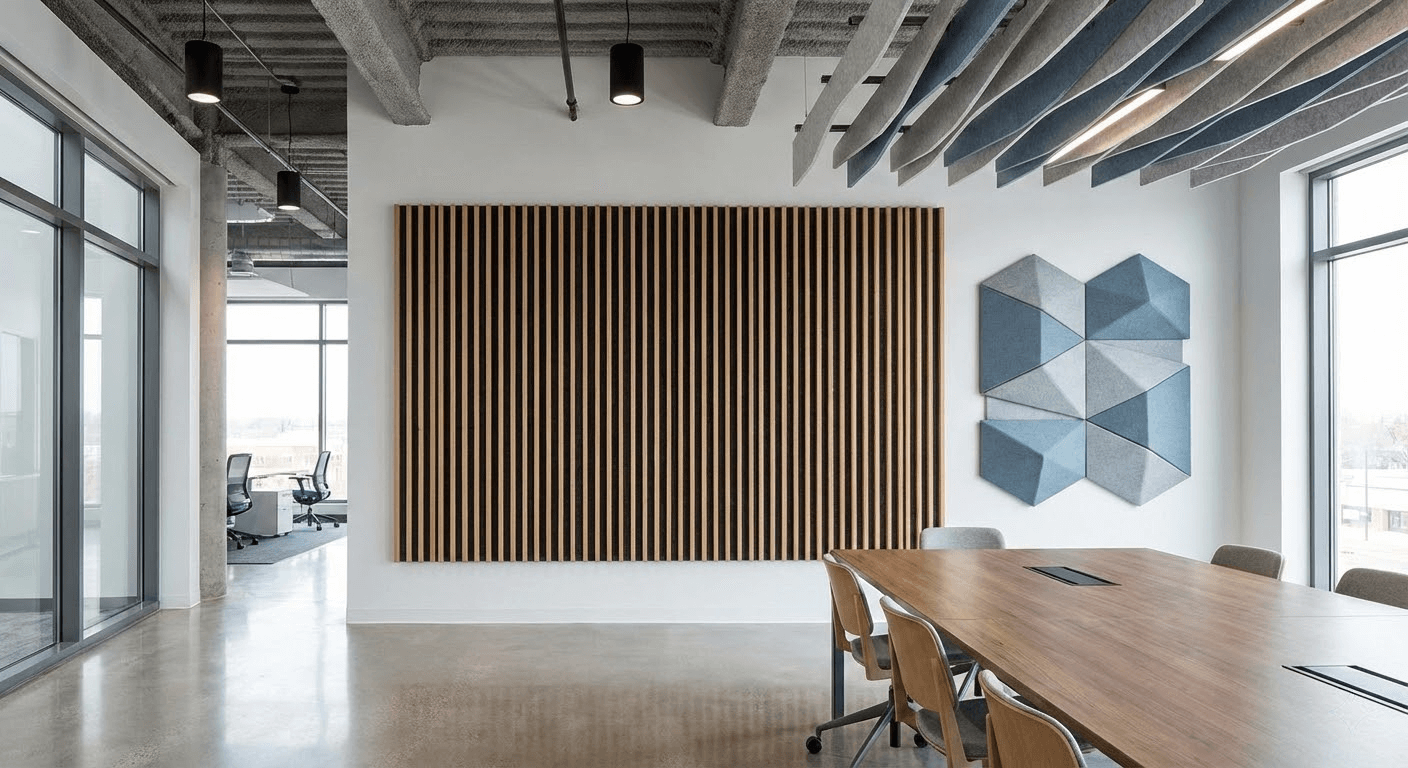
What is an acoustic panel
How acoustic panels reduce echo
Rooms sound “live” because sound reflects off hard surfaces like drywall, glass, concrete, tile, and large desks. Those reflections arrive shortly after the direct sound and blur clarity. Acoustic panels reduce that bounce by absorbing part of the sound energy instead of reflecting it back into the room.
A simple real-world signal: if a single clap creates a noticeable ring or flutter, the room is reflection-dominant. Another quick check is a 10-second voice memo. If consonants feel smeared or “washy,” early reflections are likely the culprit.
What acoustic panels do not do
Acoustic treatment and soundproofing solve different problems. Panels reduce reflections and shorten reverb. Soundproofing focuses on stopping noise transfer through walls, ceilings, doors, and gaps. If the complaint is “I can hear the next room,” the fix usually involves sealing air leaks, adding mass, and decoupling structures.
Keeping this distinction upfront prevents wasted budgets and disappointed stakeholders.
How an acoustic panel works
Core materials and construction
Most panels use porous, air-permeable materials. As air moves through the fibers, friction converts sound energy into tiny amounts of heat. Common constructions include:
-
Fabric-wrapped fiberglass or mineral wool for strong broadband absorption
-
PET felt panels for durable commercial installs and modern aesthetics
-
Foam panels for lightweight use cases, with performance varying widely by density and thickness
-
Wood slat acoustic panels that combine an absorptive backing with a decorative face
Thickness and spacing matter because deeper systems interact better with longer wavelengths. As a practical rule, increasing thickness and adding an air gap behind the panel generally improves performance, especially in the low-mid range.
How performance is measured in real buying decisions
Many products list NRC, a single-number summary of midrange absorption. NRC is useful for quick comparisons, yet it hides frequency detail. Two panels with the same NRC can behave differently at lower frequencies.
For buyers, a better habit is to look for:
-
Absorption coefficients by frequency band when available
-
Panel thickness and any recommended air gap
-
Whether data comes from published lab testing and how it translates to your room
If your goal is speech clarity, midrange absorption and placement around talker and listener zones matter most. If your goal is music or home theater, you’ll care more about balanced treatment and controlling strong early reflections.
Types of acoustic panels and where they fit best
Fabric-wrapped panels
These are a common “default choice” for meeting rooms, classrooms, studios, and home theaters. They tend to provide strong broadband absorption when built with effective cores and proper thickness.
Good fits:
-
Speech-forward rooms like conference spaces and classrooms
-
Listening rooms where early reflections need control
-
Multi-room commercial rollouts that need a consistent look
Watch-outs:
-
High-traffic zones may need tougher finishes or strategic placement
-
Specs like thickness and mounting hardware should be standardized early for smooth installation
PET felt panels and baffles
PET felt panels work well when durability and modular layouts are priorities. Hanging baffles and ceiling clouds can be especially effective in open rooms, where wall coverage alone cannot do the job.
Good fits:
-
Open offices, restaurants, lobbies
-
Spaces with limited wall real estate
-
Ceiling-heavy reflection problems
Wood slat acoustic panels
These are often chosen when acoustic treatment must double as a finished architectural surface. The slat face supports design goals, while the backing layer does the absorption work.
Good fits:
-
Feature walls, hospitality interiors, modern office build-outs
-
Projects where aesthetics drive approval
Watch-outs:
-
Performance varies widely by system depth and backing
-
Ask for published acoustic data and confirm the full assembly depth
Where to place acoustic panels for best results
High-impact placement rules
Placement often beats “buying the fanciest panel.” Start with the biggest reflection contributors:
-
First reflection points for speakers or primary listening positions
-
Back wall to reduce slapback and improve focus
-
Ceiling above desks, conference tables, or mix positions to reduce strong overhead bounce
A useful concept: early reflections can strongly affect perceived clarity, so treating those hotspots usually delivers the fastest improvement per panel.
A first-hand field note
On a small meeting room project with a glass wall and a big table, the complaint was predictable: people felt they had to “project” and still talked over each other. We treated the ceiling above the table first, then added side-wall panels at seated head height. The change was immediate: voices felt less sharp, and remote call audio sounded clearer. The biggest lesson was that placement solved more than quantity. We did not blanket the whole room, we targeted the strongest reflection paths.
You can replicate this approach with a simple workflow:
-
Identify the loudest reflection surfaces
-
Treat the ceiling and first reflection points first
-
Add back-wall coverage if slapback persists
Quick decision guide for bulk buyers
Below is a compact framework you can use when choosing what to buy and how much.
-
Define the primary goal:
-
Speech clarity: meeting rooms, classrooms, customer service areas
-
Listening quality: studios, home theaters, demo rooms
-
General comfort: open offices, hospitality, retail spaces
-
Match goal to common panel strategy:
-
Speech clarity: prioritize midrange absorption, focus on ceiling and wall reflections near talker and listeners
-
Listening quality: prioritize early reflection control and balanced coverage, consider deeper systems where possible
-
General comfort: favor scalable ceiling solutions and durable finishes
-
Choose practical specs to standardize:
-
Panel size and thickness
-
Mounting method and hardware
-
Finish, color, and cleanability requirements
-
Fire rating requirements based on the installation environment
Safety and installation considerations
For commercial and multi-room installs, these details protect the project and the people using the space:
-
Fire ratings: confirm the rating required for the building type and location of installation
-
Handling and encapsulation: some cores can shed fibers if not properly wrapped or sealed; plan safe handling during install
-
Mounting and load limits: verify wall type and fastener compatibility so panels stay secure over time
-
Cleaning and maintenance: specify what can be wiped, vacuumed, or spot cleaned without damaging performance
Results vary based on room size, surface materials, furniture, and placement. A simple measurement checklist helps reduce surprises:
-
Room dimensions and ceiling height
-
Major hard surfaces and their locations
-
Primary listening or speaking zones
-
Photos of walls and ceiling for mounting planning
Conclusion
What is acoustic panel in practical terms? It’s a tool for improving how a room sounds by absorbing reflections, reducing echo, and improving clarity. Pick the panel type that fits the space, prioritize placement at reflection hotspots, and standardize specs before ordering at scale.
CTA: build a room-by-room list of goals and surfaces, decide the first reflection points and ceiling needs, then request spec sheets and a bulk quote so you can lock in sizes, mounting methods, and lead times for a smoother rollout. Wellco Wholesale can support bulk purchasing across multiple supply categories for trade customers who need consistent supply and coordinated procurement.
Frequently Asked Questions
Frequently Asked Questions
How many acoustic panels do I need for a typical room
A good starting point is to treat the biggest reflection paths first, usually the ceiling above the main area and the side walls. Many rooms feel noticeably better once key reflection points are treated, then you can add more if slapback or harshness remains.
Do acoustic panels block outside noise
Panels mainly reduce echo and improve clarity inside the room. If outside noise is the problem, you will usually need sealing, added mass, and better doors or wall assemblies.
What thickness should I choose for better results
Thicker panels and deeper assemblies typically perform better, especially as you move toward lower frequencies. If you can add an air gap behind the panel, you often gain additional low-mid control without changing the visible thickness.
Are wood slat acoustic panels as effective as fabric panels
They can be effective, yet performance depends heavily on the depth of the system and the absorptive backing. Always compare published acoustic data and confirm the full assembly design before standardizing a bulk order.
What should bulk buyers confirm before placing a large order
Lock in panel dimensions, mounting hardware, finish consistency, fire rating needs, and packaging requirements. Also confirm lead times and plan for a small overage to cover damage, replacements, or layout changes.