
Heavy Duty Bamboo Stakes Garden: Bulk Buying Guide
If you’ve ever walked out after a windy night and found tomatoes leaning like they’re trying to escape the bed, you already know why “heavy duty” matters. A stake doesn’t fail on day one—it fails when the plant gets heavy, the ties get tight, and the soil gets soft after a soaking rain.
This guide is built for bulk buyers and serious growers looking for heavy duty bamboo stakes garden use: how to judge real “heavy duty” specs, pick sizes that won’t wobble, and buy in volume without getting stuck with warped bundles.
One practical advantage for trade customers is consolidating sourcing. Wellco Wholesale operates as a one-stop factory-direct wholesaler across garden, farm, landscaping, and light building supplies—helpful when you want consistent specs and fewer vendors to manage, without turning every purchase into a special project.
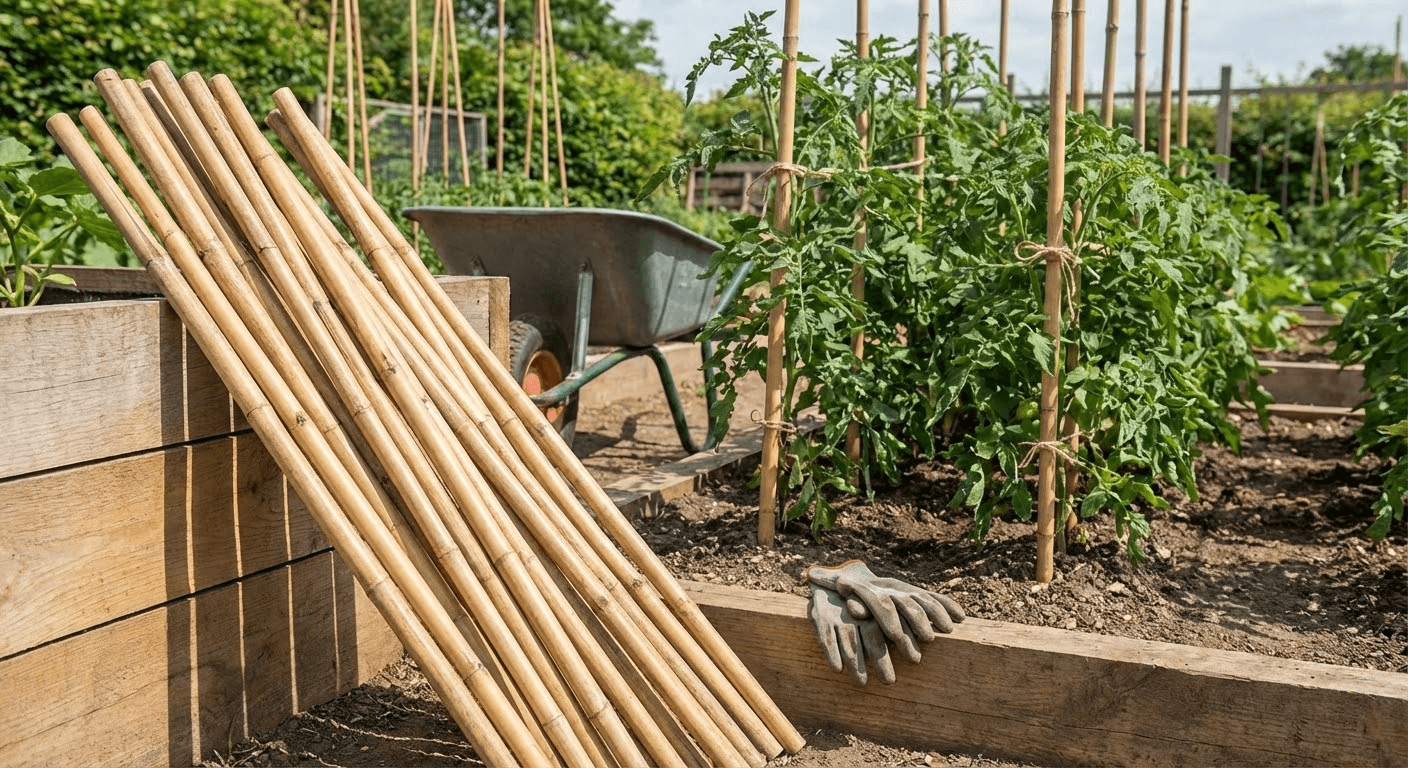
What “Heavy Duty” Really Means for Bamboo Stakes
“Heavy duty” isn’t a marketing sticker. In garden terms, it’s mainly:
-
Outside diameter (OD) for stiffness
-
Wall thickness for split resistance
-
Mature culm selection for consistent performance
Bamboo’s strength is well documented, but it varies by species, age, and testing method. Reported tensile strength commonly falls around 115–309 N/mm².
Important limitation: those numbers are from materials testing contexts; they don’t magically guarantee “structural” performance. In this article, “heavy duty” means garden/landscaping loads (vines, trellises, saplings), not building structures.
Quick quality cues you can verify on arrival
Before you ever reorder big, define “pass/fail” for bundles:
-
Straightness: mild curve is fine; strong bowing slows installs.
-
Cracks: tiny surface checks happen; deep lengthwise cracks are rejects.
-
Ends: clean cuts are ideal; shredded ends usually mean brittle drying.
-
Moisture/mold: musty smell or fuzzy growth suggests damp storage and shorter lifespan.
Best Uses for Heavy Duty Bamboo Stakes in the Garden
Heavy-duty bamboo pays off when plants create leverage and surprise weight:
-
Indeterminate tomatoes (especially in windy beds)
-
Pole beans, cucumbers, climbers on trellis lines
-
Raised beds and community gardens where supports get bumped and re-tied often
Extension guidance commonly recommends stakes in the 5–6 ft range for tomato staking systems and includes bamboo as a practical stake material.
UC Master Gardeners describe a traditional tomato approach using 6–8 ft stakes tied as the plant grows.
For landscaping and light site work, thicker bamboo stakes also work well for:
-
Sapling support (short-term)
-
Layout marking for edging/irrigation
-
Temporary netting support (bird netting, frost fabric)
A Practical Sizing Guide
Use three inputs:
-
expected plant height at peak
-
load (fruit + vine mass)
-
exposure (open/windy vs sheltered)
Here’s a simple sizing cheat sheet (rule-of-thumb guidance—soil and wind change everything):
-
Tomatoes (typical garden): 5–6 ft stake, medium diameter; sheltered beds
-
Tomatoes (tall + windy): 6–8 ft stake, thicker diameter; prioritize stiffness
-
Cucumbers/beans on trellis: stakes sized to trellis height; thicker if using as frame posts
-
Saplings: stake length depends on trunk height; choose thicker to resist flex
Rutgers Cooperative Extension notes tomato staking systems often use stakes about 4–8 ft tall, depending on the system.
Depth, stability, and “don’t-wobble” installs
Two common field rules:
-
Leave enough height for tie points after setting the stake.
-
Set it deep enough to stop wobble.
A common rule of thumb is burying about one-third of the total stake length for stability.
For tomatoes specifically, many guides recommend driving the stake at least ~12 inches into the ground (more in sandy/loose soil).
Experience note (what crews actually do):
In hard, dry clay, driving bamboo aggressively can split it—often near a node. The workaround is simple: make a pilot hole with a rebar/steel rod, then set the bamboo stake. It’s faster than replacing cracked stakes later.
Bulk Purchasing Math for Pros
Buying in bulk works best when you standardize to 1–2 primary sizes:
-
one “workhorse” stake for tomatoes and general support
-
one heavier option for windy rows or trellis frames
Planning steps:
-
Count plants (or linear feet of row)
-
Decide training method (single stake, weave, trellis)
-
Add an overage for breakage, mis-cuts, and replacements
A practical overage is often 10–15% (this is a planning assumption; your soil and handling will determine the real number). If your site is windy, rocky, or crews cut stakes on-site, lean higher.
Durability, Storage, and Reuse
Bamboo is strong, but soil contact + constant moisture will shorten its life. A review in BioResources notes untreated bamboo can have a service life of about 2–5 years, depending on conditions.
Storage and handling that extends lifespan
-
Keep bundles off wet ground (pallet + airflow)
-
Store under cover with ventilation
-
Avoid leaving stakes embedded all winter in saturated soil
-
End-of-season: inspect and cull cracked, soft, or moldy stakes
Experience note (fast “first 15 minutes after delivery” routine):
-
Open 2–3 bundles from different parts of the shipment
-
Count obvious rejects (severe bowing, deep cracks, mold)
-
If reject rate is high, document immediately (photos + bundle codes) before the stakes get distributed and mixed.
Safety and Limitations for Professional Buyers
Handling safety
-
Gloves reduce splinters (especially when breaking bundles)
-
Sand/cap sharp cut ends in high-touch areas (paths, pick-your-own farms)
Plant-safe tying
Use soft ties and leave room for growth. WVU Extension recommends tying with soft cord and allowing about ½ inch slack for the stem to expand.
That’s not just “plant care”—it reduces snapped stems and rework.
What to ask suppliers for (so every reorder matches)
If consistency matters, request:
-
diameter range/tolerance (example: “10–12 mm”)
-
bundle counts + labeling for inventory control
-
drying/moisture expectations and packaging method
-
replacement/claims policy for excessive warping/cracking
Where to Source Heavy Duty Bamboo Stakes in Bulk
For trade customers, wholesale sourcing is mostly about consistency: repeatable specs, stable supply, and packaging that doesn’t create a labor mess on arrival.
Wellco Wholesale positions itself as a factory-direct, one-stop wholesaler offering a wide variety of wholesale products (including garden and farm supplies), serving professional bulk buyers while also accommodating retail purchasing needs.
Bulk order checklist (simple and effective)
-
Request a sample bundle (or start with a smaller order)
-
Test drive the stakes: drive into your soil, tie plants, check splintering
-
On arrival: do a quick QC check—straightness, crack rate, moisture/mold smell, bundle counts
-
Store correctly immediately (dry, ventilated, off the ground)
Conclusion
The best “heavy duty” stake is the one you don’t have to replace mid-season. For heavy duty bamboo stakes garden use, prioritize diameter and wall thickness, size for plant height and wind exposure, set them deep enough to resist wobble, and store them like you plan to reuse them.
If you buy in bulk, standardize 1–2 sizes, start with a sample, and lock your specs before going big—your season will run smoother, and your labor hours won’t vanish into emergency re-staking.
Frequently Asked Questions
Are heavy duty bamboo stakes better than wood stakes?
They can be, especially when you want a lighter stake that’s still stiff and easy to cut. Performance depends heavily on bamboo maturity, diameter, and storage conditions—poorly dried bamboo can crack or bow just like cheap wood.
How deep should I put bamboo stakes into the ground?
A common guideline is burying about one-third of the stake length for stability, but soil type matters a lot. In loose or sandy soil, you’ll often need deeper placement than in firm soil to prevent wobble.
Do bamboo stakes rot if left outside?
They can. Unprotected soil contact and constant moisture reduce lifespan, and untreated bamboo is often reported in the 2–5 year service-life range depending on conditions. Good storage and seasonal inspection helps extend reuse.
What stake length is best for tomatoes?
Many systems use 5–6 ft stakes, while taller methods can use 6–8 ft depending on variety and training style. Choose based on your plant height, wind exposure, and how deep you need to set the stake.
What should I check when a bulk shipment arrives?
Check straightness, crack rate, mold/moisture odor, and bundle counts first. Open multiple bundles from different parts of the shipment so you’re not judging only the “good” edge bundles.
Word count: 1106
###END_ARTICLE