
Bamboo Canes vs Fiberglass Stakes
Choosing between bamboo canes and fiberglass stakes can look like a small buying decision, but it affects plant health, labor time, visual presentation, shipping cost, and reorder planning. A gardener may only need a few supports for tomatoes, while a landscaping contractor or reseller may need hundreds of pieces that stay consistent across jobs.
This guide helps you compare both options by use case, cost, durability, appearance, storage, and buying model. You will see where bamboo canes make the most sense, where fiberglass stakes justify the higher upfront price, and how mixed purchasing can help you avoid overbuying the wrong material.
Wellco Wholesale supports both trade buyers and individual shoppers with wholesale pricing, 1 piece MOQ, fast US shipping, and flexible sourcing for seasonal garden and landscaping supplies. That flexibility helps buyers test small quantities first, compare bamboo and fiberglass in one order, then scale into bulk purchasing or reseller fulfillment when the product fit is clear.
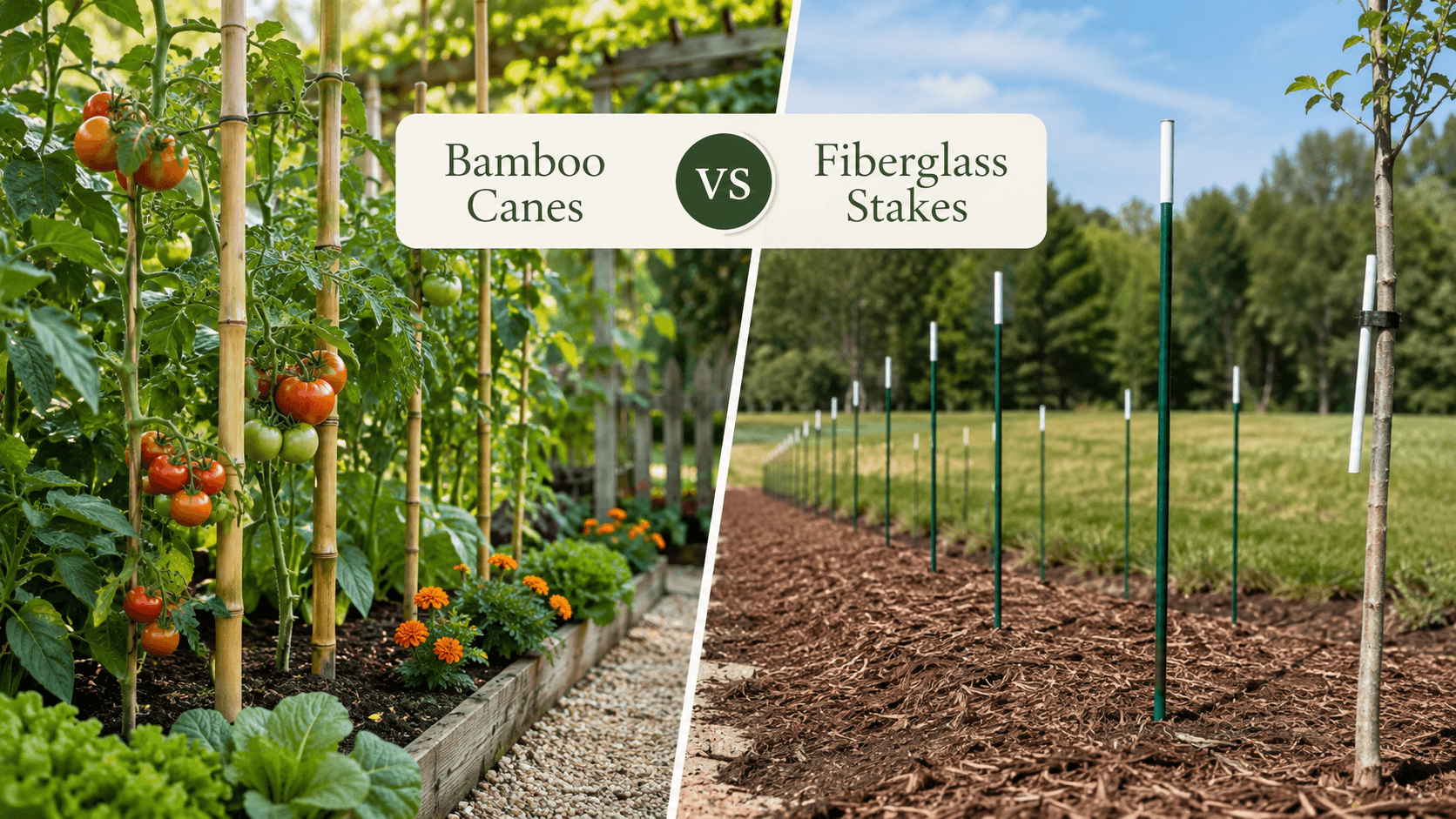
Bamboo Canes vs Fiberglass Stakes: Quick Comparison
Before looking at detailed applications, start with the practical difference: bamboo is a natural plant support with strong garden appeal, while fiberglass is an engineered stake built for repeatable performance. Buyers often compare the two by unit price first, yet field use usually depends on lifespan, storage, visibility, and how the stake will look in the finished project.
The table below breaks down the key differences between the most common buying factors, helping you choose the right product for your application:
| Factor | Bamboo Canes | Fiberglass Stakes | Best Fit |
|---|---|---|---|
| Appearance | Natural, organic look | Smooth, uniform, commercial look | Bamboo for visible gardens, fiberglass for utility use |
| Durability | Often seasonal to multi season depending on thickness and storage | Longer service life with strong weather resistance | Fiberglass for repeated reuse |
| Cost | Usually lower upfront | Higher upfront | Bamboo for budget sensitive projects |
| Flexibility | Moderate natural flex | Controlled engineered flex | Fiberglass for repeated bending stress |
| Sustainability appeal | Renewable natural material | Reusable synthetic material | Depends on project lifespan and disposal plan |
The main takeaway is simple: bamboo works best when appearance and seasonal value lead the decision, while fiberglass fits projects where reuse, visibility, and consistency reduce labor and replacement costs.
What is the main difference between bamboo canes and fiberglass stakes?
Bamboo canes are natural, lower cost plant supports with a warm garden appearance, while fiberglass stakes are engineered supports designed for consistent sizing, weather resistance, and repeated reuse. Bamboo fits visible seasonal garden work best, while fiberglass performs better in marking, commercial, and long term support tasks.
That difference matters because buyers rarely purchase stakes for one reason only. A garden center may care about how attractive bundled supports look on a retail rack. A contractor may care more about whether a crew can reuse the same stakes across multiple jobs without sorting broken pieces.
Bamboo canes vary naturally in diameter, taper, color, and node spacing. Fiberglass stakes usually come in more uniform diameters and lengths, which helps when a buyer needs repeatable installation across rows, driveways, or job sites.
The right choice starts with the job, the load, and the expected reuse cycle.
When Bamboo Canes Are the Better Choice
Bamboo works especially well when appearance, affordability, and simple plant training matter most. In vegetable gardens, raised beds, nursery displays, and decorative landscapes, bamboo canes blend into the environment instead of drawing attention away from the plants.
A practical spec to check is cane diameter. Thin canes may suit peas, beans, and light vines, while thicker canes provide better support for tomatoes, young ornamentals, and temporary fencing. For many seasonal garden projects, buyers choose different lengths in the same order so they can match support height to plant growth stage.
Best uses for bamboo canes
Bamboo canes are a strong fit for tomato supports, climbing beans, peas, young shrubs, plant labels, garden borders, temporary fencing, and event decor. They also work well for garden center retail bundles because the material looks familiar, natural, and easy for consumers to understand.
For a practical field example, a landscape crew installing spring beds might sort bamboo into three groups before work begins: light canes for beans and peas, medium canes for tomatoes, and thicker canes for young ornamentals or temporary borders. That small sorting step helps crews move faster and reduces the chance of using undersized support for heavier plants.
For a small garden, a few pieces may be enough. For a nursery or landscape crew, bundle count, straightness, and diameter consistency become more important. A crew installing supports across dozens of beds will work more efficiently when the canes arrive sorted by usable size.
How long do bamboo canes last outdoors?
Bamboo canes commonly last one or more growing seasons outdoors, depending on thickness, climate, soil contact, and storage. Thicker canes usually last longer than thin canes. Keeping unused stock dry and reducing constant wet soil contact can extend their usable life.
Outdoor life depends heavily on moisture. A cane pushed deep into wet soil may weaken faster than one used in a dry raised bed or tied to a trellis frame. Sun exposure, freeze thaw cycles, and plant weight also influence how long it stays usable.
Bulk buyers should plan for a realistic replacement rate instead of assuming every cane will return to storage in perfect condition. For seasonal garden support, that expectation keeps budgets cleaner and avoids spring shortages.
Buying guide tip: what to check before ordering bamboo canes
When ordering bamboo canes, check length, diameter, straightness, dryness, splitting, and packaging. Also check how much cane length will remain above ground after installation. A 6 foot cane may only provide around 5 feet of usable support if 12 inches need to be embedded for stability.
Soil moisture and wind exposure should influence your sizing choice. Wet soil may require deeper embedment, while windy sites may need thicker canes or extra ties. A cane that works in a protected raised bed may feel too light in an open landscape installation.
If you are buying for resale, visual consistency matters. If you are buying for field use, strength and usable length matter more. Bamboo canes can offer strong value when the project needs a natural look, moderate support, and seasonal performance.
When Fiberglass Stakes Are the Better Choice
Fiberglass stakes become more attractive when the job requires durability, repeat use, visibility, or precise sizing. They are common in commercial landscaping, tree support, driveway marking, greenhouse alignment, farm paths, and row marking.
A typical buying decision may involve diameter, length, color, surface finish, cap options, pointed ends, and reflective tape. Those details sound small, but they matter when workers need to install hundreds of stakes quickly and identify them from a distance.
Best uses for fiberglass stakes
Fiberglass stakes are a good fit for young tree support, driveway markers, row markers, greenhouse layout, utility marking, farm paths, and commercial landscaping. They can also support situations where uniform length and color make installation easier to manage.
For example, a farm supply buyer may prefer fiberglass when customers need high visibility markers for winter, traffic edges, or utility zones. A landscaping crew may prefer them when reuse across jobs lowers the cost per season.
Fiberglass can also help when dimensional consistency matters. If every row marker, tree support, or driveway marker needs the same height above ground, uniform stakes reduce sorting time and make finished work look cleaner.
Are fiberglass stakes worth the higher upfront cost?
Fiberglass stakes can be worth the higher upfront cost when repeated reuse, consistent sizing, weather resistance, or high visibility reduces labor and replacement costs. For short term decorative garden support, bamboo canes may offer better value. The better choice depends on cost per season, not only cost per piece.
The lifecycle calculation changes the buying decision. A cheaper stake that needs replacement every season may cost more over time than a stronger stake reused across multiple installations. Labor also matters because crews lose time sorting damaged supports, replacing failed stakes, or reordering during peak season.
Fiberglass has another advantage in predictable storage. Uniform stakes stack cleanly, ship more predictably, and simplify warehouse handling for distributors and resellers.
Fiberglass can justify the higher initial budget when reuse, visibility, or dimensional consistency directly reduces labor and replacement costs.
Cost, MOQ, and Bulk Buying Factors
Price per unit matters, but serious buyers also compare replacement cycles, shipping weight, packaging, storage loss, and reorder timing. A landscaper restocking before spring may choose bamboo for visible garden installations and fiberglass for reusable marking tasks.
The table below shows how bulk buying factors can change the final decision:
| Buying Factor | Bamboo Canes | Fiberglass Stakes | Why It Matters |
|---|---|---|---|
| Upfront unit cost | Usually lower | Usually higher | Affects seasonal project budget |
| Replacement cycle | More frequent | Less frequent | Changes long term cost |
| MOQ flexibility | Useful for testing sizes before larger buys | Useful for trial orders before commercial use | Reduces inventory risk |
| Shipping and storage | Bundles may vary by size and natural shape | Uniform pieces stack predictably | Impacts warehouse handling |
| Resale appeal | Strong for garden and decor buyers | Strong for utility and commercial buyers | Helps resellers plan listings |
The key buying lesson is to compare total project cost, including replacement and handling, rather than judging the products by the first invoice alone.
How should you compare cost for bulk orders?
Start with cost per piece, then calculate cost per season. Add expected replacement rate, freight impact, storage needs, and the chance of size mismatch. For resellers, also consider how easy each product is to explain in listings and how often customers may reorder.
Above ground height and embedment depth also affect cost planning. If a support needs 12 to 18 inches in the soil, buyers should order enough length for both stability and plant height. Undersized stakes can create hidden costs because crews may need extra ties, replacements, or rework.
Wellco Wholesale’s flexible 1 piece MOQ can help buyers test cane sizes, fiberglass stake styles, or mixed product groups before committing to larger inventory. For trade orders, the California warehouse, free shipping over $300, and blind drop shipping support can also help reduce fulfillment friction.
A lower unit price helps only when the product fits the job and reaches the buyer on time.
Appearance, Sustainability, and Customer Expectations
After cost, the next decision is how the support will look and how customers will interpret the material. Bamboo gives gardens a warmer, more natural look. Fiberglass gives landscapes, farms, and utility areas a cleaner and more uniform appearance.
Retail gardeners often respond well to bamboo because it fits the visual language of raised beds, cottage gardens, mulch, and edible planting. Commercial buyers may care less about appearance if the stake must stay visible, straight, and reusable.
Which option looks better in a garden?
Bamboo usually looks better in decorative garden settings because it blends with plants, soil, mulch, and timber beds. It supports a natural style without making the support system feel too industrial.
Fiberglass can still look clean and professional, especially in organized nursery rows or utility areas. Bright colors can also help workers see rows, paths, and hazards quickly.
The better visual choice depends on whether the support should disappear into the garden or stand out for safety and workflow.
Sustainability considerations buyers should weigh
Bamboo is a renewable natural material and can be a strong choice for buyers who want plant supports with a lower impact visual story. Fiberglass does not biodegrade like bamboo, yet its longer reuse cycle may reduce replacement frequency.
That means sustainability is not only about the material itself. Project lifespan, storage habits, disposal plan, and customer expectations all matter. A seasonal decorative garden may favor bamboo, while a commercial marking program may reduce waste by reusing fiberglass stakes year after year.
The best environmental choice depends on how the product will actually be used, stored, reused, and retired.
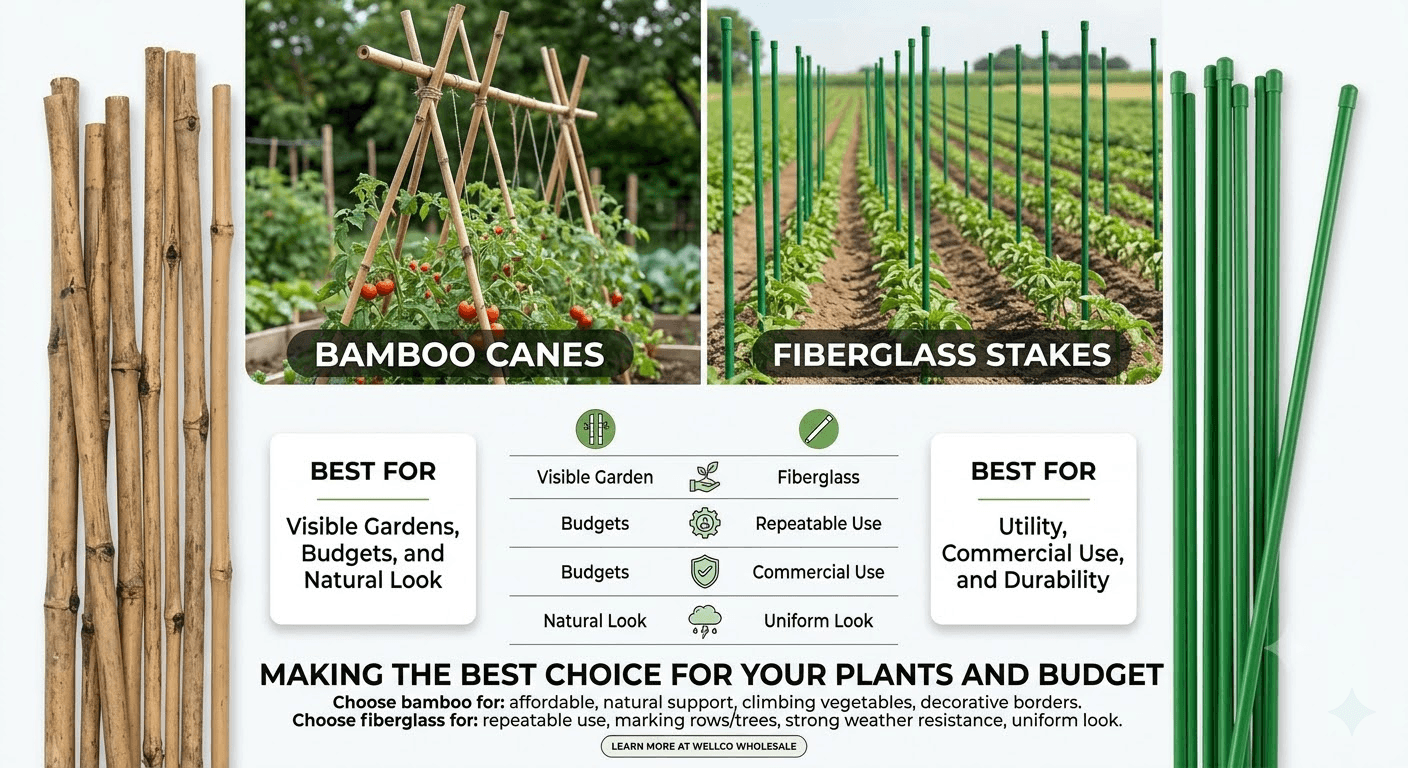
Application Based Recommendation Guide
Once you understand cost, lifespan, and appearance, the easiest way to decide is by matching each material to the job. Most buyers do not need one material for every situation.
The table below translates common use cases into practical buying recommendations:
| Use Case | Recommended Option | Key Reason |
|---|---|---|
| Tomato and bean support | Bamboo canes | Natural look and low seasonal cost |
| Young tree staking | Fiberglass stakes or thick bamboo canes | Depends on support load and reuse needs |
| Garden center retail bundles | Bamboo canes | Strong consumer appeal |
| Driveway or row marking | Fiberglass stakes | Better visibility and repeated reuse |
| Decorative event or landscape design | Bamboo canes | Warmer appearance |
| Commercial crews reusing inventory | Fiberglass stakes | More predictable long term performance |
The table shows why many buyers benefit from mixed sourcing: one material can handle customer facing garden work, while the other can handle repeat use and marking tasks.
Can you use both bamboo canes and fiberglass stakes in one project?
Yes, many buyers use both materials in the same project. Bamboo canes work well where appearance and low seasonal cost matter, while fiberglass stakes suit repeated use, marking, and higher exposure areas. Mixed purchasing helps landscapers, nurseries, and resellers match each product to its strongest role.
For example, a landscape contractor may use bamboo around visible planting beds and fiberglass along service paths or exposed areas. A nursery may sell bamboo bundles to retail customers while keeping fiberglass stakes for internal row marking.
Resellers can also benefit from carrying both. Bamboo may attract garden and decor shoppers, while fiberglass can serve buyers looking for utility markers, farm supports, or reusable commercial stakes.
A mixed inventory often gives buyers the best balance of appearance, durability, and margin.
Practical Selection Checklist Before You Buy
A good purchasing decision starts with the real load, installation site, and buyer expectation. Before ordering, confirm how the stake will be used, how long it needs to last, and whether appearance or reuse matters more.
For light vines, vegetables, decorative borders, and short seasonal projects, bamboo canes often provide enough strength at a lower upfront cost. For heavier loads, windy sites, repeated installation, or visibility needs, fiberglass may be the safer choice.
Check the plant or project load
Light plants need less support than young trees, heavy tomatoes, or exposed landscape installations. Match cane or stake thickness to plant weight, expected growth, and wind exposure.
A practical rule is to size the support for the mature plant, not the seedling. Undersized supports may look fine at installation but fail when plants become heavier later in the season.
Check sizing and installation conditions
Consider how much length will stay above ground and how much will be embedded in soil. A tall support with shallow embedment can lean, especially in wet soil or open wind.
Also check whether the stake must be visible to workers, drivers, or customers. Natural bamboo may look better in a garden bed, while colored fiberglass can perform better where visibility affects safety or workflow.
Check storage, shipping, and resale requirements
Bamboo should stay dry in storage, and buyers should inspect for splitting, excessive bend, or appearance issues before display. Fiberglass should be checked for surface finish, caps, and safe handling.
For resale, think about packaging and customer expectations. Garden shoppers may want attractive natural bundles, while commercial buyers may prioritize uniform specs, repeat supply, and clear product descriptions.
A checklist prevents overbuying and helps every stake serve a clear purpose.
Conclusion
Bamboo canes are a strong choice when you want natural appearance, low upfront cost, and reliable seasonal garden support. They fit vegetables, climbing plants, decorative landscapes, and retail garden bundles especially well.
Fiberglass stakes make more sense when you need consistent sizing, reuse, visibility, and longer service life. They are strong candidates for commercial crews, row marking, driveway marking, tree support, and repeat use inventory.
For bulk buyers, the smartest comparison is cost per season. Many landscapers, nurseries, and resellers get the best results by using bamboo for visible garden work and fiberglass for utility or long term tasks.
Choose the material that matches your project load, appearance goals, storage setup, and reorder plan.
[Shop Wellco Wholesale's full range with 1 piece MOQ and free shipping over $300 →]