
Garden Bamboo Stakes Guide for Plant Support
A healthy garden can still lose yield when stems lean, vines sprawl, or fruit touches wet soil. That is why a simple support supply, such as a bamboo stake, often becomes one of the most useful items in a growing season.
This guide helps you choose garden bamboo stakes for plant support, garden layout, small farm planting, resale, and seasonal restocking. You will learn which plants need support, how to choose the right size, how bamboo compares with plastic and metal stakes, and what to check before buying in small or bulk quantities.
What Are Garden Bamboo Stakes?
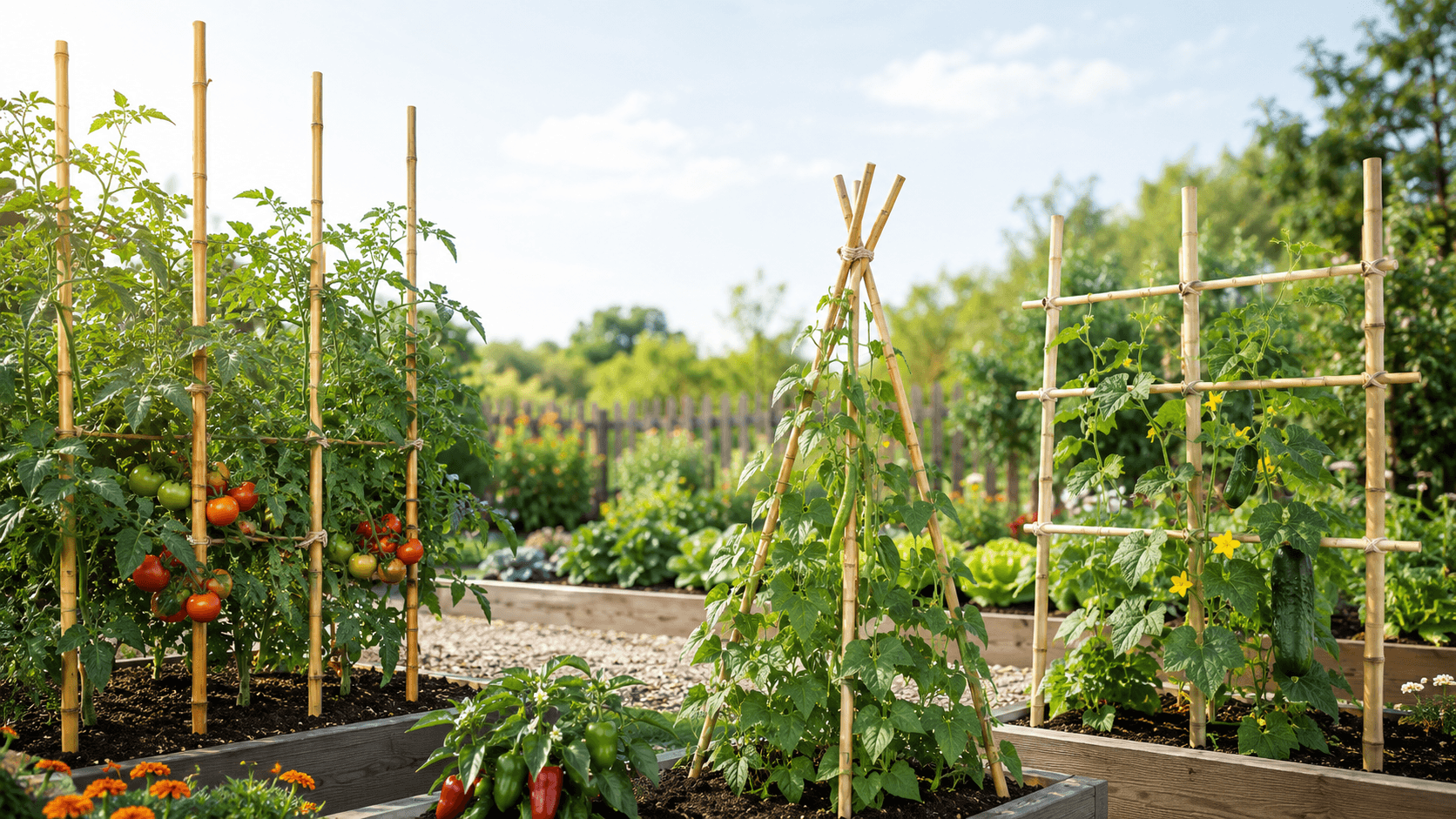
Garden bamboo stakes are cut bamboo poles used to support plants, guide climbing growth, mark rows, frame lightweight structures, and organize garden beds. Common lengths range from about 2 feet for seedlings and flowers to 6 feet or longer for tomatoes, beans, cucumbers, and climbing vines.
Bamboo works especially well in seasonal gardens because it is light, easy to carry, and simple to install with twine, clips, or garden tape. For buyers managing multiple beds or customer projects, the right stake size can reduce plant damage and make maintenance easier throughout the season.
What are garden bamboo stakes used for?
Garden bamboo stakes are used to keep plants upright, guide climbing stems, reduce bending, and create simple garden structures. They work for vegetables, flowers, young shrubs, row markers, temporary fencing, and DIY trellises because bamboo is lightweight, easy to install, and natural looking outdoors.
For home gardeners, bamboo stakes help keep tomatoes, peppers, and flowers cleaner and more organized. For small farms and landscapers, they help standardize plant support across rows, raised beds, and seasonal installations.
Why bamboo works well for plant support
Bamboo gives gardeners a practical balance of weight, strength, and appearance. A 4 foot to 6 foot stake is easy to move in bundles, but still firm enough for many annual vegetables when installed correctly.
The key is matching the stake to the crop. Fruiting plants, windy locations, and loose soil usually need thicker stakes, deeper placement, or multiple supports tied together as a teepee or trellis.
Common users: home gardeners, small farms, landscapers, and resellers
A home gardener may only need 10 to 25 pieces for a few raised beds. A small farm, nursery, landscaper, or online reseller may need hundreds before the spring planting rush.
That buying pattern affects what matters most. Retail shoppers usually focus on project fit and shipping speed. Trade buyers often care about unit cost, bundle consistency, reorder availability, packaging, storage, and lead time.
Getting the basics right first makes the next step easier: choosing bamboo for the benefits that match your actual use case.
Key Benefits of Garden Bamboo Stakes
Bamboo stakes remain popular because they solve several garden problems at once. They support plants, keep beds tidy, and blend into outdoor spaces without making a garden look overly industrial.
Natural appearance for garden design
Bamboo has a warm, organic look that works well in vegetable beds, flower borders, patio planters, and landscape displays. You can use it for simple plant support or turn it into visible garden features such as teepees, fan trellises, borders, and small decorative frames.
For garden designers and landscapers, this matters. A natural material often looks better in customer facing spaces such as hotel gardens, patio areas, community gardens, farm stands, and residential landscapes.
Lightweight strength for vegetables, vines, and flowers
Bamboo stakes are easy to carry, reposition, and install. For tomatoes or cucumbers, a practical method is to tie the main stem loosely every 8 to 12 inches as the plant grows.
This spacing keeps support consistent without choking the stem. Use soft garden twine, plant clips, or garden tape, especially on tender stems that can bruise under rough ties.
Renewable material for eco conscious gardening
Many gardeners choose bamboo because it feels more natural than plastic. It also fits well with gardens that already use jute twine, biodegradable pots, composting systems, and other low waste supplies.
Bamboo still needs proper care. If you leave it in wet soil year round, it may weaken faster. Buyers in very wet climates or permanent installations should inspect stakes more often and consider heavier long term supports for large shrubs or heavy loads.
Cost value for seasonal planting and repeat purchases
Bamboo stakes can offer strong value when you need many supports at a manageable unit cost. The value comes from easy handling, repeat seasonal use, simple storage, and the ability to standardize support sizes across similar plants.
The table below breaks down the key differences between the most common stake options, helping buyers choose the right support for each application:
| Feature | Bamboo Stakes | Plastic Stakes | Metal Stakes |
|---|---|---|---|
| Appearance | Natural and garden friendly | Bright, uniform, and more visible | Clean but more industrial |
| Best use | Vegetables, vines, flowers, light layouts | Wet areas, labels, reusable markers | Heavy plants and long term support |
| Handling | Lightweight and easy to cut or tie | Lightweight and consistent | Heavier but strong |
| Seasonal reuse | Good with dry storage | Good if UV resistant | High if rust resistant |
| Buyer fit | Gardeners, small farms, landscapers, resellers | Retail garden projects and labeling | Heavy duty or permanent installations |
Bamboo is a strong option when you want plant support that looks natural, installs quickly, and works well for seasonal growing projects.
Best Uses for Garden Bamboo Stakes
After choosing bamboo as a support material, the next decision is where to use it. Bamboo performs best when the plant weight, wind exposure, and soil conditions match the stake size.
Which plants need bamboo stake support?
Plants with tall stems, heavy fruit, climbing habits, or soft young growth often need bamboo stake support. Tomatoes, beans, cucumbers, peppers, dahlias, young shrubs, and flowering vines are common examples. The stake helps guide growth, reduce bending, and keep leaves or fruit off the soil.
Short stakes work well for seedlings, herbs, row markers, and small flowers. Taller stakes work better for plants that keep growing upward through the season.
Tomatoes, beans, cucumbers, peppers, and flowering vines
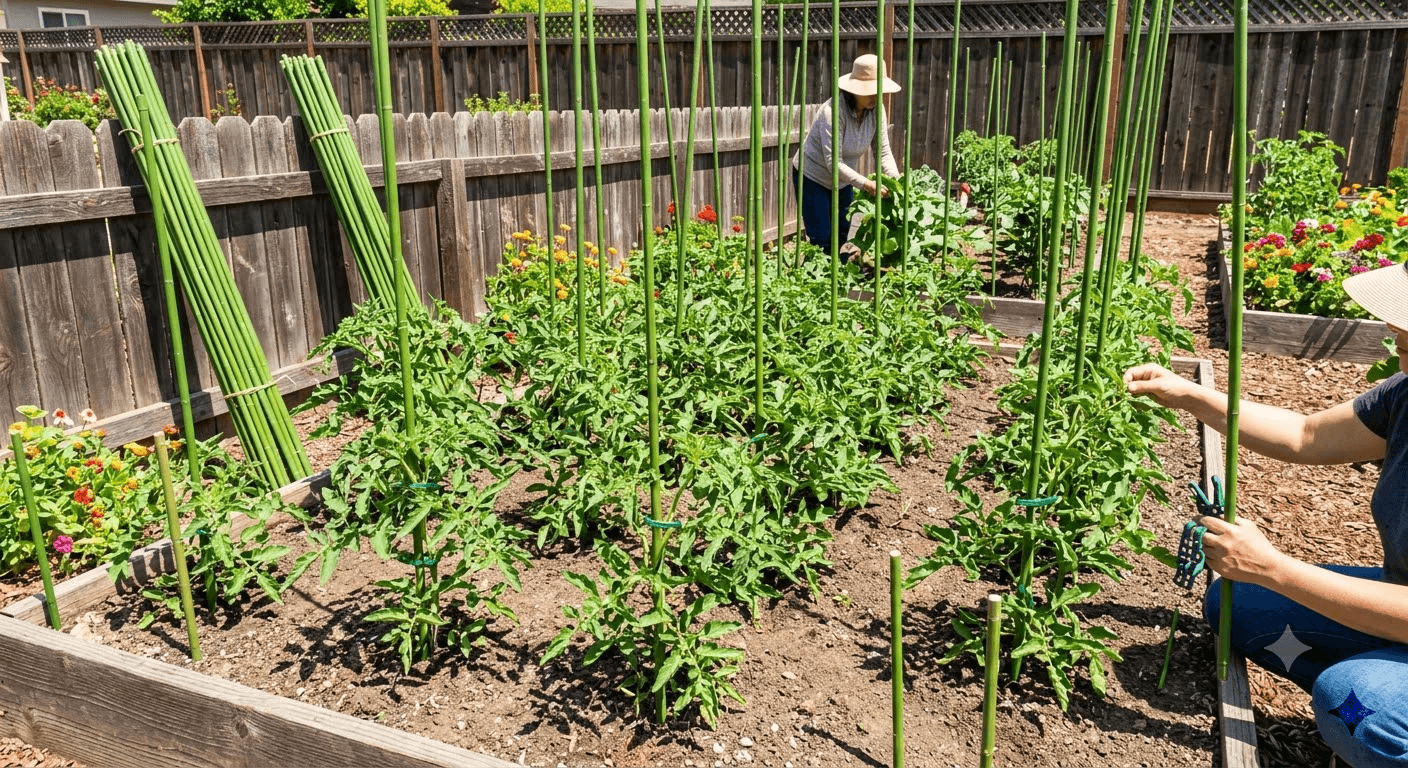
Tomatoes are one of the most common bamboo stake uses. Install the stake early, then add loose ties as the plant grows. This helps avoid root disturbance later.
Beans and cucumbers often work better with several stakes tied into a teepee or light trellis. Flowering vines can also climb bamboo when you add twine or horizontal supports between the stakes.
Garden borders, temporary fencing, and layout markers
Bamboo stakes can mark planting zones, paths, irrigation lines, and new landscape layouts. Contractors often use temporary stakes to guide crews before installing permanent borders, netting, or plantings.
This is also useful for small farms. A row marker placed before planting can reduce layout mistakes and make irrigation or cover installation easier.
DIY trellises and plant training projects
A simple bamboo trellis can use 3 to 5 stakes tied at the top. For a wider bed, several vertical stakes can be connected with twine to support peas, beans, cucumbers, or flowering vines.
The table below gives a quick planner for matching common garden scenarios with suitable bamboo stake setups:
| Use Case | Recommended Setup | Key Reason |
|---|---|---|
| Tomato support | 5 foot to 6 foot single stake | Supports vertical tying as the plant grows |
| Bean teepee | 4 to 6 stakes tied at the top | Gives vines a simple climbing frame |
| Light garden netting | Stakes along bed edges | Holds quick covers or light barriers |
| Flower border | Short to medium stakes with twine | Keeps stems upright and beds tidy |
| Layout marking | Short stakes at corners or row ends | Helps guide planting, irrigation, and spacing |
Use bamboo where flexibility, appearance, and seasonal installation matter. For very heavy or permanent support, plan for thicker stakes, multiple stakes, or a stronger material.
How to Choose the Right Bamboo Stakes
Choosing the right stake is less about guessing and more about matching a few basic specifications. Length, diameter, straightness, and surface quality all affect performance.
What size bamboo stakes should you buy?
Choose bamboo stakes based on mature plant height, soil depth, wind exposure, and expected plant weight. A useful rule is to allow 6 to 12 inches below soil and enough exposed height for the mature plant. Use thicker stakes for fruiting crops, loose soil, and windy areas.
For example, a 3 foot flower may need a 4 foot stake. A tall tomato plant may need a 5 foot or 6 foot stake so enough bamboo remains above ground after installation.
Length, diameter, and plant height
Length gives reach. Diameter gives strength. Thin stakes suit delicate stems, row markers, and decorative use. Thicker stakes work better for fruiting plants, larger flowers, and garden areas with wind exposure.
If the soil is loose or sandy, push the stake deeper or use more than one stake. If the soil is compacted, water the area slightly before installation to reduce cracking or breakage.
Straightness, surface quality, and strength
Look for reasonably straight stakes with fewer deep cracks, sharp splinters, or crushed sections. A slight natural curve is common with bamboo, but severe bends can make installation harder.
For resellers and contractors, consistency matters even more. Similar lengths, clean bundles, and predictable quality help with product listings, crew installation, and customer satisfaction.
Treated bamboo vs natural bamboo
Natural bamboo works for many seasonal gardens. Treated bamboo may resist moisture or pests better, depending on the treatment method.
For edible crop areas, confirm the treatment details before use. Do not assume every treated bamboo stake is suitable for vegetable gardens unless the supplier provides clear product information.
The table below summarizes the main buying factors to review before placing an order:
| Factor | What to Look For | Why It Matters |
|---|---|---|
| Length | Plant height plus 6 to 12 inches for soil placement | Prevents short or unstable support |
| Diameter | Thicker stakes for heavier plants and wind | Improves strength and stability |
| Surface | Fewer severe cracks and splinters | Protects stems, hands, and packaging quality |
| Straightness | Reasonably straight pieces | Makes installation and bundling easier |
| Treatment | Clear product details from the supplier | Helps match the stake to food gardens or landscape use |
A good bamboo stake order starts with the plant and ends with the spec. That approach reduces waste, returns, and emergency reorders.
Wholesale Buying Tips for Bamboo Stakes
Once you know the right size, buying method becomes the next major decision. This is where small gardeners, contractors, farms, and resellers often have different priorities.
When does buying bamboo stakes in bulk make sense?
Buying bamboo stakes in bulk makes sense when you manage several garden beds, landscaping jobs, nursery stock, resale inventory, or small farm rows. Bulk purchasing can reduce per unit cost, improve size consistency, and help you avoid shortages during peak planting season.
A landscaper preparing for spring installs, for example, should estimate stake quantity by project count, plant type, replacement rate, and shipping lead time. A small farm can do the same by counting crop rows and adding extra pieces for breakage, expansion, or midseason replacement.
MOQ flexibility for small buyers and trade buyers
MOQ flexibility matters because many buyers want wholesale value without overstocking. A home gardener may only need one bundle. A reseller may test a product before committing to larger inventory. A contractor may need different lengths for several job types.
Wellco Wholesale serves both trade buyers and individual shoppers with factory direct pricing and one piece MOQ on many products. For bamboo stake buyers, this helps small farms, garden supply resellers, landscapers, and DIY gardeners source supplies without being locked into excessive quantities.
What resellers and contractors should check before ordering
Before ordering, confirm length, approximate diameter, bundle quantity, packaging, shipping method, and return terms. Resellers should also check whether packaging fits marketplace requirements or dropship needs.
Contractors should focus on installation efficiency. If a crew needs to support hundreds of plants in a day, consistent stake size and clean bundle handling can save time.
Shipping, storage, and seasonal restocking considerations
Long products can affect shipping cost and handling. Check shipping thresholds, pickup options, and consolidated delivery before ordering.
Wellco Wholesale is based in Corona, California, and operates a 90,000 square foot warehouse that supports fast shipping, pickup, and blind drop shipping for eligible orders. For buyers who restock seasonally, that type of warehouse support can help reduce delays during spring demand spikes.
Good buying decisions protect both plants and margins. Plan early, choose consistent specs, and store surplus properly.
How to Install and Maintain Bamboo Garden Stakes
Even a good stake performs poorly when installed too late or tied too tightly. Proper installation helps bamboo support the plant without damaging stems or roots.
How do you install bamboo stakes without damaging plants?
Install bamboo stakes 2 to 4 inches away from the main stem, then push them firmly into the soil before tying the plant loosely. Use soft twine, garden tape, or clips, and leave room for stem growth. Add ties gradually as the plant gets taller.
Install stakes early in the season whenever possible. Early placement reduces root disturbance and helps train the plant before stems become heavy or tangled.
Tying methods and spacing tips
Use a loose figure eight tie for delicate stems. One loop holds the stake, and the other supports the plant. This method reduces rubbing and gives the stem room to move.
For fast growing tomatoes and vines, check ties every 1 to 2 weeks. Add new ties as needed, especially after rain, wind, or heavy fruit set.
Seasonal inspection and replacement
Inspect stakes after storms, irrigation changes, and periods of fast plant growth. Replace cracked, leaning, or unstable stakes before they fail.
In wet climates, check the soil line carefully. Bamboo often weakens first where moisture, soil contact, and plant weight meet.
Storage tips to extend reuse
At season’s end, remove soil from the base and let stakes dry before storage. Store bamboo horizontally on a rack or vertically in a dry place with airflow.
Sort used stakes into three groups: strong pieces for plant support, weaker pieces for row marking, and damaged pieces for disposal or craft use. This simple habit helps you reuse the best pieces and avoid failures next season.
Good maintenance turns a low cost seasonal supply into a repeat use garden tool.
Where to Buy Garden Bamboo Stakes
You can buy garden bamboo stakes from garden centers, farm supply stores, online marketplaces, and wholesale suppliers. The right channel depends on quantity, sizing needs, delivery expectations, and reorder plans.
For one time garden projects, local retail may be enough. For small farms, landscapers, resellers, and repeat garden buyers, a wholesale supplier usually gives better control over unit cost, product consistency, and supply planning.
Before choosing a supplier, check length, diameter range, bundle quantity, shipping terms, return policy, and customer support. If you need private label packaging, blind drop shipping, or recurring seasonal supply, confirm those services before placing a large order.
Wellco Wholesale can fit buyers who want wholesale pricing, flexible order quantities, and US warehouse support. That makes it practical for both small DIY projects and repeat trade purchasing.
Conclusion
Garden bamboo stakes give you a useful mix of plant support, natural appearance, easy handling, and seasonal value.
First, choose the stake by mature plant height, soil depth, and expected plant weight. Second, install it early and tie plants loosely as they grow. Third, inspect stakes during wet weather, wind, and heavy fruiting periods. Fourth, store bamboo dry after the season so usable pieces can return to the garden next year.
For larger orders, review MOQ, bundle consistency, shipping terms, packaging, and supplier support before buying.
[Shop Wellco Wholesale's full range with 1-piece MOQ and free shipping over $300 →]