
Is Bubble Foil Insulation Any Good for Your Home?
You have probably seen bubble foil insulation online and wondered how something so thin could make a real difference in your home. It looks light, shiny, and easy to install, which makes it tempting for garage doors, sheds, attic hatches, RV interiors, and small DIY upgrades.
This article answers the practical question behind the search: is bubble foil insulation any good for your home? You will learn where it performs well, where it falls short, how to install it for better results, and what to check before buying a roll.
The honest answer depends on your project. Bubble foil insulation can help control radiant heat and improve comfort in the right application. It performs best when you understand air gaps, sealed seams, roll coverage, and the difference between reflective insulation and thick cavity insulation.
What Bubble Foil Insulation Actually Does
Before you compare prices or roll sizes, you need to know how this material works. Bubble foil insulation uses reflective foil facing and a plastic bubble core to reduce specific types of heat movement.
How Bubble Foil Insulation Works
Heat moves in three main ways: radiation, conduction, and convection. Radiation happens when heat travels as infrared energy, such as sunlight heating a garage door. Conduction happens when heat moves through direct contact. Convection happens when warm air circulates and carries heat from one area to another.
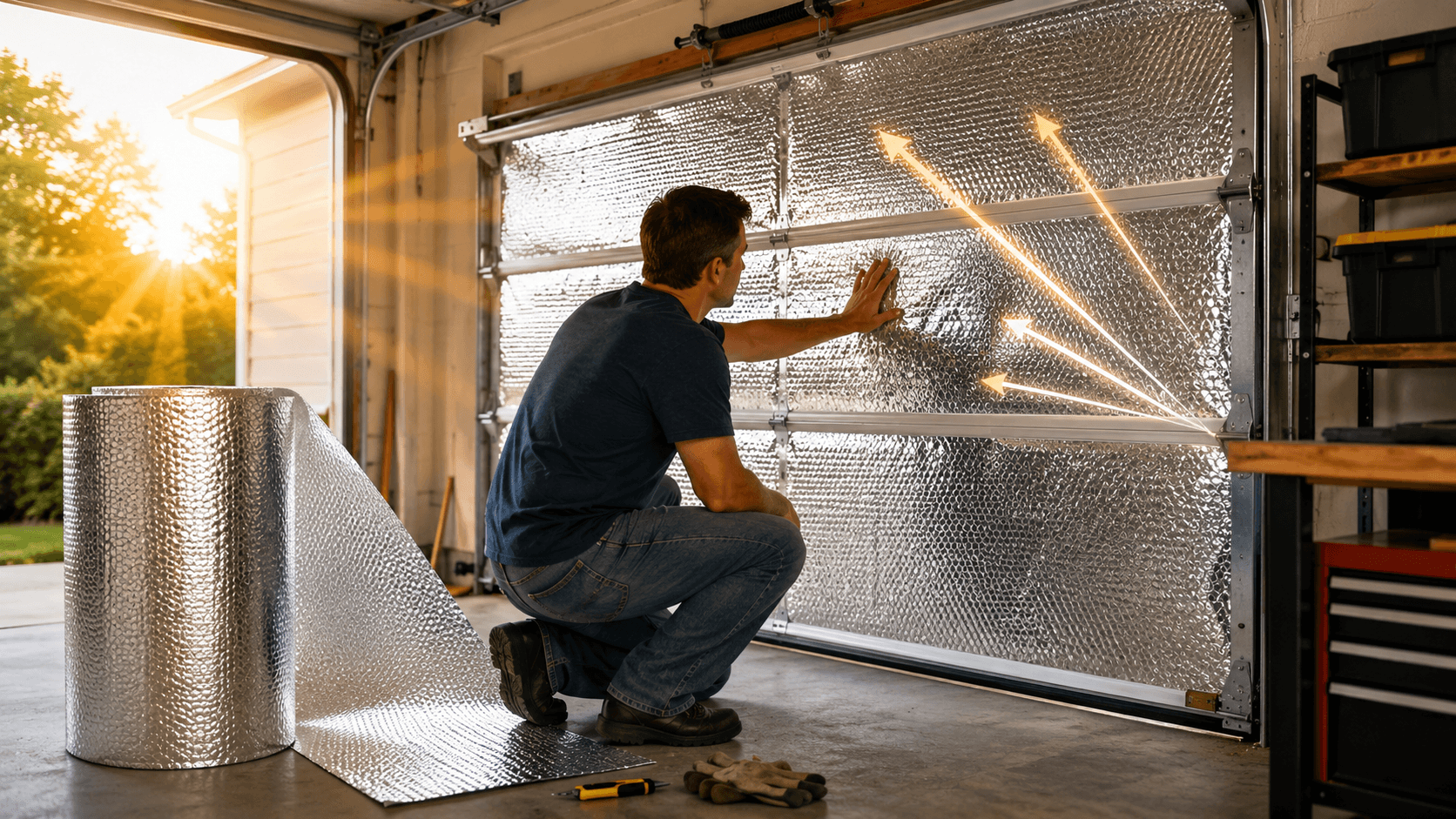
Bubble foil insulation mainly targets radiant heat. The shiny foil surface reflects radiant energy, while the bubble layer creates a small air space that helps slow direct heat transfer. Clean aluminum reflective surfaces are commonly described as reflecting about 95% to 97% of radiant energy, though real home performance depends on installation quality.
That detail matters because the material does not perform like a 3.5-inch fiberglass batt or a 1-inch foam board panel. If you press bubble foil flat against a surface with no air space, you reduce one of its biggest advantages.
Use bubble foil insulation as a radiant barrier or supplemental insulation, especially when the installation allows the reflective surface to face an air space.
Where It Performs Best
Bubble foil insulation performs best in areas where radiant heat creates the main comfort problem. Common examples include garage doors, metal sheds, RV walls, attic access panels, ducts, crawl-space touch-ups, workshops, and seasonal heat-control projects.
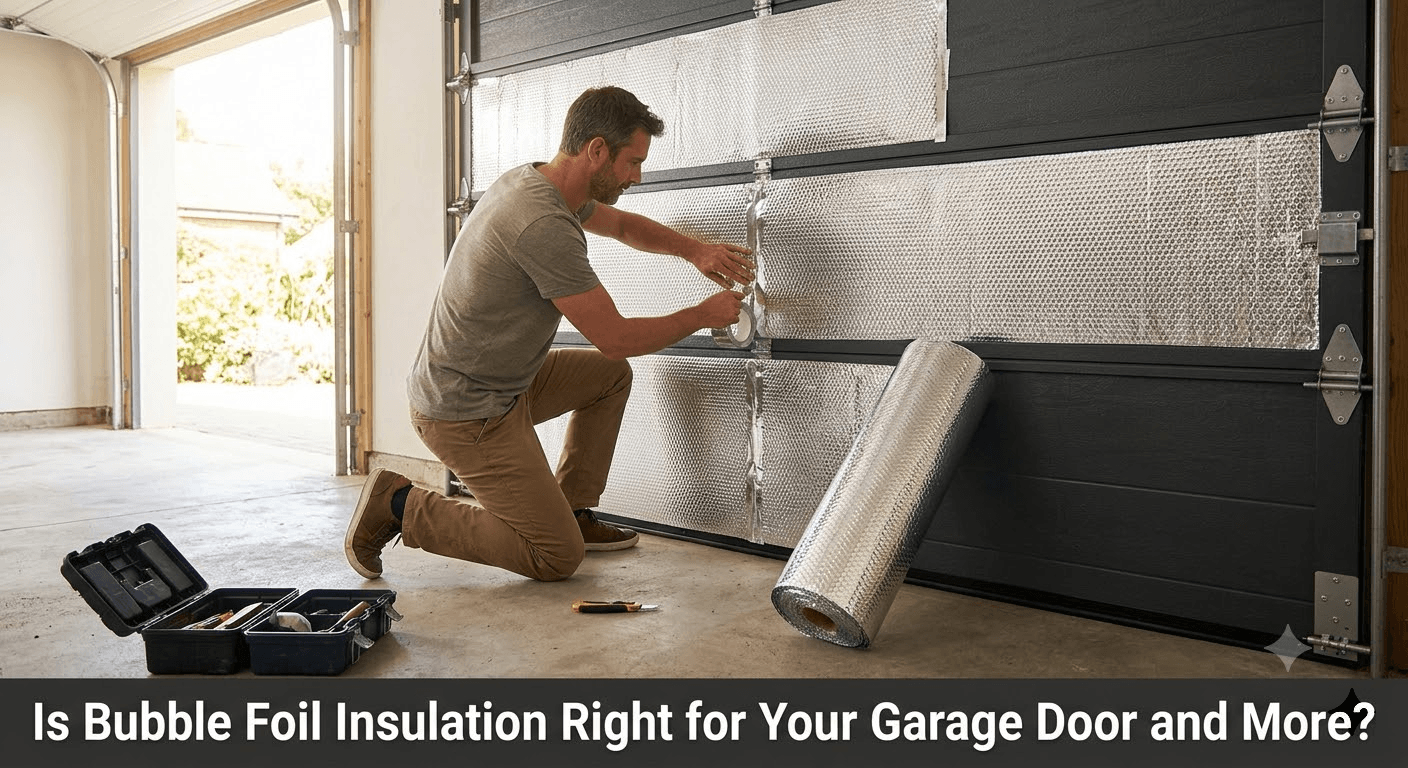
A south-facing garage door offers a useful example. On a hot afternoon, the door surface can absorb solar heat and radiate that heat into the garage. Bubble foil insulation may reduce radiant heat gain when installed with an air gap, sealed seams, and panel cuts that avoid hinges, rollers, tracks, and safety sensors.
For a small metal shed, bubble foil can also help reduce summer heat gain. Metal panels heat up quickly in direct sun, and reflective insulation can limit the heat that radiates inward. In these projects, homeowners often value simple handling as much as thermal performance.
Bubble foil insulation makes the most sense when radiant heat, easy installation, and lightweight handling matter more than high cavity R-value.
What It Does Not Do Well
Bubble foil insulation disappoints when buyers expect it to perform like thick traditional insulation. A thin reflective roll usually cannot replace fiberglass batts, mineral wool, or foam board in code-required walls, ceilings, or conditioned living spaces.
It also performs poorly when compressed behind panels, stapled tightly to a surface with no air gap, or used in a cold-climate wall where conductive heat loss creates the main issue. In those cases, you may need insulation with higher measurable thermal resistance.
Soundproofing creates another common misunderstanding. Bubble foil may reduce minor surface vibration in some lightweight panels, yet it lacks the mass and density needed for serious sound control.
Treat bubble foil as a targeted heat-control material with clear limits, especially for cold climates, finished rooms, and regulated building assemblies.
Is Bubble Foil Insulation Any Good for Your Home?
Now that the material’s role is clearer, the real question becomes project fit. Bubble foil insulation can be useful at home when you match it to the right space.
Is bubble foil insulation any good for home use?
Bubble foil insulation is good for home use when you need lightweight radiant heat control in garages, sheds, RVs, attic hatches, or small utility areas. It works best with an air gap and sealed seams. It is less suitable as the only insulation in main walls or cold-climate living spaces.
For many homeowners, the appeal comes from convenience. You can cut most rolls with a utility knife, tape seams with foil tape, and install panels without heavy protective gear. That makes it friendlier for quick weekend upgrades than fiberglass batts.
Comfort gains vary by climate and location. A hot garage in Arizona, Texas, or inland California may show a more noticeable difference than a shaded interior wall in a mild coastal area.
Bubble foil insulation can be a smart home upgrade when the project’s main problem is radiant heat and the installation leaves space for the reflective surface to work.
When Should You Choose It Over Traditional Insulation?
The table below breaks down common home projects and shows where bubble foil insulation makes sense compared with fiberglass, foam board, and spray foam:
| Project Area | Bubble Foil Fit | Better Alternative If Needed | Why It Matters |
|---|---|---|---|
| Garage door | High | Foam board panels | Helps reduce radiant heat from sun-exposed doors |
| Metal shed | High | Foam board plus ventilation | Fits lightweight panels and limits solar heat gain |
| Attic hatch | Medium to high | Foam board with weatherstripping | Small gaps may also need air sealing |
| Finished wall cavity | Low | Fiberglass, mineral wool, or foam board | Living spaces usually need higher insulation value |
| Duct wrap support | Medium | Code-rated duct insulation | HVAC areas may require specific ratings |
| RV or van interior | Medium to high | Layered insulation system | Lightweight material helps, but moisture planning matters |
This comparison shows why one product can be helpful in one area and weak in another. Bubble foil insulation often performs best in exposed, lightweight, or seasonal spaces rather than full residential wall assemblies.
Choose bubble foil insulation when the project rewards reflectivity, low weight, and fast installation.
Key Pros and Cons Before You Buy
Price per roll looks simple, but the real value depends on the project. A low-cost roll can save time on a garage upgrade, while the same roll can create frustration if you use it in the wrong place.
Main Advantages for DIY Homeowners
Bubble foil insulation gives homeowners several practical benefits. It is lightweight, easy to cut, clean to handle, and usually simple to transport. Many rolls fit in a car, which helps DIY buyers avoid freight complications.
The surface also resists moisture better than many fibrous materials. That can help in sheds, garages, and utility spaces where occasional humidity or condensation may occur. You still need ventilation and proper installation, but the material itself does not shed fibers or absorb moisture like some soft insulation products.
A single person can often install it on a garage door or shed wall using a measuring tape, straightedge, utility knife, foil tape, and basic fasteners. For garage doors, measure each panel separately because top, middle, and bottom sections may differ slightly.
Bubble foil insulation works well when you need a clean, lightweight, DIY-friendly material for a limited project.
Common Drawbacks and Misunderstandings
The biggest drawback comes from unrealistic expectations. Thin reflective insulation usually does not deliver the same standalone thermal resistance as thicker foam board or fiberglass insulation.
Another issue is installation quality. If you leave seams open, crush the bubble layer, or install the foil with no air space, the project may deliver weaker results. Small mistakes can matter because reflective insulation depends on surface exposure and air space.
Fire rating and code compliance also deserve attention. Some areas require specific flame-spread ratings, vapor-control rules, or approved assemblies. Always check the product details before using bubble foil near heat sources, electrical areas, or enclosed building cavities.
The material performs better when you treat it as a targeted product with specific limits.
Bubble Foil Insulation Pros and Cons Table
The table below summarizes the main buying factors so you can decide whether the material fits your project:
| Factor | Advantage | Limitation | Best-Fit Project |
|---|---|---|---|
| Weight | Easy to carry and cut | Less rigid than panels | Garage doors, sheds, RVs |
| Reflective surface | Reduces radiant heat | Needs an air gap | Sun-exposed metal surfaces |
| Moisture handling | Resists water absorption | Can trap moisture if poorly installed | Ventilated utility spaces |
| Thickness | Saves space | Lower standalone insulation value | Hatches and tight panels |
| DIY handling | Minimal mess | Requires careful seams | Weekend upgrades |
For most homeowners, the decision should start with the space. If the surface receives radiant heat and you can preserve an air gap, bubble foil insulation can be useful. If the space needs high R-value or code-approved cavity insulation, choose a more robust material.
Project fit matters more than the roll price, especially when performance depends on air space and seam quality.
How to Install Bubble Foil Insulation for Better Results
Good installation can make the difference between a useful upgrade and a disappointing project. Since reflective insulation depends on surface exposure, small details matter.
Why Air Gaps Matter
A reflective foil surface needs an adjacent air space to reduce radiant heat effectively. Without that space, the material mainly acts as a thin conductive layer with limited insulation value.
For garage doors, this may mean leaving a slight space between the foil and the door panel where the door structure allows it. For sheds, furring strips can create a small cavity before you attach the insulation. For attic hatches, you may combine bubble foil with rigid foam or weatherstripping if air leakage also affects comfort.
Do not crush the bubble layer behind heavy boards. Compression reduces the trapped air space and can make the material less effective.
Protect the air gap whenever possible because reflectivity needs space to do its job.
Can you install bubble foil insulation yourself?
Yes, most homeowners can install bubble foil insulation themselves for small projects such as garage doors, sheds, attic hatches, and RV panels. You usually need a utility knife, measuring tape, foil tape, and suitable fasteners. Check fire ratings, heat-source clearance, and local building rules before installing it in enclosed or regulated spaces.
Start by measuring the area and adding extra material for overlaps or trimming. Cut panels cleanly, test fit them before fastening, and seal seams with foil tape. On garage doors, avoid blocking hinges, rollers, tracks, or safety sensors.
For ducts or mechanical areas, use caution. Some HVAC applications require insulation products that meet specific standards, and improper wrapping can create condensation or service-access problems.
DIY installation works well for simple areas, while building-code and heat-source situations deserve extra care.
Common Installation Mistakes
The most common mistake is stapling bubble foil flat against a surface and expecting a major insulation upgrade. Without air space, the foil loses much of its radiant barrier effect.
Another mistake is leaving seams open. Warm air, humid air, or radiant heat can move through gaps, especially around edges. Foil tape helps create a cleaner, more consistent installation.
Some homeowners also install the reflective face where it cannot “see” an air space. If both sides get buried against solid materials, you may get less benefit than expected.
Leave space, seal seams, avoid compression, and keep reflective surfaces exposed to an air cavity when the project allows.
Buying Guide: What to Check Before Ordering
Once you know the project fits, buying becomes much easier. You should compare product details, coverage, facing type, shipping value, and installation accessories.
Thickness, Roll Size, and Facing Type
Roll size affects both cost and waste. Common buying details include roll width, total length, square footage, bubble structure, single-sided or double-sided foil facing, and compatible foil tape. A 24-inch roll may suit narrow panels, while a 48-inch roll may reduce seams on larger shed walls or garage doors.
Facing type matters too. Double-sided reflective foil gives you more flexibility when both sides face air spaces. Single-sided products can still work well when only one reflective surface matters.
Use this quick specification checklist before placing an order:
| Spec to Check | What to Look For | Why It Matters |
|---|---|---|
| Roll width | Match panel or wall dimensions | Reduces trimming waste |
| Total coverage | Confirm square footage per roll | Prevents under-ordering |
| Facing type | Single-sided or double-sided foil | Affects installation flexibility |
| Bubble structure | Single or double bubble layer | Influences thickness and handling |
| Fire-rating info | Listed product rating or use guidance | Helps avoid unsafe applications |
| Temperature range | Suitable for garage, shed, or duct area | Protects performance expectations |
| Seam tape compatibility | Foil tape or approved tape | Helps seal gaps cleanly |
Check whether the seller lists fire-rating information, temperature range, and recommended applications. Specific product data helps you avoid vague claims and choose a material that fits your space.
Compare coverage and specifications before price, because the cheapest roll may create more seams, waste, or installation work.
Where Wellco Wholesale Fits for Small and Bulk Buyers
For homeowners, small contractors, resellers, and project buyers, Wellco Wholesale can be a practical source when you want wholesale pricing without a large commitment. Its model supports 1-piece MOQ, California warehouse fulfillment, and free shipping over $300, which helps both retail buyers and small trade buyers manage project costs.
That flexibility matters in real buying situations. A homeowner can test one roll before expanding the project. A contractor can restock for several garages or sheds without overbuying. A reseller can trial demand before committing to a larger order. Repeat buyers also benefit when warehouse-based fulfillment reduces lead-time uncertainty.
Flexible ordering and reliable shipping can matter as much as the insulation roll itself, especially when your project has a tight schedule or uncertain material quantity.
What questions should you ask before buying?
Before buying bubble foil insulation, ask where you will install it, whether radiant heat is the main problem, whether you can leave an air gap, what roll size covers the area, and whether fire rating or building code rules apply. Also compare shipping cost, seam tape needs, and possible alternatives.
You should also ask whether the space needs vapor control. In some assemblies, placing a low-permeance layer in the wrong location can contribute to moisture problems. This depends on climate, wall design, and ventilation.
For a simple garage door, the checklist stays short. For a finished wall, roof assembly, or HVAC application, you need more caution and better specifications.
A good buying decision starts with the installation area, then moves to roll specs, safety requirements, and total delivered cost.
Best Use Cases and Poor Use Cases
By this point, the pattern is clear: bubble foil insulation can help when the use case fits. A quick project planner can prevent wasted money.
Good Use Cases
Bubble foil insulation works well for garage doors, sheds, workshops, RVs, attic hatches, light ductwork support, seasonal barriers, and temporary radiant heat reduction. These spaces often have exposed panels, limited room, and a strong need for easy installation.
For example, a homeowner with a detached metal shed may use bubble foil to reduce summer radiant heat gain. If the shed also has ventilation, shaded openings, and sealed gaps, the space may become more practical for storage, hobbies, or light work during hot parts of the day.
Small property owners may also use the material for utility areas where clean handling matters. Unlike fiberglass batts, bubble foil does not release itchy fibers during cutting.
Use bubble foil where radiant heat and installation convenience drive the decision.
Poor Use Cases
Bubble foil insulation performs poorly as the main insulation for cold-climate living walls, soundproofing projects, high-R-value roof assemblies, or areas exposed to direct flame and high heat. In those cases, thicker insulation or a code-approved assembly usually makes more sense.
For soundproofing, choose materials with mass and density, such as mineral wool or specialized acoustic assemblies. For cold walls, choose products that provide meaningful thermal resistance. For fire-sensitive spaces, use materials with the required rating and follow local rules.
You should also avoid using bubble foil as a shortcut when a project needs air sealing. Insulation and air sealing solve different problems, and many uncomfortable rooms need both.
When the project requires high insulation value, acoustic control, or strict code compliance, choose a purpose-built material.
Quick Suitability Planner
The table below gives you a fast way to judge whether bubble foil insulation fits your next home project:
| Home Project | Good Fit? | Main Reason | Better Choice If Not |
|---|---|---|---|
| Sun-facing garage door | Yes | Reflects radiant heat | Foam board for added rigidity |
| Detached metal shed | Yes | Limits solar heat gain | Foam board plus ventilation |
| Attic hatch | Sometimes | Works as a supplemental layer | Foam board and weatherstripping |
| Finished bedroom wall | Usually no | Needs higher insulation value | Fiberglass, mineral wool, or foam board |
| Soundproofing a room | No | Too light for serious sound control | Mineral wool or acoustic assemblies |
| RV interior panel | Sometimes | Lightweight and space-saving | Layered system with moisture planning |
Use this planner as a starting point, then check the product’s actual specs. Your climate, building type, and installation method can change the final decision.
Bubble foil insulation works best in targeted projects where its light weight and radiant barrier function solve the actual problem.
Conclusion
Bubble foil insulation can be a good choice for your home when you use it in the right place. It helps most when radiant heat is the main issue, especially in garages, sheds, RVs, attic hatches, and light utility areas.
Remember these four takeaways. First, bubble foil works best with an air gap and sealed seams. Second, it should be viewed as supplemental radiant heat control in many home projects. Third, it should not replace fiberglass, mineral wool, foam board, or spray foam when the space needs higher insulation value. Fourth, roll size, facing type, fire rating, seam tape, and shipping cost all affect the real value of your purchase.
If your project needs quick handling, clean installation, and targeted radiant heat control, bubble foil insulation can offer practical value.
[Shop Wellco Wholesale's full range with 1-piece MOQ and free shipping over $300 →]