
How to Cut Steel Rebar Safely (5 Easy Methods + Tools Guide)
Cutting steel rebar the right way is essential for safe, long-lasting concrete structures. Whether you are a DIY homeowner cutting a few bars at home or a contractor working on a busy job site, knowing how to cut steel rebar safely and accurately will save you time, reduce waste, and help prevent dangerous failures.
In this step-by-step guide, you will learn how to cut steel rebar using both manual and power tools, which cutting method works best for different bar sizes, how to cut rebar at home without professional machines, and the safety precautions you should follow on every project.
Understanding Steel Rebar Basics
Rebar, short for reinforcing bar, is a steel rod used to strengthen concrete so it can resist tensile forces that plain concrete alone cannot handle. The rods usually have ridges or deformations along the surface so they bond more tightly with the surrounding concrete.
Common steel rebar sizes used in residential and commercial projects include #3 (3/8 inch or about 10 mm), #4 (1/2 inch or about 12 mm), #5 (5/8 inch or about 16 mm), and #6 (3/4 inch or about 20 mm). Thicker bars require more powerful cutting tools and careful handling.
Why Proper Cutting Matters
Clean, accurate cuts directly affect the structural integrity and durability of your slab, beam, or footing. Poorly cut pieces may not fit the reinforcement layout, can create stress points inside the concrete, or leave sharp ends that are difficult to bend and tie.
- Correct fit and spacing inside forms or reinforcement cages.
- Better preservation of the steel’s mechanical properties by avoiding overheating or cracking at the cut.
- Less scrap and waste, which saves on material cost and labor time.
Tools for Cutting Steel Rebar
The best way to cut steel rebar depends on the bar diameter, the number of cuts you need to make, your budget, and whether you are working at home or on a professional job site.
Manual Tools for Small Jobs
- Hacksaw: A sturdy hacksaw with a high-quality metal-cutting blade works well for thin bars and occasional cuts but is slow for larger diameters or many pieces.
- Bolt cutters: Designed to cut metal rods and chains, bolt cutters can quickly handle smaller rebar sizes such as #3 and #4 when you have good leverage and strong handles.
- Manual rebar cutter and bender: A dedicated hand-operated tool that can both cut and bend rebar, ideal for small workshops and job sites that need reliable cuts without electricity.
Manual tools are affordable and portable, making them a good choice for DIYers and small projects where you only need to cut a few bars at a time.
Power Tools for Faster, Cleaner Cuts
- Angle grinder: A versatile handheld tool fitted with an abrasive or diamond cutting disc. It is excellent for on-site work and cutting bars that are already tied in place.
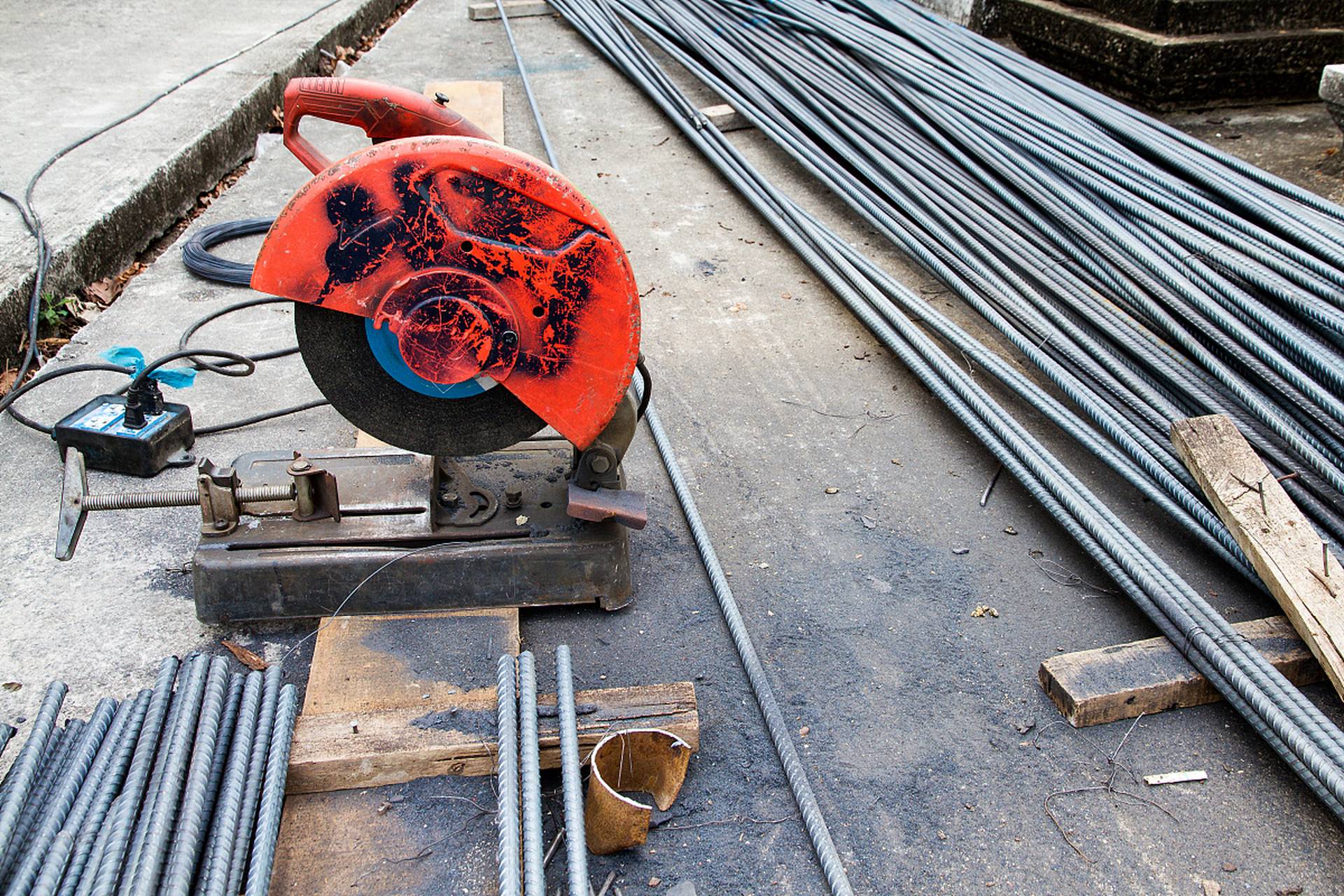
- Chop saw: A stationary saw with a high-speed abrasive wheel that allows very straight, repeatable cuts. It is ideal when you need to cut many pieces to the same length.
- Portable bandsaw: A power tool that uses a continuous metal-cutting band. It produces smooth cuts with fewer sparks and works well on thicker bars.
Power tools dramatically increase your cutting speed and consistency but require more safety precautions and a stable workspace.
Best Tools for Cutting Rebar: Quick Comparison
| Tool | Best for | Pros | Cons |
|---|---|---|---|
| Hacksaw | Very small jobs and thin bars | Low cost, easy to control, quiet | Slow, tiring, not suitable for large volumes |
| Bolt cutters | Cutting short pieces of #3–#4 rebar | Fast, no electricity needed, portable | Struggles with thick bars, needs strong leverage |
| Angle grinder | General on-site cutting and modifications | Versatile, cuts in tight spaces, relatively inexpensive | Generates sparks and noise, needs careful control |
| Chop saw | Many straight cuts at the same length | Very fast, accurate, stable cutting platform | Bulky, not ideal for cutting bars already installed in concrete |
| Portable bandsaw | Thicker bars and cleaner edges | Smooth cuts, fewer sparks, good control | Higher cost, blades can be damaged if misused |
Safety Preparations Before You Cut Rebar
Cutting steel rebar creates sparks, metal dust, and sharp offcuts, so safety should always be your first priority.
Essential Protective Gear
- Safety glasses or goggles: Protect your eyes from flying metal fragments and sparks.
- Cut-resistant gloves: Help prevent cuts from sharp edges and protect your hands from heat during cutting.
- Protective clothing: Wear a long-sleeve shirt, long pants, and closed-toe shoes to shield your skin from sparks and metal chips.
- Hearing protection: Use earplugs or earmuffs when cutting with noisy power tools.
- Respirator or dust mask: Helpful when working in dusty or enclosed areas to reduce inhalation of fine particles.
Workspace Safety Checklist
- Choose a flat, stable surface and keep the cutting area clear of clutter.
- Secure long bars on sawhorses or a sturdy workbench to prevent rolling and shifting.
- Keep flammable materials, fuel, and solvents far away from sparks.
- Work in a well-ventilated area and, when possible, outdoors or near open doors.
- Have a fire extinguisher or a bucket of water nearby in case of emergencies.
Step-by-Step Guide to Cutting Steel Rebar
Step 1: Measure and Mark
- Use a tape measure to determine the exact length of rebar required for your beam, slab, or footing. Double-check each measurement against your drawings or layout.
- Mark the cut line clearly using a permanent marker, chalk, or soapstone. Wrap the mark around the full circumference of the bar so you can see it from every angle.
Step 2: Secure and Position the Rebar
- Clamp the rebar in a vise or secure it with clamps on a workbench or sawhorses. The bar should not wobble, twist, or roll while you cut.
- Position the bar so that the marked section hangs slightly past the support, allowing the tool or blade to pass through without hitting the bench.
Step 3: Make the Cut
- Align the blade or cutting jaws directly with the marked line. If you are using an angle grinder or chop saw, let the blade spin up to full speed before touching the metal.
- Begin cutting with light pressure to form a shallow groove along the mark. This groove helps guide the blade and keeps it from wandering.
- Increase pressure gradually and let the tool do most of the work. Avoid forcing the blade, which can cause binding, overheating, or kickback.
- As you approach the end of the cut, reduce pressure slightly to avoid snapping off the last bit of metal and leaving a jagged edge.
After the cut is complete, use a grinder or metal file to remove burrs and sharp edges, especially if the bar end will be exposed or handled frequently.
How to Cut Steel Rebar at Home (DIY Scenario)
When you only need to cut a handful of bars for a patio, small slab, or fence project, you may not have access to professional saws. You can still cut steel rebar safely at home by planning your workspace and choosing the right tools.
- Work in a driveway, backyard, or open garage with the door fully raised so sparks and dust can disperse.
- For #3 or #4 rebar, start with bolt cutters or a good hacksaw. For thicker bars, a small angle grinder with a metal-cutting disc is usually the most efficient choice.
- Support the bar on sturdy sawhorses or a workbench and clamp it firmly so it cannot move while you are cutting.
- Warn family members or neighbors about the noise, and keep children and pets far from the work area until you have cleaned up.
- Sweep up offcuts and metal dust carefully when you are finished so no one steps on sharp pieces later.
Expert Tips for Clean, Accurate Cuts
- Place wooden blocks close to both sides of the cut to support long bars and reduce vibrations.
- Mark both the top and sides of the bar so you can keep the blade aligned as you rotate or reposition it.
- Use steady, even pressure instead of forcing the blade. Let the tool’s speed and the abrasive wheel do the work.
- Replace worn cutting discs or blades as soon as they slow down, burn the metal, or start to wander off the line.
- When cutting many pieces to the same length, make a simple stop block or jig so you can measure once and repeat accurately.
Common Mistakes and How to Avoid Them
- Incorrect measurements: Rushing layout leads to bars that are too short or too long. Always measure twice and mark once.
- Using the wrong tool: Forcing bolt cutters through thick bar or using a dull hacksaw wastes time and produces uneven cuts. Choose a tool that matches the bar diameter and the number of cuts.
- Cutting too quickly: Pushing too hard overheats the metal and can damage the blade. Slow down and keep a smooth rhythm.
- Ignoring safety gear: Skipping gloves, goggles, or hearing protection greatly increases the risk of injury from sparks, noise, or flying debris.
- Working on an unstable surface: Cutting on loose blocks or on the ground can cause the tool to bind, kick back, or slip. Always secure the bar before you start.
Frequently Asked Questions About Cutting Steel Rebar
What is the easiest way to cut steel rebar?
For a few small bars, bolt cutters are often the easiest option because they are fast and require no electricity. For larger quantities or thicker bars, a chop saw or angle grinder with a quality metal-cutting disc is usually the simplest and most efficient solution.
Can I cut rebar with an angle grinder?
Yes, an angle grinder is one of the most common tools for cutting rebar. Always use a disc rated for cutting steel, keep the guard in place, hold the grinder firmly with both hands, and cut away from your body while wearing full protective gear.
How can I cut rebar without power tools?
You can cut rebar without power tools by using a hacksaw, bolt cutters, or a manual rebar cutter and bender. These methods take more physical effort but work well for smaller jobs and locations where electricity is not available.
Is it safe to cut steel rebar indoors?
Cutting steel rebar indoors is generally not recommended because sparks and dust can ignite or damage nearby surfaces. If you must cut indoors, clear the area of flammable materials, use proper ventilation, protect floors and walls, and keep a fire extinguisher within reach.
Conclusion and Next Steps
Cutting steel rebar is straightforward once you understand the right tools, safety gear, and techniques. By measuring carefully, securing each bar properly, and choosing the best cutting method for your project, you will achieve clean, accurate cuts that help your concrete structure perform as designed.
If you are ready to start your project, explore our selection of steel rebar and durable fiberglass rebar, available in multiple diameters and lengths for both residential and commercial jobs.
For more tips on rebar, concrete, insulation, and other building materials, bookmark our blog or subscribe to our newsletter so you never miss a new guide.