
How to Support Tomato Plants with Bamboo Stakes
Tomato plants can look healthy early in the season, then start leaning once fruit clusters get heavy. If stems bend, branches touch the soil, or the plant becomes hard to prune, support becomes more difficult and the risk of breakage increases.
Bamboo stakes give gardeners, small farms, nurseries, and garden supply buyers a simple way to support tomato plants without bulky structures. When you choose the right stake height, install it early, and tie stems correctly, bamboo can help keep tomato plants upright and easier to manage.
This guide explains how to support tomato plants with bamboo stakes, when bamboo works well, how to install stakes step by step, and what buyers should check before ordering bamboo tomato stakes for home use, farm use, nursery use, or resale.
Are Bamboo Stakes Good for Tomato Plants?
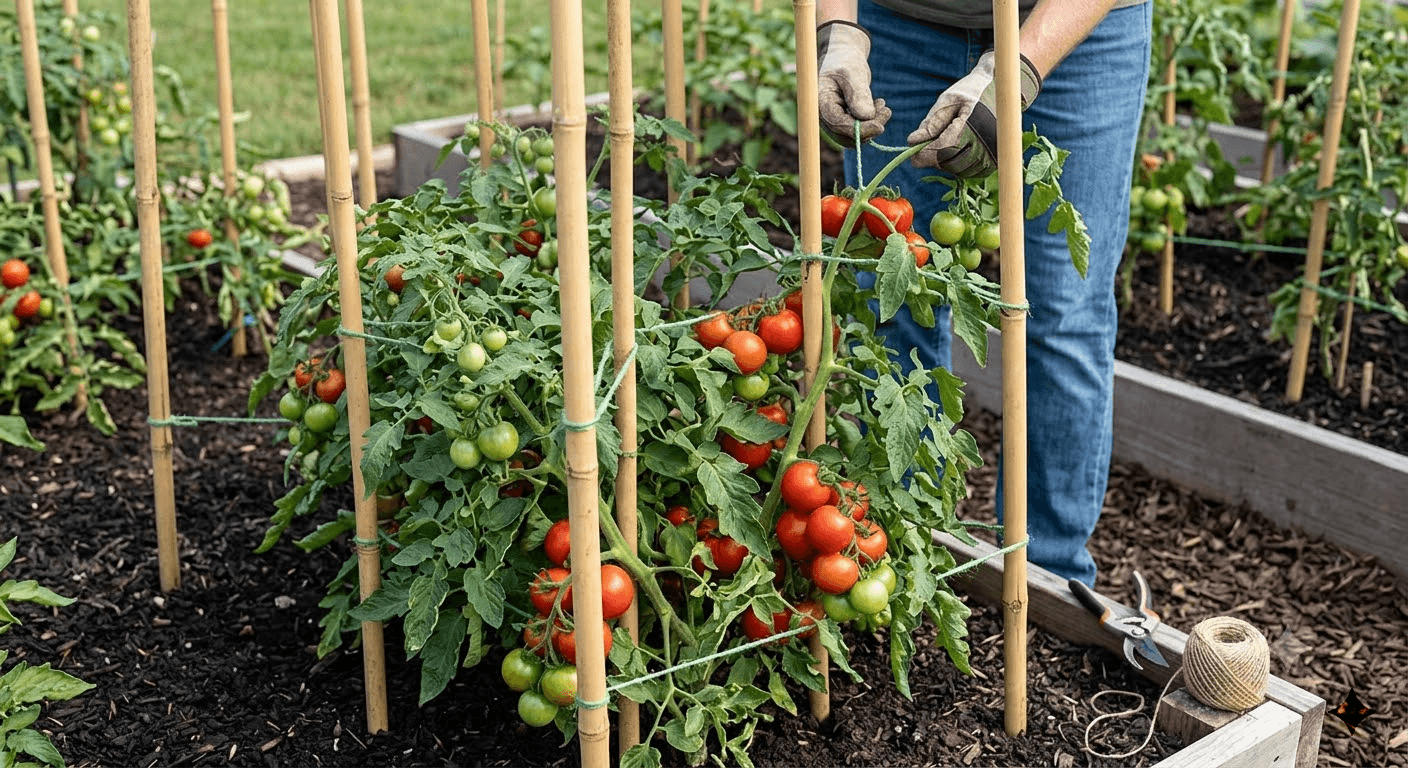
Bamboo stakes can work well for tomato plants when they are tall enough, inserted firmly, and paired with soft plant ties. They are especially useful for seasonal gardens, raised beds, patio containers, and small growing setups where you want lightweight support with a natural appearance.
Tomatoes need support because fruit weight increases quickly. A single branch can hold several tomatoes, and the main stem may lean under the combined weight of fruit, leaves, wind, and rain.
Why does bamboo work for seasonal tomato support?
Bamboo works for seasonal tomato support because it is lightweight, easy to install, and suitable for many home garden and small farm tomato plants. It also blends naturally into garden beds, making it practical for growers who want simple support without large cages or permanent trellis systems.
Bamboo is easy to handle in batches. Gardeners can carry multiple stakes at once, and small farms or nurseries can install them quickly along rows, raised beds, or display areas.
Bamboo is a natural material, so its outdoor life depends on moisture, soil contact, climate, storage, and season length. Buyers who need repeated long-term use may want to compare bamboo stakes with fiberglass stakes or other reusable supports.
When should you consider stronger or reusable supports?
You should consider stronger or reusable supports if your tomato plants grow very tall, carry heavy fruit, face strong wind, or need support across multiple seasons. In those cases, fiberglass stakes, tomato cages, or trellis systems may provide more stable long-term support.
For many seasonal tomato plantings, bamboo is a practical and cost-friendly option. For repeated commercial use, buyers should compare support materials based on durability, storage space, labor, and replacement cost.
Getting the support material right early helps prevent avoidable plant damage later in the season.
Benefits of Using Bamboo Stakes for Tomatoes
Once you confirm bamboo is a good fit, the next step is understanding what it helps with. Bamboo stakes mainly provide physical support, but correct installation can also make tomato care cleaner and easier.
The table below summarizes the main benefits for gardeners, growers, and garden supply buyers:
| Benefit | How It Helps Tomato Plants | Buyer Note |
|---|---|---|
| Upright growth | Helps keep the main stem from leaning or bending | Install early for better results |
| Cleaner fruit | Can help reduce fruit contact with soil when tied correctly | Useful for raised beds and small gardens |
| Better access | Can make pruning, tying, and harvesting easier when spacing is suitable | Helpful for dense planting areas |
| Natural appearance | Blends with garden beds and vegetables | Good for home gardens and retail packs |
| Lightweight handling | Easy to move, stock, and install | Useful for farms, nurseries, and resellers |
Bamboo stakes are especially practical when you want a simple support method without a large cage or permanent trellis. They work well with soft plant ties, garden twine, or flexible clips.
Do bamboo stakes help tomato plants grow better?
Bamboo stakes can help tomato plants grow more upright and easier to manage, but they do not replace good soil, watering, sunlight, pruning, or pest control. Their main value is physical support, which can reduce leaning, soil contact, and branch stress when installed correctly.
Supported plants are easier to inspect. You can spot pests, remove yellowing leaves, prune side growth, and harvest fruit without working through tangled stems.
For retailers, this benefit is easy to explain. A bamboo stake plus plant tie bundle solves a clear tomato-growing problem for home gardeners and small growers.
How to Choose Bamboo Stakes for Tomato Plants
Choosing the right stake starts with the tomato variety. Compact determinate tomatoes usually need less height than indeterminate tomatoes, which can keep growing through the season.
For taller tomato plants, many gardeners use bamboo stakes around 6 feet tall, with a stronger diameter for better stability. This is a useful reference for larger tomato plants, though compact, patio, cherry, and determinate tomatoes may use shorter supports.
Buyers should always check actual product specifications before ordering. Length, diameter, straightness, finish, bundle count, and packaging can all affect how well the stake fits the intended use.
The table below helps you match buying factors with real use:
| Buying Factor | What to Check | Why It Matters |
|---|---|---|
| Stake height | Mature plant height plus soil insertion depth | Prevents the stake from becoming too short |
| Diameter | Thicker stakes for taller or heavier plants | Improves stability |
| Soil insertion | Enough length to anchor the stake firmly | Reduces leaning |
| Plant type | Determinate, indeterminate, patio, or cherry tomatoes | Helps match support strength |
| Bundle quantity | Number of plants plus replacement needs | Helps farms, stores, and resellers plan orders |
How tall should bamboo stakes be for tomatoes?
Bamboo stakes for tomatoes should be tall enough to support the mature plant while leaving extra length for soil insertion. Taller tomato plants may use stakes around 6 feet, while compact, patio, or determinate tomatoes may need shorter supports.
Do not judge the stake only by total length. Several inches must go into the soil or potting mix. If the stake looks tall before installation but barely reaches the tomato after insertion, it is too short.
For containers, also consider pot depth and weight. A stake in a shallow or lightweight pot may feel unstable once the tomato plant becomes top-heavy.
How to Stake Tomatoes with Bamboo Stakes Step by Step
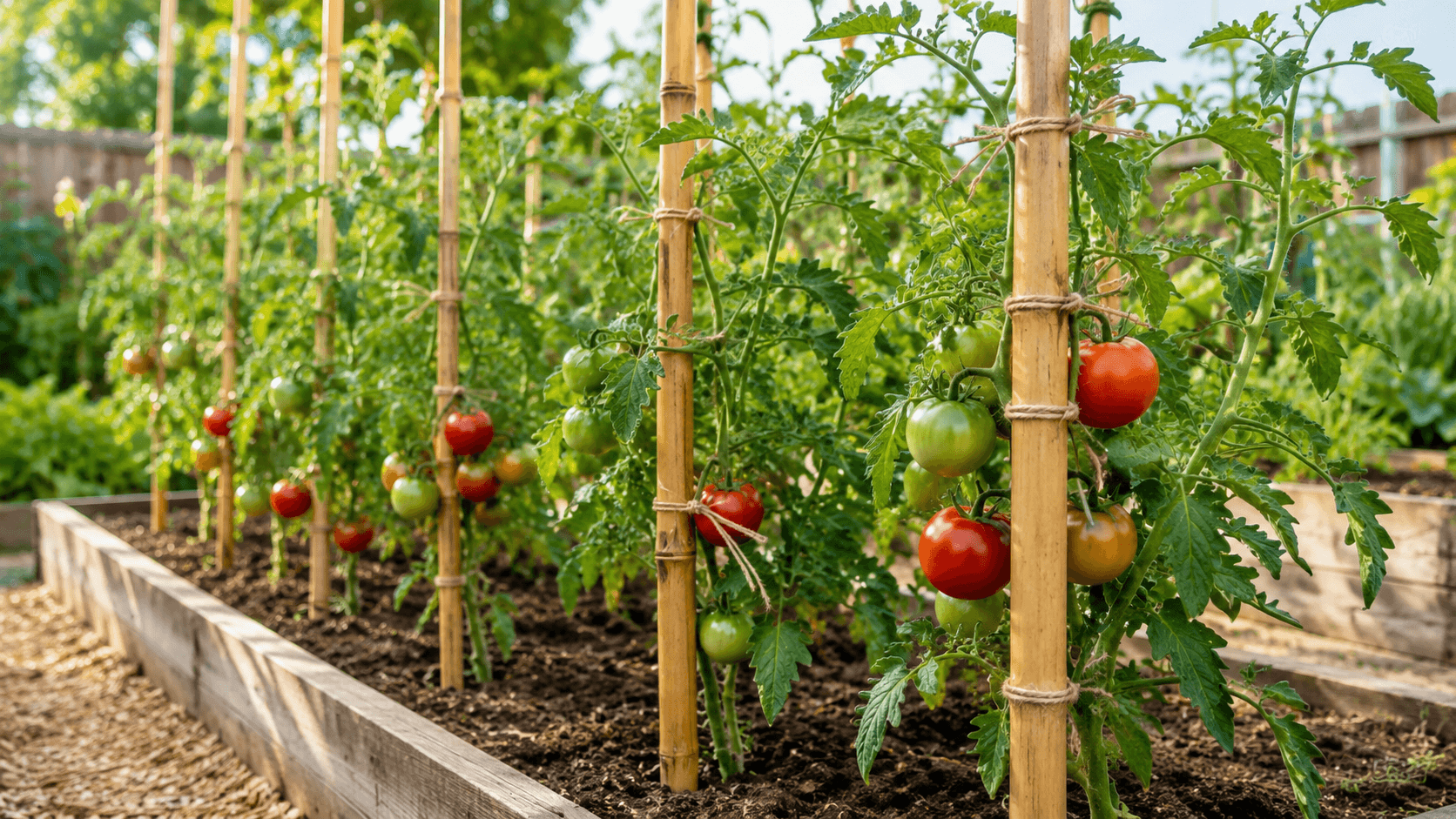
The right stake can still fail if you install it too late or tie the plant incorrectly. Bamboo support works best when the plant is young and the root system has not spread too far.
Follow this practical process for most home garden, raised bed, and small farm tomato setups.
Step 1: Install stakes early
Install bamboo stakes at transplanting time or soon after the tomato plant begins upright growth. Early staking reduces the risk of root damage and helps the plant grow around the support from the beginning.
Step 2: Place the stake near the main stem
Place the bamboo stake a few inches from the main stem. Keep it close enough to support the plant, but avoid forcing it through the central root zone.
Step 3: Insert the stake deep enough for stability
Push the stake firmly into the soil so it can resist wind and plant weight. For taller plants, deeper insertion gives better stability. In loose soil, you may need a thicker stake or additional support points.
Step 4: Tie stems with soft plant ties
Use soft garden ties, twine, or flexible clips. Tie the stem loosely so it stays upright without being squeezed. Leave room for the stem to thicken.
Step 5: Add support as the plant grows
Add new ties higher on the plant as it grows. Focus on the main stem and areas near heavy fruit clusters.
Step 6: Check support during fruiting
Check ties during fast growth and fruiting. Adjust loose ties and replace tight ties before they cut into the stem.
How do you tie tomato plants to bamboo stakes?
Tie tomato plants to bamboo stakes with soft plant ties, garden twine, or flexible clips. Secure the main stem loosely, leave space for growth, and add more ties as the plant gets taller. Avoid tight knots because tomato stems thicken during the season.
Good tying guides the plant upward without restricting growth. The support should help the plant stay upright while still allowing natural movement.
Bamboo Stakes vs Other Tomato Supports
Bamboo stakes are useful, but buyers should compare them with other tomato support options. The best choice depends on plant size, growing space, budget, storage, and whether you want seasonal or reusable materials.
The table below compares common tomato support options:
| Support Type | Best For | Advantages | Limitations | Buyer Note |
|---|---|---|---|---|
| Bamboo stakes | Seasonal gardens, raised beds, retail packs | Natural look, lightweight, easy to install | Outdoor life depends on moisture and season length | Strong fit for simple tomato support |
| Tomato cages | Bushier tomato plants and containers | Surrounds the plant with support | Takes more storage space | Good for compact plants |
| Fiberglass stakes | Repeated use, nurseries, small farms | Durable, rust-resistant, clean appearance | Higher upfront cost than bamboo | Good for long-term buyers |
| Wood stakes | Traditional garden support | Familiar and simple | Can split, rot, or weather | Check finish and thickness |
| Trellis systems | Rows, greenhouses, serious growers | Supports vertical training | Requires more setup | Useful for larger production |
Bamboo stakes fit buyers who want lightweight seasonal support and easy storage. Tomato cages may suit bushier plants. Fiberglass stakes may suit buyers who prioritize reuse and longer service life.
For garden centers and resellers, offering bamboo stakes, plant ties, and one alternative support option can serve more customers without making the category difficult to shop.
Supporting Tomato Plants in Pots with Bamboo Stakes
Container tomatoes need careful support because pots can tip when plants become top-heavy. The stake has less soil depth to anchor into, and the plant depends on the pot for stability.
Use a large container with good drainage. A wider and heavier pot helps balance the plant, stake, and fruit weight. Compact tomato varieties are easier to manage in containers, while tall indeterminate tomatoes need stronger support.
Can bamboo stakes be used for potted tomatoes?
Yes, bamboo stakes can be used for potted tomatoes when the pot is large, stable, and deep enough to hold the stake firmly. Install the stake early, tie the main stem loosely, and use a heavier container if the plant becomes top-heavy.
For patio or balcony growing, avoid very short stakes for tall tomato plants. If the plant keeps leaning, use multiple bamboo stakes or a cage-style support.
Container tomatoes also need regular watering checks. Dry potting mix can stress the plant and reduce stability during hot weather.
Buying Bamboo Tomato Stakes Wholesale
For garden centers, small farms, nurseries, and online resellers, bamboo tomato stakes are often seasonal inventory. Demand usually rises before and during vegetable planting season.
A garden center preparing spring tomato-growing displays may stock bamboo stakes in two or three common heights, soft plant ties, and garden netting together. This helps shoppers build a complete support setup and makes the display easier to understand.
Small farms and nurseries should check stake height, diameter, bundle quantity, storage conditions, packaging, and reorder availability. Online sellers should also consider carton size, product images, shipping cost, and whether the stakes can be bundled with related products.
Wellco Wholesale supports both trade buyers and individual shoppers with garden and agricultural supplies. Low MOQ helps buyers test different bamboo stake sizes before larger seasonal orders. Mixed garden supply orders can support restocking across bamboo stakes, fiberglass stakes, plant ties, garden netting, row cover, mulch film, and weed barrier.
Who should buy bamboo tomato stakes in bulk?
Garden centers, small farms, nurseries, landscaping teams, and online resellers should consider buying bamboo tomato stakes in bulk when they need repeat supply, consistent sizing, better unit cost, or enough stock for planting season. Bulk buying works best when stake sizes match customer demand.
For resellers, bamboo tomato stakes are easy to explain and pair well with plant ties. For farms and nurseries, consistent sizing can make installation, display, and seasonal planning more efficient.
If your customers also grow beans, peppers, vines, or flowers, bamboo stakes may support multiple garden supply needs beyond tomatoes.
Common Mistakes to Avoid
A simple support system can still fail when buyers choose the wrong size or install it poorly. The most common mistake is staking too late. Once the tomato plant is large, inserting stakes can disturb roots or break branches.
Another mistake is choosing stakes that are too short or too thin. A stake should support the plant after part of it is inserted into soil. Taller tomatoes and windy locations may need thicker stakes or multiple support points.
Do not ignore wind and fruit weight. If a tomato plant still leans after tying, add another bamboo stake or consider a cage, trellis, or fiberglass stake for heavier support.
Checking support during the season helps prevent small problems from becoming broken stems or fallen branches.
Related Garden Supplies
Bamboo stakes support the plant, but tomato growing often needs a fuller set of supplies. Related products can help protect leaves, manage soil, and make plant care easier.
The table below shows useful products that pair well with bamboo tomato stakes:
| Related Product | How It Helps | Common Buyer |
|---|---|---|
| Plant ties | Secures stems without harsh pressure | Gardeners, farms, nurseries |
| Fiberglass stakes | Adds durable support for repeated use | Small farms, resellers, nurseries |
| Garden netting | Helps protect vegetables from birds or pests | Home gardens, small farms |
| Row cover | Supports light frost or pest protection | Garden centers, growers |
| Mulch film | Helps manage soil moisture and weeds | Vegetable growers |
| Weed barrier | Helps control weeds around growing areas | Landscapers, farms, garden buyers |
For retail displays, bamboo stakes and plant ties can sit together. For wholesale orders, adding related products can help buyers build a more complete tomato-growing or garden support category.
Conclusion
Bamboo stakes are a practical support option for many tomato plants, especially in seasonal gardens, raised beds, containers, and small farm setups.
Choose stakes tall enough for both mature plant height and soil insertion.
Install bamboo stakes early to reduce root and stem damage.
Use soft plant ties and leave room for stem growth.
Check support during fruiting and add more stakes if needed.
If you are buying for a garden, farm, nursery, or resale program, choose bamboo tomato stake sizes that match your customers’ most common growing needs.
[Shop Wellco Wholesale's full range with 1-piece MOQ and free shipping over $300 →]