
Benefits of Bamboo Plant Stakes and Buying Tips
Plants often need support before they look weak. Tomatoes start leaning once fruit sets, beans need something to climb, young trees need help staying upright, and flowers can bend after wind or rain. Waiting too long can lead to broken stems, messy beds, and harder harvesting.
Bamboo plant stakes give gardeners, small farms, nurseries, and garden supply buyers a simple way to support plants without adding heavy or bulky structures. They are lightweight, natural-looking, easy to install, and practical for seasonal growing.
This guide explains the benefits of bamboo plant stakes, where to use them, how they compare with other plant supports, and what buyers should check before ordering for a garden, nursery, farm, retail store, or resale program.
What Are Bamboo Plant Stakes?
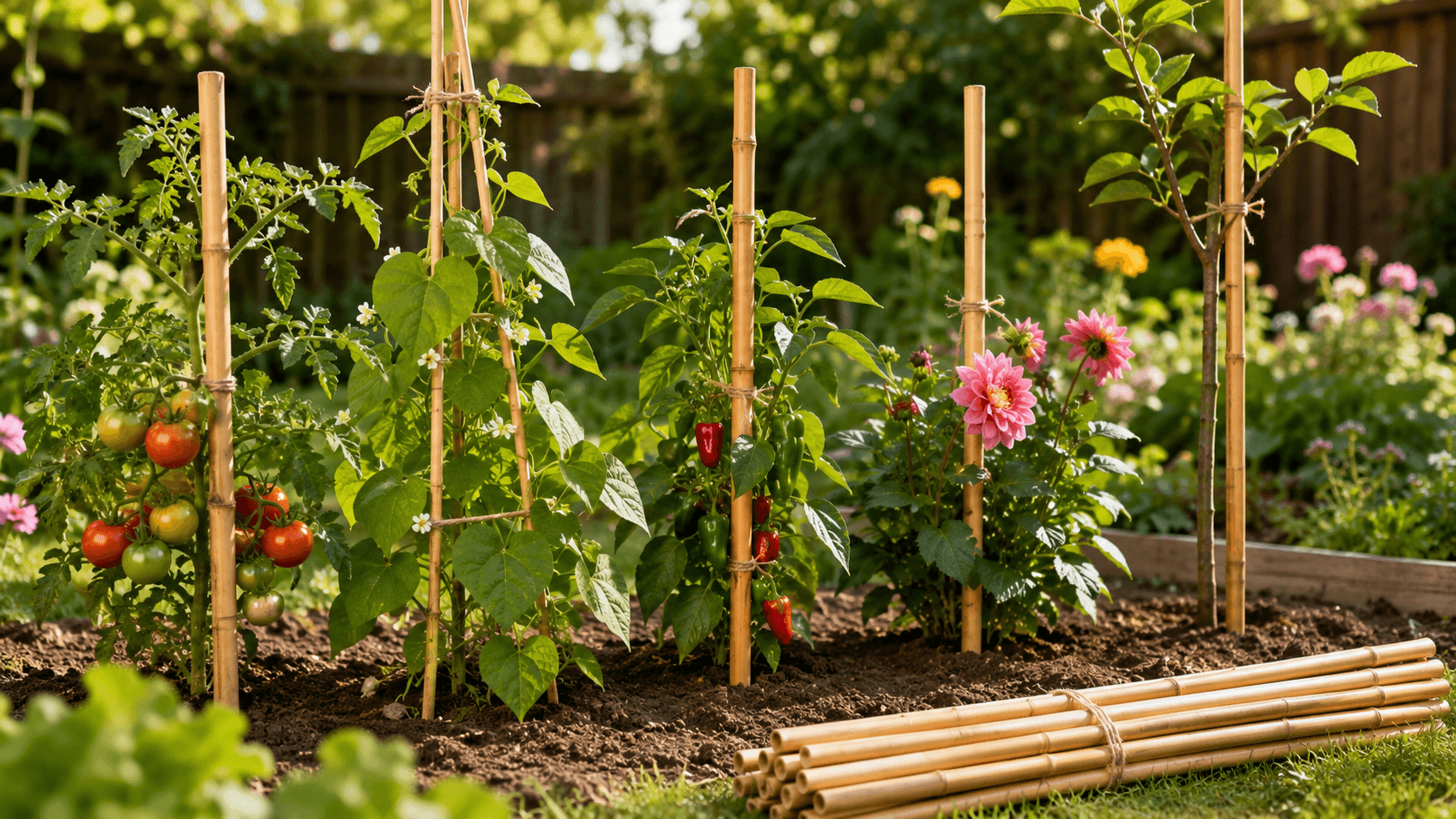
Bamboo plant stakes are bamboo poles used to support plants during growth. Gardeners use them to hold stems upright, guide climbing plants, protect young trees, and keep fruits or branches away from the soil.
They are commonly available in different lengths, diameters, and bundle quantities. Shorter stakes may fit potted plants, flowers, or light garden use. Taller and thicker stakes are usually better for tomatoes, beans, vines, young trees, and nursery plants.
Are bamboo plant stakes the same as bamboo sticks?
Bamboo plant stakes and bamboo sticks can refer to similar products, but “plant stakes” usually means bamboo pieces selected for supporting plants. Buyers should check length, diameter, straightness, surface finish, and bundle quantity before ordering.
For retail shoppers, “bamboo sticks” may sound familiar. For garden centers, farms, and wholesale buyers, “bamboo plant stakes” gives the product a clearer use case because it directly connects the item to plant support.
This wording also matters for product listings, category pages, and internal links. If you sell the product online, use both terms naturally, while keeping bamboo plant stakes as the main product phrase.
Key Benefits of Bamboo Plant Stakes
Once buyers know what bamboo stakes are, the next question is why they are useful. Their value comes from practical support, easy handling, natural appearance, and controlled cost for seasonal gardening.
The table below summarizes the main benefits and how they apply to common buyer needs:
| Benefit | How It Helps | Best Fit |
|---|---|---|
| Natural appearance | Blends with plants, soil, and garden beds | Home gardens, decorative beds, retail packs |
| Lightweight handling | Easy to carry, install, and reposition | Gardeners, nursery workers, small farms |
| Seasonal support | Helps plants stay upright during active growth | Tomatoes, beans, peppers, flowers |
| Cost-friendly use | Works well for large seasonal planting needs | Garden centers, farms, resellers |
| Flexible applications | Supports many crops and plant types | Vegetable gardens, pots, nurseries |
Bamboo stakes are often chosen because they look natural in a garden. They do not stand out as much as metal supports, which makes them useful for raised beds, home landscapes, and decorative planting areas.
They are also easy to handle. A small garden center can stock bundles for spring customers, while a nursery can use them for young plants that need temporary support during growth, transport, or display.
What are the main benefits of bamboo plant stakes?
The main benefits of bamboo plant stakes include natural appearance, lightweight handling, easy installation, seasonal plant support, and cost-friendly use. They are suitable for tomatoes, beans, flowers, young trees, vines, potted plants, and many garden or nursery applications.
For small farms, the biggest advantage is simple installation. Workers can place stakes quickly without complicated tools. For home gardeners, the appeal is usually the natural look and easy setup.
For resellers, bamboo stakes are easy to explain because customers already understand their purpose. That makes them useful for spring retail displays, online garden supply listings, and plant support bundles.
Where to Use Bamboo Plant Stakes
After choosing bamboo stakes, buyers need to match them to the right plants. The best use cases are plants that need vertical support, gentle training, or temporary structure during active growth.
Tomatoes are one of the most common examples. As tomato plants grow taller and set fruit, branches can bend under weight. A bamboo stake placed near the main stem can help keep the plant upright when paired with soft plant ties.
Beans, peppers, young trees, orchids, flowers, and vines can also benefit from bamboo stakes. In nurseries, stakes can help present plants more neatly and reduce leaning during handling or display.
Are bamboo stakes good for tomato plants?
Yes, bamboo stakes are good for tomato plants, especially for seasonal garden use and smaller growing setups. They help keep the main stem upright, reduce branch bending, make tying easier, and support cleaner growth when installed early with soft plant ties.
For tomatoes, stake height matters. A compact tomato plant may need a shorter stake, while a taller variety needs more height above the soil and enough stake length inserted into the ground for stability.
Bamboo stakes also work well in pots and raised beds. For container tomatoes, the pot must be stable enough to support both the plant and stake as the fruit becomes heavier.
Bamboo Plant Stakes vs Other Plant Supports
Bamboo stakes are useful, but they are one support option among several. Buyers should compare them with fiberglass stakes, wood stakes, and metal supports before deciding what to stock or use.
The table below breaks down the main differences between common plant support options:
| Support Type | Best For | Main Benefits | Limitations | Buyer Note |
|---|---|---|---|---|
| Bamboo stakes | Seasonal gardens, retail packs, natural displays | Lightweight, natural look, easy to install | Outdoor life depends on moisture, storage, and season length | Good for general seasonal garden support |
| Fiberglass stakes | Repeated use, nurseries, small farms | Durable, rust-resistant, clean appearance | Higher upfront cost than basic bamboo | Strong option for long-term buyers |
| Wood stakes | Traditional garden support | Familiar, sturdy, easy to use | Can split, rot, or weather over time | Check finish and outdoor durability |
| Metal supports | Heavy plants, cages, trellis setups | Strong and reusable | May rust or take more storage space | Useful for heavier or long-term structures |
Bamboo stakes are a strong option when buyers want natural-looking, lightweight, seasonal plant support. They are especially useful for gardens, retail packs, and short to medium seasonal planting needs.
Fiberglass stakes may be better when repeated use, rust resistance, and longer service life matter more. Metal supports can handle heavier structures, while wood stakes remain familiar for traditional gardening.
The right choice depends on plant type, budget, season length, outdoor exposure, and how often the support will be reused.
How to Choose the Right Bamboo Plant Stakes
A good bamboo stake order starts with size. If the stake is too short, it may fail once the plant grows taller. If it is too thin, it may bend under plant weight or wind pressure.
Check length and diameter first. For small potted plants or flowers, shorter and thinner stakes may be enough. For tomatoes, beans, vines, or young trees, buyers should choose stronger stakes with enough height for both soil insertion and plant support.
Buyers should also remember that the full stake length will not remain visible. A portion must be inserted into soil or potting mix. The stake should still support the plant properly after several inches are placed into the ground or container.
How tall should bamboo plant stakes be?
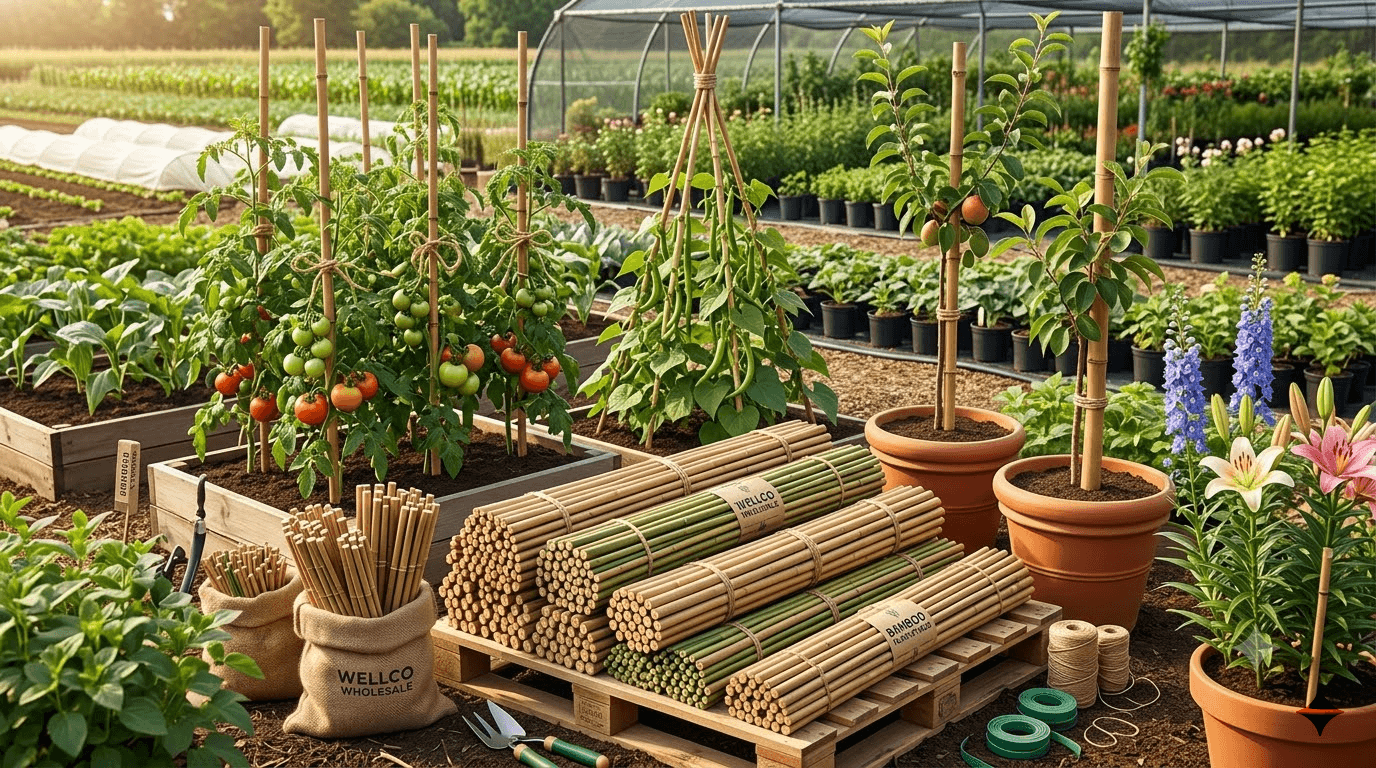
Bamboo plant stakes should be tall enough to support the mature plant while leaving enough length for soil insertion. Buyers should choose stake height based on plant type, expected growth, soil depth, container size, and whether the plant needs single-stem support or climbing guidance.
For practical buying, do not judge height from package length alone. A stake that looks tall before installation may become too short after part of it is inserted into the soil.
Storage also affects usable life. Bamboo is a natural material, so moisture, soil contact, climate, and season length can affect performance. Keep unused stakes dry, avoid long exposure to wet ground, and store bundles off the floor when possible.
Buying Bamboo Plant Stakes Wholesale
For trade buyers, bamboo plant stakes are often a seasonal product. Demand may rise before spring planting, during vegetable garden season, and when nurseries prepare young plants for sale.
Small farms and garden centers should check length, diameter, bundle count, packaging, shipping cost, and reorder availability. Online resellers should also consider carton size, product photos, and whether the stakes can be sold with related items such as plant ties or garden netting.
A garden center preparing spring inventory may stock 3 to 4 common bamboo stake sizes, plant ties, and garden netting together. This helps customers buy a complete plant support setup in one trip and makes the display easier to understand.
Wellco Wholesale supports both trade buyers and individual customers with garden and agricultural supply products. Low MOQ can help buyers test bamboo stakes before larger restocking orders. Mixed garden supply orders can support seasonal purchasing across bamboo stakes, fiberglass stakes, plant ties, garden netting, row cover, weed barrier, and mulch film.
Who should buy bamboo plant stakes in bulk?
Garden centers, small farms, nurseries, landscaping teams, online resellers, and seasonal garden supply sellers should consider buying bamboo plant stakes in bulk. Bulk buying is useful when buyers need repeat supply, consistent sizing, better unit cost, or enough inventory for spring and summer demand.
A small farm may use bamboo stakes for tomatoes, peppers, beans, and young plants. A nursery may use them to keep display plants upright. An online seller may start with bamboo stakes, then add fiberglass stakes or plant support bundles after testing demand.
If buyers need longer-lasting support for repeated use, fiberglass stakes may be worth adding as a related product category.
Common Mistakes to Avoid
Even a simple garden product can underperform if buyers choose or install it poorly. One common mistake is choosing stakes that are too short. A stake may look tall in the bundle but become too low after part of it goes into the soil.
Another mistake is installing stakes too late. Once roots spread and stems become heavy, adding support becomes harder. Early staking reduces the risk of root disturbance and broken branches.
Tying stems too tightly can also damage plants. Use soft plant ties, garden twine, or flexible clips, and leave room for the stem to grow.
Outdoor storage is another factor. Since bamboo is natural, moisture and long soil contact can reduce usable life. Check stored bundles before selling or installing them.
Related Garden Supplies
Bamboo stakes solve the plant support problem, but many buyers need a fuller growing setup. Related products can improve plant protection, soil management, and seasonal growing conditions.
The table below shows useful add-on products that pair well with bamboo plant stakes:
| Related Product | How It Helps | Common Buyer |
|---|---|---|
| Plant ties | Secures stems to stakes without harsh pressure | Gardeners, nurseries, small farms |
| Garden netting | Helps protect crops from birds or pests | Vegetable growers, home gardeners |
| Row cover | Supports frost or light pest protection | Farms, garden centers |
| Fiberglass stakes | Provides durable support for repeated use | Nurseries, contractors, resellers |
| Weed barrier | Helps control weeds around planting areas | Landscapers, farms, garden buyers |
| Mulch film | Supports soil moisture and weed management | Vegetable growers, small farms |
For retailers, these products can become a practical seasonal display. Customers who buy bamboo stakes may also need ties, netting, row cover, or soil cover products.
For wholesale buyers, related products can increase order value while helping customers solve more than one garden problem at the same time.
Conclusion
Bamboo plant stakes are practical for seasonal plant support, natural-looking gardens, nursery display, and small farm use.
Choose the right length and diameter for the plant.
Account for the part of the stake inserted into soil.
Install stakes early and use soft ties.
Store unused bamboo stakes in a dry place.
If you are buying for a garden, nursery, farm, or resale program, start with the plant types your customers support most often, then choose stake sizes and quantities that match seasonal demand.
[Shop Wellco Wholesale's bamboo plant stakes and related garden supplies →]