
Where to Use Reflective Insulation | Guide
Reflective insulation can be useful in many places, but placement decides whether it actually helps. A roll that works well under a hot roof may perform poorly if it is compressed, covered by the wrong layer, or installed where moisture and access were never considered.
This guide shows where to use reflective insulation in homes, metal buildings, warehouses, agricultural structures, vehicles, pipes, and specialty projects. It also covers roll size, surface durability, air space, moisture exposure, fastening, and order quantity.
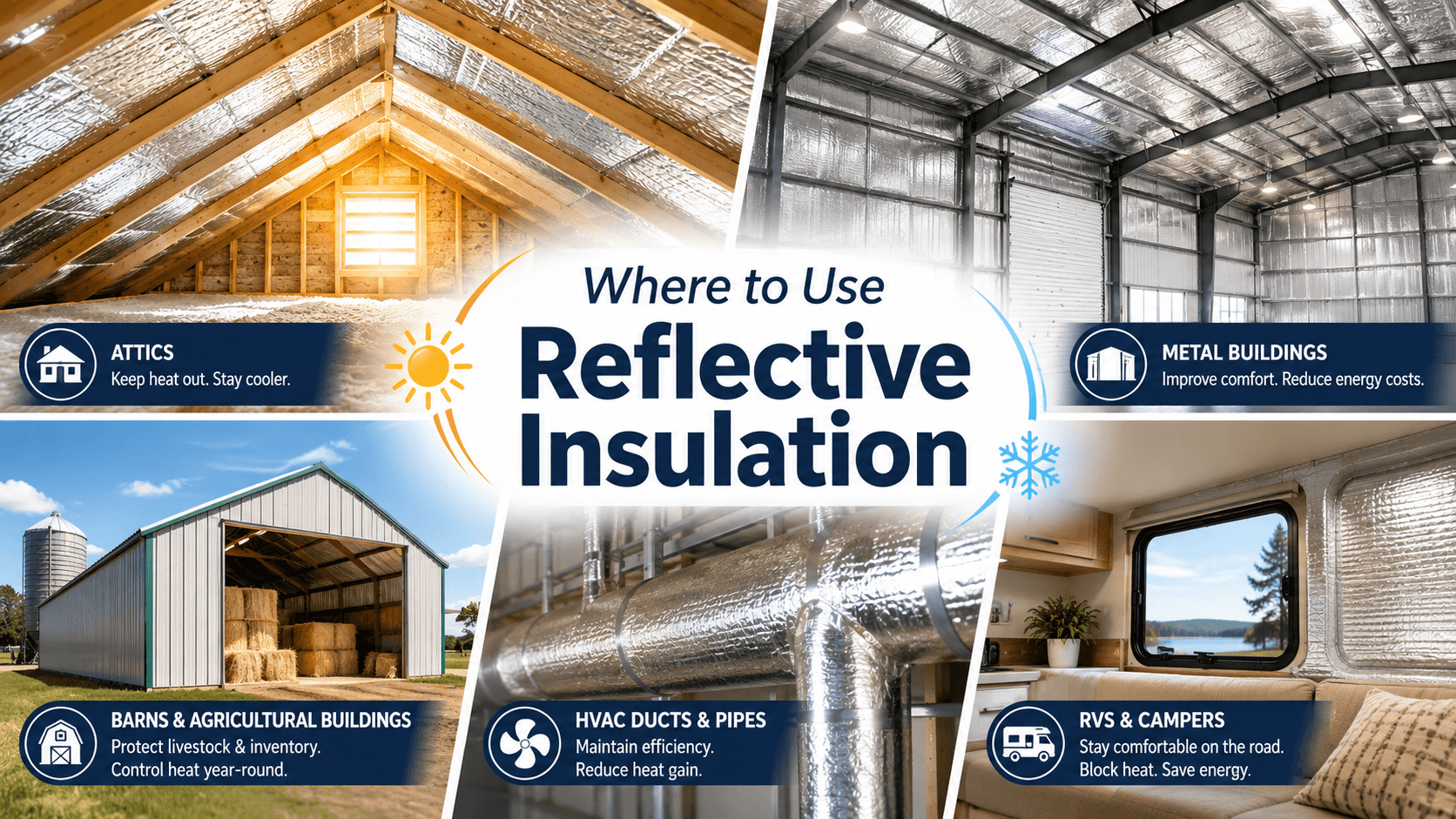
What Is Reflective Insulation Used For?
Reflective insulation helps manage radiant heat transfer, especially near roofs, wall panels, ducts, tanks, and sun exposed surfaces. Many products use a foil faced surface that reflects radiant heat when installed in suitable conditions.
How reflective insulation helps manage radiant heat
Reflective insulation works best when the reflective surface faces an appropriate space. If the material is crushed tightly between layers or covered in a way that blocks its reflective function, performance can drop.
Before ordering, check roll width, roll length, thickness, surface finish, flexibility, and whether the product can be fastened cleanly.
Where does reflective insulation work best?
Reflective insulation works best in spaces with a clear radiant heat source, an appropriate air gap, and a surface that can remain exposed or properly positioned. Good examples include attics, metal buildings, warehouses, barns, RVs, ducts, pipes, crawl spaces, and small utility structures where lightweight thermal control matters.
The table below helps match common projects to suitable placements:
| Use Case | Recommended Placement | Buyer Fit |
|---|---|---|
| Attics | Under roof decking or between rafters | DIY homeowners |
| Metal buildings | Roof and wall interiors | Contractors, building owners |
| Warehouses | Rooflines, walls, ducts | Warehouse operators |
| Agricultural buildings | Barns, shelters, storage | Small farms |
| Pipes and tanks | Wrapped around suitable surfaces | Maintenance teams |
| RVs and campers | Panels, floors, cargo zones | DIY vehicle owners |
Where to Use Reflective Insulation in Homes
Homes often have hot roof areas, tight crawl spaces, garages, sheds, and small wall projects where lightweight insulation can be practical.
Attics and roof spaces
Attics are common because roof surfaces can gain heat during sunny months. You may use reflective insulation under roof decking, between rafters, or near roof facing surfaces.
A homeowner measuring an attic should separate each roof plane, then add 5 to 10% extra material. This allowance helps cover overlap, cutting waste, and awkward corners.
Exterior walls, crawl spaces, and floors
Reflective insulation can be used in open wall assemblies, garages, sheds, crawl spaces, and underfloor areas. Access matters. If the wall or floor is already closed, labor may outweigh the value.
Crawl spaces need extra caution because moisture, ventilation, and sagging can affect the result. Plan support, sealing, and future inspection before installation.
How should you choose reflective insulation for a home project?
Choose reflective insulation based on project area, roll size, surface durability, moisture exposure, installation access, fastening method, and whether the space allows a suitable air gap. Common home uses include attics, garages, crawl spaces, sheds, pipe wraps, and small wall upgrades.
For an attic, handling and roll width may matter most. For pipes, flexibility matters more. For a shed or garage, surface durability and fastening method often guide the choice.
Where to Use Reflective Insulation in Commercial and Industrial Buildings
Commercial spaces usually involve larger surfaces, bigger order quantities, and tighter installation schedules. You need to think beyond roll price.
Warehouses and storage buildings
Warehouses may use reflective insulation near roofs, walls, ducts, and temperature sensitive storage zones. If you manage storage areas, estimate material by zone: roof area, wall area, duct area, and storage area.
Metal buildings and steel structures
Metal buildings are a strong application because roof and wall panels can gain heat quickly under sun exposure. Reflective insulation may help when the material is placed correctly inside roof, wall, ceiling, or partition areas.
Before buying, confirm fastening method, roll width, surface orientation, and installation access. These details affect labor time and final performance.
HVAC ducts and mechanical rooms
Reflective insulation can be used around ductwork, tanks, and mechanical areas if the material fits the surface and does not block service access. Keep valves, panels, filters, and inspection points reachable.
The table below summarizes common commercial buying checks:
| Commercial Use | What to Check | Why It Matters |
|---|---|---|
| Warehouse roofs | Wide rolls and durable surface | Faster coverage |
| Metal walls | Fastening and surface orientation | Better fit |
| HVAC ducts | Flexible material and seam handling | Cleaner wrapping |
| Mechanical rooms | Heat, moisture, access | Safer maintenance |
| Storage zones | Quantity and reorder availability | Consistent supply |
Where to Use Reflective Insulation in Agricultural Buildings
Farm structures often combine heat exposure, dust, moisture, and large open spans. Reflective insulation can help when it fits the real conditions of the building.
Barns and livestock facilities
Barns and livestock shelters may use reflective insulation under roofs or along upper wall areas. A small farm owner should measure roof and wall sections separately and allow extra material for beams, vents, doors, and uneven framing.
Greenhouses and growing spaces
Greenhouses require careful placement because light, heat, and airflow affect plant growth. Reflective materials can be useful in selected zones, but broad coverage may create unwanted shading or heat reflection.
Farm storage buildings
Farm storage buildings may hold seed, feed, tools, and seasonal supplies. In these spaces, surface durability, roll size, packaging strength, and moisture exposure deserve attention before ordering.
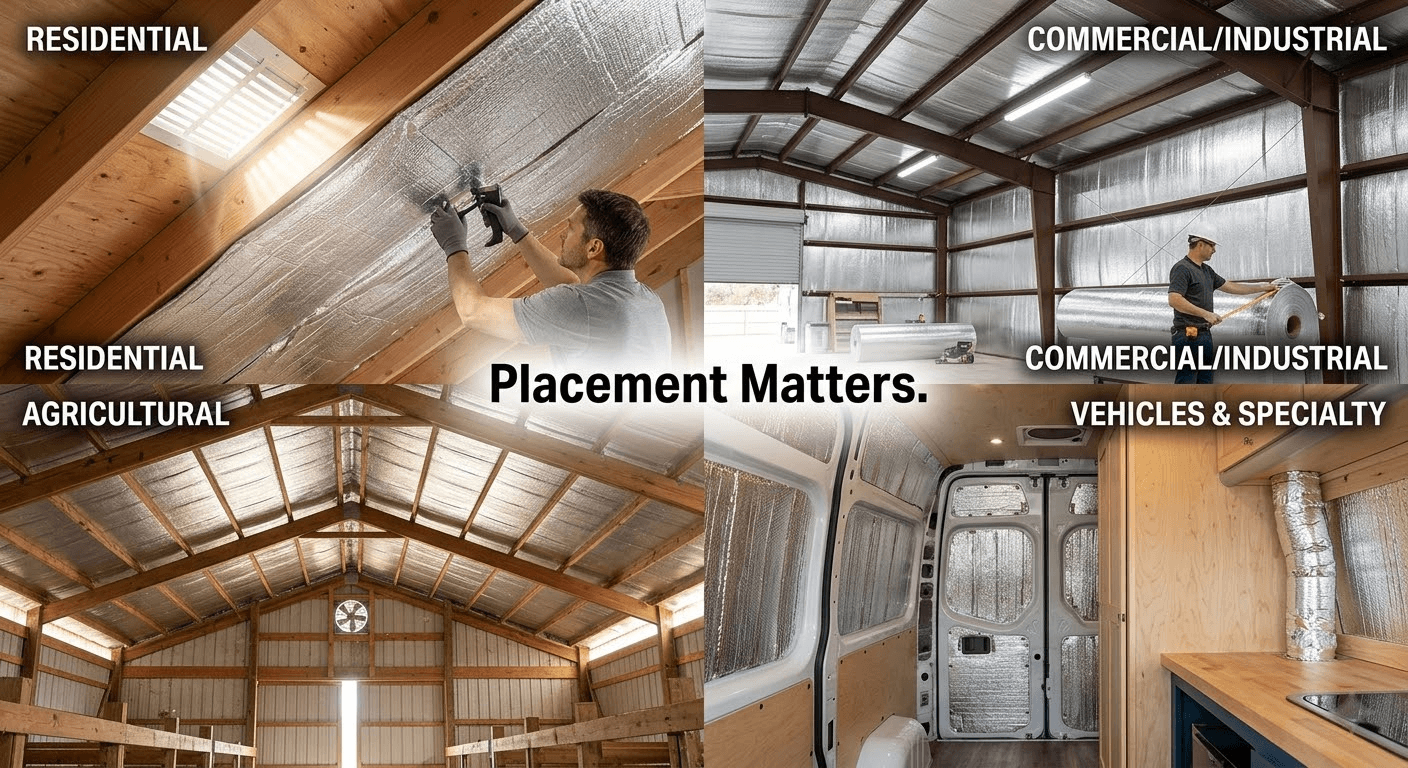
Where to Use Reflective Insulation for Vehicles and Specialty Projects
Vehicles and small structures need materials that can fit curves, corners, panels, and compact utility spaces.
RVs, campers, and utility vehicles
RVs, campers, and service vehicles may use reflective insulation in interior panels, floors, cargo spaces, and compact compartments. Measure each panel separately because wheel wells, cabinets, and access covers increase cutting waste.
Delivery trucks, marine spaces, and temporary structures
Delivery trucks, marine compartments, sheds, workshops, and temporary structures may use reflective insulation where lightweight thermal control is useful. Check cleaning needs, vibration, moisture exposure, and fastening conditions.
Can reflective insulation be used around pipes and tanks?
Reflective insulation can be used around pipes, tanks, and mechanical systems when the material fits the shape, can be secured properly, and suits the project’s temperature and moisture conditions. Common uses include hot water tanks, pipe wrapping, duct areas, utility rooms, and compact mechanical spaces.
For pipes and tanks, measure diameter or circumference before ordering. Plan extra material for overlap, seams, and irregular surfaces.
Where Reflective Insulation Performs Best
Reflective insulation gives the most value when the location supports its reflective surface and has a real radiant heat issue.
Areas with air gaps
Many applications need an air space near the reflective surface. If the product is compressed tightly, it may not deliver the expected reflective benefit.
Areas exposed to sun or strong roof heat
Attics, rooflines, sheds, barns, and metal buildings are common because roofs and panels can absorb solar heat. Match the reflective surface to the heat source.
Spaces with temperature differences or moisture concerns
Storage buildings, garages, ducts, and utility rooms often have temperature differences between surfaces. Moisture prone areas need ventilation planning, secure fastening, and inspection access.
Common Mistakes When Using Reflective Insulation
Most poor results come from planning errors, so check the application before you compare prices.
Reflective insulation buying checklist
Use this checklist before ordering:
| Factor | What to Check | Why It Matters |
|---|---|---|
| Project location | Attic, wall, duct, pipe, barn, vehicle | Each area installs differently |
| Roll size | Width, length, coverage | Affects seams and quantity |
| Thickness | Fit and flexibility | Controls handling |
| Surface material | Foil quality and durability | Affects wear |
| Air gap | Proper spacing | Supports performance |
| Moisture exposure | Ventilation and condensation | Reduces placement risk |
| Order quantity | Area plus 5 to 10% extra | Prevents shortages |
Avoid using the same product format for every area. An attic, pipe, metal wall, and RV panel may each need a different roll size, surface strength, and fastening approach.
Buying Reflective Insulation from Wellco Wholesale
Once you know the application, sourcing becomes easier. Start with square footage, installation zones, and expected waste.
Wellco Wholesale supports retail and trade buyers with 1 piece MOQ access, wholesale pricing options, and free shipping over $300. This helps homeowners test a small project and allows small farm owners or contractors to order larger quantities.
For resellers, contractors, and supply businesses, consistency matters. Wellco Wholesale operates from a 90,000 sq ft California warehouse and can support bulk availability, blind drop shipping, and OEM or ODM options where suitable.
Conclusion
Reflective insulation works best when you match the material to the location, heat source, air space, and installation method.
Before ordering, identify where radiant heat comes from, check whether the application needs an air gap, measure by zone, add 5 to 10% for waste, and choose roll size, surface durability, and fastening method based on real project conditions.
For small projects, start with a practical quantity and confirm fit. For repeat purchasing, plan around stable supply, packaging, lead time, and reorder needs.
[Shop Wellco Wholesale's full range with 1-piece MOQ and free shipping over $300 →]